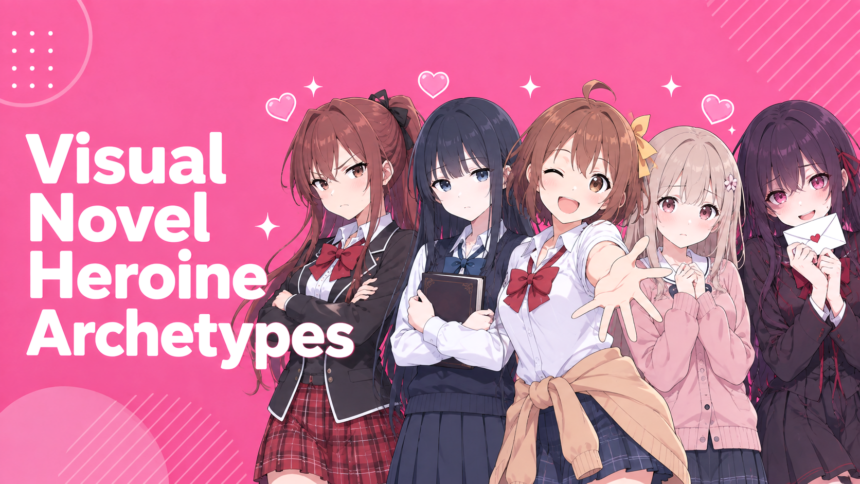
Archetypes give writers a recognizable starting shape for a character, but they only actually work when a writer treats that shape as a foundation rather than a finished personality. Some archetypes have stayed popular for decades because they offer genuine flexibility for deeper writing underneath the surface trait, a debate that runs constantly through “best heroine type” polls and threads on r/visualnovels. Others tend to wear thin quickly because the archetype itself does most of the heavy lifting, leaving little room for a character to feel like anything beyond the label attached to her.
The Childhood Friend
The childhood friend archetype trades on built-in history rather than the slow-burn discovery a new character would require, giving a writer an immediate foundation of shared memories, inside jokes, and established comfort to draw from right from the story’s opening scenes. This history can make a childhood friend route feel warmer and more immediately grounded than routes built around characters the protagonist has just met, since the emotional stakes don’t need to be built entirely from scratch.
The risk with this archetype is a familiar one in visual novel writing circles: a childhood friend who exists purely as comforting, unchallenging background presence can end up feeling more like furniture than a fully realized character, especially in stories where she isn’t the primary route’s focus. The archetype works best when a writer gives her genuine independent goals and personality traits that exist outside her relationship to the protagonist, rather than defining her purely by how long she’s known him.
The Tsundere
Few archetypes have stayed as consistently popular or as consistently mocked as the tsundere, built around a character who responds to affection with irritation or denial before eventually revealing genuine warmth underneath. Done well, this creates real tension and comedic timing, since the gap between what a tsundere character says and what she actually feels gives a writer natural material for both humor and emotional payoff once that gap finally closes.
Done poorly, a tsundere becomes a one-note joke, repeating the same deflection-then-blush pattern without ever developing beyond it or explaining why she defaults to hostility as an emotional coping mechanism in the first place. The archetype works best when a writer treats the defensive behavior as a symptom of something specific, insecurity, past hurt, fear of vulnerability, rather than as a personality quirk that exists purely for comedic repetition without any underlying explanation.
The Kuudere
The kuudere presents as cold, distant, and emotionally reserved on the surface, with genuine warmth revealed gradually and often subtly rather than through the more dramatic emotional swings a tsundere typically displays. This archetype rewards patient, careful writing, since the character’s emotional depth has to come through in small gestures and understated moments rather than obvious declarations, which can make a well-written kuudere route feel especially rewarding once her genuine feelings finally surface clearly.
This same subtlety is exactly where the archetype risks falling flat. A kuudere written without enough small, carefully placed hints of warmth underneath the cold exterior can simply read as flat or uninteresting for large stretches of a route, since there’s less obvious dramatic material to work with compared to more overtly expressive archetypes. The best kuudere writing plants enough quiet detail early on that a reader can look back and recognize the warmth was there all along, just expressed in a register easy to miss on a first pass.
The Onee-San (Older Sister Type)
The onee-san archetype trades on a caretaking, mature energy, often paired with a teasing or flirtatious edge that plays against her more nurturing surface presentation. This combination gives a writer real range to work with, since an onee-san character can shift between genuine warmth, playful teasing, and moments of real vulnerability underneath her confident exterior, provided the writing actually explores that range rather than settling for one note throughout an entire route.
Teacher characters frequently draw on this same archetype, since an authority figure paired with underlying warmth or vulnerability creates a similar dynamic to the classic onee-san setup even when the specific role differs. The archetype works best when a writer resists the temptation to keep her purely in the confident, together caretaker role throughout, since revealing genuine cracks in that composed exterior tends to be where the most memorable moments for this archetype actually happen.
The Yandere
The yandere archetype, built around obsessive, often unstable devotion that can escalate into genuinely disturbing territory, works best in visual novels that treat the underlying psychology seriously rather than playing the extreme behavior purely for shock value or dark comedy. A well-written yandere route explores what actually drives that level of obsession, whether that’s untreated trauma, isolation, or a specific triggering event, giving the extreme behavior real narrative weight rather than presenting it as an aesthetic choice disconnected from any underlying cause.
This is one of the archetypes most prone to shallow execution when a writer leans purely on shock value rather than genuine characterization. A yandere character written without any real exploration of why she’s become this way tends to read as a checklist of disturbing behaviors rather than an actual person, while the strongest examples of this archetype in the genre treat her condition with enough narrative seriousness that the route becomes genuinely unsettling rather than simply performative.
The Himedere
The himedere carries herself with a princess-like sense of entitlement and superiority, often demanding attention and treatment befitting royalty regardless of her actual social standing. This archetype offers strong comedic potential through the gap between her self-image and her actual circumstances, and it also creates natural room for a genuine character arc if the writing eventually reveals insecurity or loneliness underneath the demanding exterior, similar in structural function to how a tsundere’s hostility often masks something more vulnerable.
The archetype risks becoming purely obnoxious rather than endearing if a writer never earns the audience’s sympathy for her underlying insecurity, leaving readers with just the demanding surface behavior and no deeper reason to actually care about her beyond the initial comedic novelty.
The Genki Girl
The genki girl brings relentless energy, enthusiasm, and cheerfulness to nearly every scene she appears in, often serving as comic relief or an emotional counterbalance to heavier moments elsewhere in a story. This archetype works especially well in ensemble casts, where her energy provides useful contrast against more reserved or serious characters, and it can carry genuine emotional weight when a writer eventually reveals what that constant cheerfulness might be covering for or compensating against.
The risk here mirrors several of the other archetypes discussed: a genki girl whose enthusiasm never gets explored beyond surface-level comic relief can start to feel exhausting rather than endearing across a full route, particularly if the writing never slows down to show a more grounded, complex side beneath the constant energy.
What Makes an Archetype Actually Work
Looking across all of these, a clear pattern emerges. The archetypes that hold up best all share the same underlying trait: the surface behavior functions as a starting point for deeper characterization rather than as the entire character on its own. A tsundere’s hostility, a kuudere’s coldness, a himedere’s entitlement, and a genki girl’s relentless cheer all work best when a writer treats them as a mask or a coping mechanism worth eventually exploring, rather than as a fixed personality trait that never develops or gets explained across an entire route.
This is really the same underlying principle that governs good character writing generally, regardless of whether an archetype is involved at all. An archetype gives a writer a recognizable shape to start from, but the actual quality of a heroine, archetype or not, comes down to whether that starting shape eventually gives way to something specific, contradictory, and genuinely felt rather than staying exactly as flat as the label first suggested, a standard that applies across the visual novel format as a whole.
Why These Archetypes Keep Recurring
Part of why these specific archetypes have stayed so consistently popular across decades of visual novel writing is that they offer genuinely useful narrative shorthand, letting a reader immediately understand a character’s basic emotional register while leaving plenty of room for a specific writer to differentiate their particular version of that archetype through the details underneath. A tsundere in one visual novel can feel entirely distinct from a tsundere in another, provided each writer builds enough specific backstory and internal logic to justify why that particular character developed that particular defensive pattern.
The archetypes that fade or wear out their welcome faster tend to be ones leaned on purely for their surface recognizability, without any writer bothering to differentiate their specific execution from every other version of the same trope that came before it.
The Short Version
Visual novel heroine archetypes work best when treated as a foundation for deeper writing rather than a complete personality on their own. Tsundere hostility, kuudere coldness, himedere entitlement, and genki girl energy all function as masks worth eventually exploring rather than fixed traits, and the archetypes that have stayed popular across decades of the genre have done so because individual writers keep finding new, specific reasons underneath the familiar surface behavior. An archetype gives a character her starting shape. Whether she actually works comes down entirely to what a writer builds on top of it.