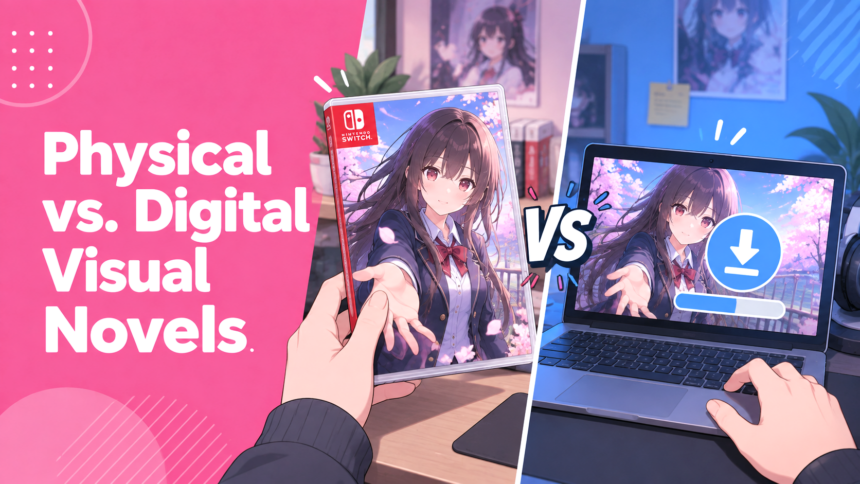
Digital wins on convenience and price for almost everyone, while physical wins on collectibility and access to titles that never got a digital release at all. Neither format is a clear universal winner, and the right choice usually depends less on personal preference in the abstract and more on which specific title you’re after, since availability differs sharply between the two.
Availability Is the Biggest Factor
Most modern visual novels release digitally first, often exclusively, through storefronts like Steam, itch.io, or a publisher’s own site. Physical editions, by contrast, tend to be limited print runs reserved for especially popular titles or crowdfunded projects with dedicated fan demand behind them. This means the choice between physical and digital often isn’t really a choice at all. A given title is either available physically or it isn’t, and digital tends to be the only realistic option for the vast majority of the catalog.
Older titles complicate this further. Some classic visual novels only ever received a physical Japanese release and never got an official digital port, which pushes readers toward importing or sourcing older hardware just to experience them at all. Knowing which category a specific title falls into before assuming either format is available saves a lot of wasted searching.
Price Differences Add Up Fast
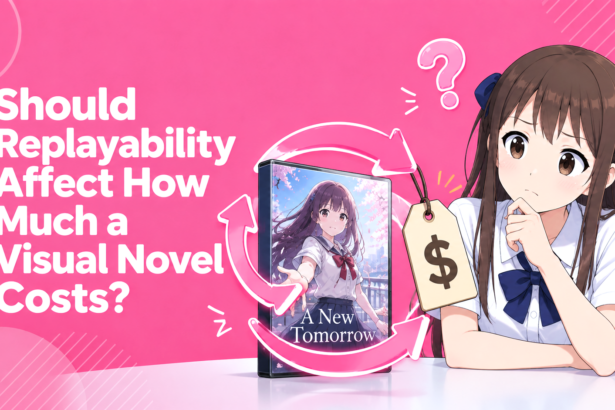
Digital visual novels are almost always cheaper than their physical counterparts, sometimes significantly so once shipping and import costs get factored into a physical purchase. Digital storefronts also run frequent sales, and visual novel pricing in general tends to fluctuate a lot more on digital platforms than it does for physical print runs, which usually stay fixed at whatever price the initial batch was set at.
Physical editions carry production costs that digital simply doesn’t: printing, packaging, shipping, and often bonus items like art books or soundtrack discs bundled into the box. Those extras are part of why physical editions cost more, and whether that premium feels worth it depends heavily on how much someone values the tangible object over the base cost of the actual story and game.
Collectibility Only Exists Physically
A digital library, no matter how large, doesn’t offer the same sense of ownership a shelf of physical cases does. Limited-run physical editions often include exclusive content unavailable digitally at any price: art books, character standees, soundtrack CDs, or special packaging tied to a specific print run that never gets reissued. For readers who care about collecting favorite titles the way some people collect vinyl records or special edition books, this is the format’s clearest advantage, and it’s not one digital can really replicate.
This collectibility cuts both ways, though. Limited physical runs sell out, sometimes within hours of going live, and resale prices for out-of-print visual novels can climb well past their original retail cost. A reader who wants a specific physical edition sometimes has to move fast or pay a serious secondary-market premium later, which isn’t a concern with digital copies that generally stay in stock indefinitely.
Convenience Favors Digital Almost Every Time
Digital copies install instantly, take up no shelf space, and travel with a reader across devices without needing to pack anything. For readers who play visual novels across multiple platforms, digital access also tends to sync more easily between a PC, a phone, and a tablet, depending on the storefront and platform support for a given title. Physical media doesn’t offer that same flexibility, since a boxed PC release generally still requires installing from a disc or redeeming a code onto the same digital storefronts anyway, making the “physical” purchase more of a collector’s object than a genuinely separate way to actually play the game.
Patches and updates also favor digital heavily. Bug fixes, translation patches, and content updates roll out automatically through digital storefronts, while physical copies often ship with whatever version was current at print time and require a separate download to bring current regardless of the format printed on the box.
Where Physical Still Has Real Practical Value
Console releases are the clearest case where physical retains genuine functional advantages beyond collecting. A physical console copy doesn’t depend on a storefront staying operational or a publisher maintaining server access indefinitely, which matters more than it might seem given how many older digital storefronts have shut down or delisted titles over the years. A physical disc keeps working regardless of what happens to the platform’s digital marketplace down the line.
Resale and lending are also physical-only options. A digital purchase is generally tied to an account and can’t be passed along to a friend or sold once finished, while a physical copy can move between owners the same way any other game or book can. For readers who like sharing favorite titles directly rather than just recommending a storefront link, this is a real, practical difference rather than just a nostalgia preference.
Which Storefront You Use Also Matters
For digital purchases specifically, the storefront itself shapes the experience almost as much as the format choice does. Different platforms carry different libraries, different pricing, and different policies around adult content, and a comparison like Steam vs. JAST vs. MangaGamer is worth checking before assuming any one digital storefront carries everything. A title unavailable on Steam is often available directly through JAST or MangaGamer instead, which sometimes matters more for digital availability than the physical-versus-digital question itself.
How to Decide for a Specific Title
The most practical approach is checking availability before deciding on a format preference in the abstract. If a title has a physical edition and the price premium feels reasonable for the extras included, physical makes sense for readers who value having something tangible on a shelf. If a title is digital-only, which covers the vast majority of the catalog at this point, the decision is already made regardless of personal preference. For older or harder-to-find titles, checking where visual novels can legitimately be downloaded is usually a faster path than hunting for an out-of-print physical copy at an inflated resale price.
The Short Version
Digital wins on price, convenience, and sheer availability, since most of the current catalog simply isn’t released physically at all. Physical wins on collectibility, resale ability, and long-term access that doesn’t depend on a storefront staying online. For most readers, digital ends up being the practical default simply because it’s what’s actually available for the vast majority of titles, with physical reserved for specific favorites worth the premium and the wait.