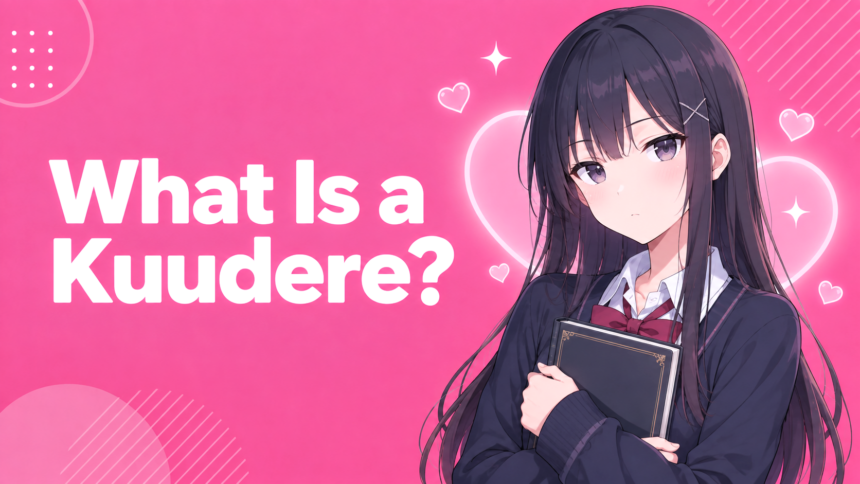
A kuudere is a character archetype from Japanese anime, manga, and visual novels describing someone who presents as calm, emotionally reserved, and difficult to read on the surface, but who genuinely cares about people in ways that express themselves through understated action rather than open feeling. The warmth is real. It is simply communicated at a much lower volume than most characters operate at, and only to the people who have earned enough of the kuudere’s trust to receive it.
The archetype is one of the most quietly compelling in anime and visual novel culture. Where other dere types announce their emotional states in dramatic shifts and visible transitions, the kuudere requires the audience to pay close attention. The signals are small, the moments of vulnerability are brief, and the payoff of witnessing them is proportionally more meaningful because they were not easy to reach.
Where the Word Comes From
Kuudere is a portmanteau of two components. The first is kuuru, written as クール, the Japanese phonetic rendering of the English word cool, used in Japanese to describe someone who is emotionally composed, collected, or detached. The second is dere, from deredere, meaning lovestruck or openly affectionate. Combined into kuudere, the word describes a character who is cool on the outside but carries genuine warmth underneath, an emotional glacier whose core temperature is warmer than its surface suggests.
The OtakuLang analysis of the archetype describes the kuudere as a character for whom every tiny gesture carries enormous weight once you learn to read them. When a kuudere says they do not dislike you, that is their version of a meaningful admission. When they quietly adjust something for you without making eye contact, that is their version of open care. Learning to read a kuudere, as that analysis puts it, is like learning a new language: the grammar looks nothing like what you are used to, but once you are fluent, the signals are clear.
The term emerged as a distinct category in the mid-2000s, alongside the broader systematisation of dere types by Japanese internet communities. Cool and stoic characters had existed in anime and manga well before the term was coined. Rei Ayanami from Neon Genesis Evangelion, released in 1995, is consistently cited as a character who set the standard for the archetype before anyone had a name for it. The word arrived later to describe a pattern that audiences had already been responding to for years.
What Makes a Kuudere
The Grokipedia analysis of the archetype identifies several consistent traits that define the kuudere across its various expressions.
A kuudere presents with a reserved, logical exterior that tends toward minimal facial expression and measured, even monotone speech. They are typically introverted and self-possessed, not in a performance of aloofness but because their natural way of engaging with the world is quieter than the default. They tend to be observant and patient, listening more than they speak and noticing details about the people around them that those people may not realise have been registered.
The warmth the kuudere carries expresses itself through small, specific actions rather than explicit statements. A kuudere character does not say they care. They demonstrate it through practical things: handling something difficult without being asked, remembering a specific preference that was mentioned in passing, being present in a moment without announcing their presence as a gift. The AIGirlfriends.ai analysis of the archetype captures this precisely, noting that their affection is quiet care expressed through thoughtful gestures rather than grand declarations.
The crucial distinction between a kuudere and a character who is simply cold is the presence of genuine underlying warmth. As the Kuudere Meaning site puts it directly: take away that warmth and you are left with a plain stoic, not a kuudere. The affection must be genuinely there, discoverable by the right people in the right circumstances, even if it is never displayed loudly. A character who is reserved and who also simply does not feel warmth toward others is not a kuudere. They are just reserved.
The Subtypes
Community analysis of the archetype has identified several subtypes that describe different expressions of the kuudere dynamic.
The sweet kuudere is genuinely warm underneath the cool exterior. They are slow and selective about who they allow close, but once trust is established the warmth becomes visible and the reserved quality reads as quiet care rather than emotional distance. This is the version most commonly used in romance-focused visual novels, where the gradual revelation of genuine affection forms the emotional arc of the character’s route.
The harsh kuudere is more genuinely distant and reserved. They may warm up over time or they may not, and when they do open up the development feels earned precisely because it was not assured. The uncertainty of whether the kuudere’s warmth will become accessible is part of the narrative tension.
The natural kuudere is simply a calm person whose default emotional register is quieter than those around them. They are not hiding anything and are not protecting themselves from vulnerability. They are just constitutionally less expressive than the people around them, and what reads as aloofness to strangers is simply their normal mode.
The defensive kuudere maintains their reserve as a protective response to past experience rather than as a natural trait. Their emotional walls have a specific origin, often in loss, betrayal, or a role that demanded they suppress their feelings, and the story of their character involves addressing that origin as much as simply discovering the warmth underneath.
How the Kuudere Differs From Other Dere Types
The kuudere sits in a specific and distinctive position relative to the other major dere types, and understanding those distinctions helps clarify what makes each archetype work.
As our articles on what a tsundere is and what a yandere is cover in detail, the tsundere archetype involves active oscillation between hostility and warmth, while the yandere involves genuine devotion that has crossed into obsession and potential danger. Both are high-energy archetypes built on visible emotional contradiction and dramatic shifts.
The kuudere is the low-energy version of the same essential dynamic: warmth concealed beneath a surface that does not announce itself as concealing anything. The tsundere is actively prickly in ways that signal to the audience that something is being hidden. The kuudere simply does not volunteer the information. They are not hostile. They are not aggressive. They are simply quiet, and their quietness requires the audience to work harder to understand what is present underneath.
The Grokipedia comparison of kuudere and tsundere notes that both types begin with emotional barriers that give way to affection in romantic contexts and both undergo a thawing arc where vulnerability gradually emerges. The primary difference is the texture of the barrier: the tsundere’s barrier is active and defended through behaviour, while the kuudere’s barrier is passive and maintained through the absence of expression rather than the presence of hostility.
The dandere, another related archetype, is sometimes confused with the kuudere. The dandere is shy and quiet out of social anxiety rather than natural composure. The dandere struggles to express feelings because of nervousness and self-doubt. The kuudere is quiet out of reserve and preference, not anxiety, and is typically composed in situations where a dandere would be flustered. The distinction is internal: one is held back by anxiety, the other simply operates at a quieter frequency by nature.
Kuudere Characters in Visual Novels and Anime
Rei Ayanami from Neon Genesis Evangelion is the most cited precursor to the kuudere archetype and the character most responsible for establishing the cool, emotionally minimalist female character as a recognisable type in anime. Her distant, almost dissociated presentation, combined with moments of genuine if constrained emotional connection, created a template that influenced a generation of character writing.
Violet Evergarden from the anime and light novel of the same name is frequently cited in contemporary discussions of the archetype as one of its most emotionally developed examples. Her arc from a former soldier who cannot access or understand human emotion to someone who learns to read and communicate feeling through her work as a letter writer is described by the Tsumino blog analysis as one of the most compelling kuudere character developments in recent anime.
In visual novels specifically, the kuudere appears regularly as a character type within multi-route titles, typically as a member of the cast whose route requires the most patience and the most careful reading of understated signals before the emotional payoff arrives. The nature of the visual novel format, allowing hours of gradual development across a single character’s route, suits the kuudere archetype particularly well. The slow revelation of genuine warmth behind a composed exterior is exactly the kind of emotional arc that benefits from the sustained investment the format provides.
Why the Archetype Works
The kuudere’s appeal to audiences reflects something genuine about the emotional experience it creates.
Most dramatic character archetypes operate loudly. The tsundere announces their emotional conflict through visible behaviour. The yandere’s intensity is impossible to miss. The deredere is openly and consistently warm. The kuudere is different: it demands that the audience pay attention. The rewards it offers are small in scale and enormous in weight, precisely because the character does not give them freely.
The Oreate AI blog analysis notes that kuudere characters reflect broader human experiences of emotional barriers formed by past trauma or fear of vulnerability. Audiences who recognise the pattern of someone who cares deeply but expresses it only through action, never words, who is present and attentive without ever naming what that presence means, find the archetype resonant in a way that more expressive character types cannot reach in the same way.
There is also a specific pleasure in the detective work the archetype requires. Learning to read a kuudere character, learning which gestures are signals and what those signals mean, creates a form of investment and intimacy that dramatically louder characters cannot produce. The moment a kuudere finally says something directly, or makes a gesture that cannot be read as anything other than care, carries a weight that only accumulates through all the quieter moments that preceded it.
For readers who want to explore the full vocabulary of character types that comes up in visual novel and anime community discussions, our visual novels glossary defines kuudere alongside tsundere, yandere, dandere, and the other dere types used regularly in the community.