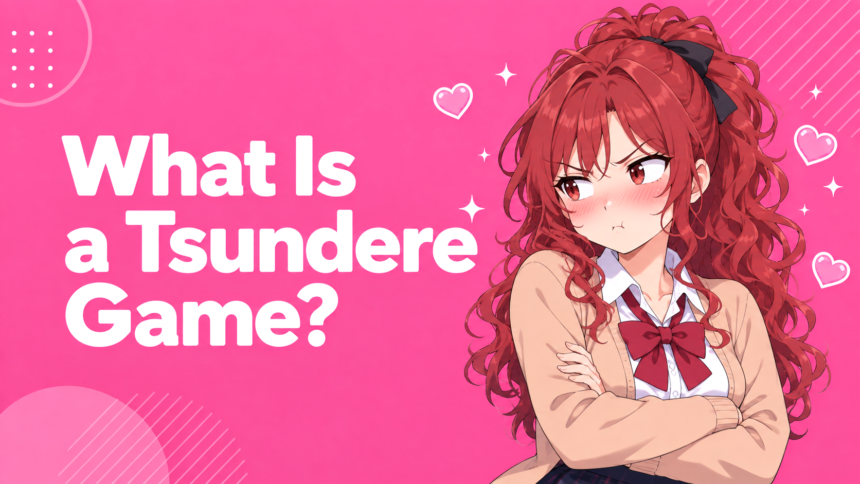
A tsundere game is a visual novel or dating sim that features a tsundere character as a central love interest or protagonist. The tsundere archetype is one of the most recognisable character types in Japanese media: a character who initially presents as cold, hostile, or dismissive toward the person they are attracted to but gradually reveals a warmer, more affectionate side as the relationship develops. The word comes from the Japanese terms tsun tsun, meaning to turn away in disgust or disdain, and dere dere, meaning to become lovestruck or affectionate.
Tsundere characters appear across manga, anime, and visual novels, but the visual novel format is particularly well suited to them because the slow build of relationship content across many hours of reading gives the tsundere arc the space it needs to feel earned rather than rushed.
The Two Types of Tsundere
The visual novel community and broader anime community distinguish between two primary tsundere variations that appear in games and other media.
The first type is the harsh tsundere whose default state is cold or aggressive and whose warmer moments are revealed gradually through sustained interaction. This type starts at the tsun end of the spectrum and moves toward dere as the story progresses. Asuka Langley from Neon Genesis Evangelion is frequently cited as the most recognisable example of this type outside the visual novel format.
The second type is the tsundere whose warm affectionate side is more present but who switches sharply into defensive hostility when embarrassed or caught expressing genuine feelings. This type oscillates between the two states more rapidly rather than moving steadily from one to the other. This variation is more common in comedy focused visual novels where the contrast between the character’s claimed indifference and their visible embarrassment is played for humour.
Both types appear regularly in visual novels and dating sims. Which type a specific character represents affects the tone of their route significantly. Harsh tsundere routes tend to be slower and more dramatically serious while oscillating tsundere routes tend toward comedy and lighter romantic content.
Why Tsundere Characters Work in Visual Novels
The visual novel format is particularly effective for tsundere character arcs for several reasons. The format’s length means the character has time to resist, push back, and maintain their defensive exterior for long enough that the eventual reveal of their genuine feelings carries real weight. A tsundere arc that resolves in two hours feels unconvincing. One that develops across fifteen hours of reading, with setbacks and moments of genuine conflict alongside the gradual softening, feels like a relationship that was actually earned.
The line by line pacing of the ADV format also makes the moments of vulnerability more impactful. A single line from a tsundere character that breaks their established pattern lands with more force because the reader has been advancing through dozens of lines of established tsun behaviour to reach it.
The format also allows readers to experience the protagonist’s perspective throughout, which is important for tsundere arcs because understanding why the protagonist persists through the hostile behaviour requires access to their internal reasoning in a way that external narration alone does not provide as effectively.
What makes a good visual novel covers character writing in depth, and the tsundere archetype represents one of the clearest examples of how character design decisions at the concept level affect the entire arc of a route.
Tsundere Games vs Standard Romance Visual Novels
A tsundere game is not a distinct genre from romance visual novels or dating sims so much as a label for titles that foreground the tsundere archetype in their marketing or structure. Most romance visual novels include at least one tsundere character among a cast of multiple love interests. A title specifically marketed as a tsundere game typically means the primary love interest or multiple love interests follow this archetype, or that the game is built specifically around the tsundere dynamic as its central romantic premise.
The tsundere archetype appears across both visual novels and dating sims. What is the difference between a visual novel and a dating sim explains the distinction between those two formats, which is relevant when shopping for tsundere games because the gameplay experience differs significantly between a stat management dating sim with a tsundere route and a narrative visual novel built around the same character type.
Tsundere Characters in Well Known Visual Novels
Several highly regarded visual novels feature prominently discussed tsundere characters whose routes are considered among the best examples of the archetype in the format.
Tohsaka Rin from Fate/stay night is one of the most analysed tsundere characters in visual novel history. Her route in the Unlimited Blade Works arc presents her shifting between competent and cutting in her public persona and genuinely warm in private moments in ways that feel grounded in character rather than as mechanical archetype fulfilment. Fate/stay night is available in English via community fan translation and is covered in the top 10 visual novels of all time discussions regularly.
Saber from the same title is sometimes discussed as a tsundere variant, though the community debates whether her character design fits the archetype precisely or represents a related but distinct type.
In the otome game space, tsundere male love interests are common and some of the most popular routes in the genre follow the archetype. Collar x Malice and many other otome titles include at least one love interest whose route follows a tsundere structure.
Where to Find Tsundere Visual Novels
Visual novels featuring tsundere characters are available across all major platforms. Steam carries a large catalogue of romance visual novels with tsundere characters. Searching the Steam store for visual novel alongside terms like tsundere surfaces many relevant titles.
MangaGamer and JAST USA both carry visual novels with tsundere routes in their catalogues, often including titles not available on Steam or available with more complete content than the Steam versions.
VNDB (Visual Novel Database) allows searching by character tags including tsundere, which is the most precise way to find titles that specifically feature the archetype as a tagged character trait. Filtering by the tsundere tag on VNDB returns a large list of titles sorted by community rating, which is the most reliable way to find well regarded examples.
For mobile players, many free to play visual novel apps on iOS and Android include tsundere characters as part of their love interest rosters. How to play visual novels on iOS and how to play visual novels on Android cover accessing visual novel content on those platforms.
Related Archetypes in Visual Novels
Understanding the tsundere archetype is easier with context from related character types that appear frequently in the same titles.
A kuudere is a character who presents as emotionally detached and cool rather than actively hostile, and who develops emotional warmth through the relationship. The distinction from a harsh tsundere is that a kuudere is not aggressive or defensive but genuinely distant, while a tsundere is reactive and often volatile.
A yandere is a character who is intensely loving but whose affection crosses into obsession, possessiveness, and sometimes violence. The yandere archetype is almost the inverse of the tsundere in emotional expression: dere first, then an extreme version of something other than tsun. The guide on what is a yandere game covers that archetype in detail.
A dandere is a character who is shy and quiet rather than hostile or cold, and who opens up through sustained interaction. Dandere characters share some structural similarities with tsundere arcs in that both move from a closed emotional state to an open one, but through different emotional mechanisms.
Understanding these archetypes helps when navigating VNDB tags, reading community recommendations, and finding titles that match the specific kind of character dynamic you want to experience.
Is a Tsundere Game the Same as a Dating Sim?
Not necessarily. Tsundere games are defined by the character archetype featured rather than by the gameplay format. A tsundere game can be a narrative visual novel with minimal gameplay, a stat management dating sim, an otome game, or any other format that includes a tsundere character as a central element. The archetype label describes the character type rather than the genre or gameplay structure of the title.
What genres of visual novels exist covers the full range of visual novel subgenres and how character archetypes like tsundere appear across all of them.
For readers new to the format who want to understand the broader context before seeking out tsundere specific titles, how to get into visual novels covers the best starting points and where to play free visual novels covers how to access a large range of titles at no cost. The visual novel glossary covers tsundere alongside other character archetype terms and format vocabulary that comes up regularly in community discussion.