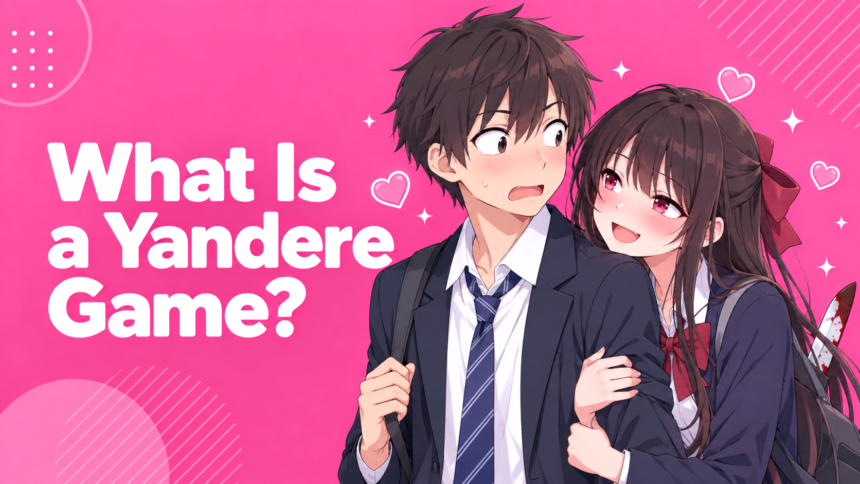
A yandere game is a visual novel — or occasionally another game format — built around a character whose love for the player is so intense it has become obsessive, possessive, and often dangerous. The yandere is sweet, devoted, and deeply affectionate on the surface. Underneath that sweetness is something that does not respond well to rivals, rejection, or any threat to the relationship, real or imagined.
The term “yandere game” is not a formal genre in the way that horror or romance are — it describes a character archetype that defines the experience rather than a mechanical category. But the yandere visual novel has grown from a niche curiosity into one of the most active creative scenes in the indie visual novel world, producing hundreds of titles on platforms like itch.io and a dedicated international fanbase with its own community, content creators, and game jams.
What “Yandere” Actually Means
The word yandere (ヤンデレ) is a Japanese portmanteau of two words: yanderu (病んでる), meaning to be mentally or emotionally ill, and deredere (デレデレ), meaning lovestruck or openly affectionate. Put together, it describes someone who is, almost literally, lovesick — a person whose romantic affection has tipped into something unhealthy and consuming.
The word fuses the Japanese “yanderu” (to be sick, including sickness of the mind or heart) with “dere” from “deredere” (lovestruck, sweet). The etymology captures the archetype precisely: a yandere character is not simply a villain who happens to be in love. The love is usually real and genuine — often portrayed as the most real thing about them — and that sincerity is what makes the archetype unsettling rather than straightforwardly monstrous. They are not dangerous despite their love but because of it.
The yandere archetype is one of a family of character types in anime and manga known as “dere types” — personality archetypes defined by how characters express or conceal romantic affection. The tsundere is cold and prickly on the surface but warm underneath. The kuudere is emotionally reserved. The dandere is shy and quiet. The yandere is the extreme end: outwardly devoted, inwardly consumed, and capable of going to frightening lengths to protect what they consider theirs.
The Yandere Character: What to Expect
In most yandere games, the yandere character follows a recognisable pattern. They appear first as charming, caring, and unusually attentive — perhaps a little too attentive. As the relationship develops, the cracks begin to show. Jealousy appears. Possessiveness escalates. The player realises, gradually or all at once, that this person has been watching more closely than anyone should, that their affection has no room for rivals, and that the line between devotion and danger is thinner than it appeared.
Violence is not inevitable in yandere fiction — obsession and control are the defining traits, not physical danger. A yandere character might stalk, manipulate, isolate, or emotionally control their love interest without ever becoming overtly violent. Many yandere games explore the psychological dimension of this obsession rather than its most extreme expressions. Others lean fully into horror, using the yandere as a vehicle for genuine fear. The range is wide, and tone varies dramatically between titles.
The dual nature — sweet outside, dangerous inside — is what gives the archetype its distinctive appeal. Almost everyone has felt a flicker of what a yandere feels: the jolt of jealousy when someone you like laughs a little too long at another person’s joke, the wish, just for a moment, to be irreplaceable to someone. Yandere fiction takes those ordinary impulses and turns the volume to maximum. The reader recognises the seed even while recoiling from where it leads — and that recognition is part of what makes these stories so effective.
Yandere Games vs Yandere Characters in Other Games
It is worth distinguishing between two different things that “yandere game” can mean.
The first is a visual novel in which a yandere character is a central love interest — a game designed around the experience of being pursued, loved, and threatened by someone whose devotion has no healthy limits. These are the titles the itch.io yandere tag collects and what the dedicated fanbase typically means when discussing the genre.
The second is a visual novel that contains a yandere character within a broader cast or story without centring the entire experience on that character. Many otome games — as our guide to what an otome game is explains — feature a yandere as one route option among several, typically accompanied by more conventionally romantic characters. Amnesia: Memories has a route widely regarded as yandere in character. Diabolik Lovers features vampires whose possessive behaviour overlaps substantially with yandere traits. Doki Doki Literature Club — covered in our top 10 visual novels for beginners — features yandere elements as part of a story doing something far more structurally complex with them.
And then there is Yandere Simulator, a stealth action game in development since 2014 in which the player plays as a yandere character rather than being pursued by one — eliminating rivals for a target boy’s affection. This is the title that introduced many Western players to the word “yandere” and has been criticised in some circles for presenting the violent end of the spectrum as the definitive expression of the archetype, which misrepresents the fuller range of what yandere fiction explores.
The Indie Yandere Visual Novel Scene
The yandere visual novel scene on itch.io has grown substantially over the last several years and is now one of the most active creative communities in the English-language indie visual novel world. The scene operates through dedicated game jams, active Discord communities, and a shared aesthetic vocabulary — often featuring initially sweet presentation that conceals mounting dread, psychological horror elements, and endings that range from romantic to genuinely disturbing.
Several titles have broken out to wider attention. 14 Days With You is one of the most discussed ongoing yandere visual novels in development, following a protagonist who slowly realises that a charming pink-haired library acquaintance has been orchestrating their entire life for years — with over 30 hours of content planned and a community that follows its development closely. The Freak Circus consistently tops itch.io’s yandere tag rankings with its dark circus setting and intensely possessive characters. The scene also includes titles exploring yandere dynamics in same-sex relationships, since the archetype’s appeal is not limited to heterosexual romance.
Almost every significant yandere visual novel carries extensive content warnings. Themes of stalking, psychological manipulation, imprisonment, violence, non-consensual scenarios, and horror imagery are common — not universal, but frequent enough that checking the content warnings on any title before reading is genuinely important. The itch.io page for any given title in this genre should be the first stop before downloading.
Why Yandere Fiction Appeals to Readers
The appeal of yandere games is something the community discusses openly and that fiction scholars have engaged with seriously. Dark romance as a genre — of which yandere fiction is a specific variant — draws readers who want to experience intense emotional states, moral complexity, and power dynamics that healthy relationships cannot offer, in a context where there are no real consequences.
The thrill of being desired completely — of being someone’s entire world — is a fantasy that real relationships, with their negotiations and uncertainties, rarely provide. The yandere character offers exactly that absolute certainty of devotion, at the price of everything else. Fiction is the one place that trade can be explored without being made. Many readers describe finding yandere games cathartic, unsettling, emotionally intense, and strangely affecting in ways conventional romance visual novels do not reach.
The horror dimension adds another layer. Yandere visual novels can produce genuine fear even though the threat is romantic in origin, and that combination of emotional registers — love and fear arriving together — is unusual in narrative media and creates experiences that stay with readers.
What to Expect When Playing a Yandere Game
If you are approaching yandere games for the first time, a few things are worth knowing.
Read content warnings carefully before starting anything. The range in this genre runs from mild psychological tension to content that is graphic, distressing, and explicitly mature. itch.io pages in this genre are generally transparent about what they contain, and that transparency exists for good reason.
Expect unreliable surfaces. Yandere games routinely establish a pleasant, even cheerful atmosphere before revealing what lies beneath it. The genre is built on misdirection, and titles that look sweetest at the start are sometimes the most intense by the end.
Expect multiple endings, most of them bad. The structure of yandere visual novels typically includes several routes or outcomes — some romantic, many horrific, occasionally both simultaneously. The save system matters: use it generously, especially near decision points, and treat bad endings as part of the designed experience rather than failures. Our guide on how to play visual novels covers all the practical interface details including save management and rollback.
Expect a community. The yandere visual novel fandom is active, creative, and welcoming to newcomers. Fan communities around specific titles organise on Discord and follow development updates closely. For discovery beyond itch.io, VNDB catalogs yandere-tagged titles with community ratings and content flags that help identify what each title contains before you commit.
Where Yandere Games Fit in the Visual Novel Landscape
Yandere games occupy a distinctive space in the visual novel medium — one that intersects horror, dark romance, and psychological thriller in ways few other character archetypes can generate. They are a strong recommendation for readers who have already explored more conventional visual novels and want to experience something with more emotional intensity and unpredictability.
For readers who are entirely new to visual novels, yandere games are probably not the ideal starting point — not because they are without merit, but because the genre’s specific pleasures are sharpened by knowing what it is subverting. A reader who has spent time with conventional romance visual novels will feel the tonal shift in a yandere game more acutely and appreciate the craft in its execution more fully. Our guide to getting into visual novels covers where to begin, and the visual novels glossary defines all the terminology — including other dere types — that the yandere genre’s community discussion assumes familiarity with.