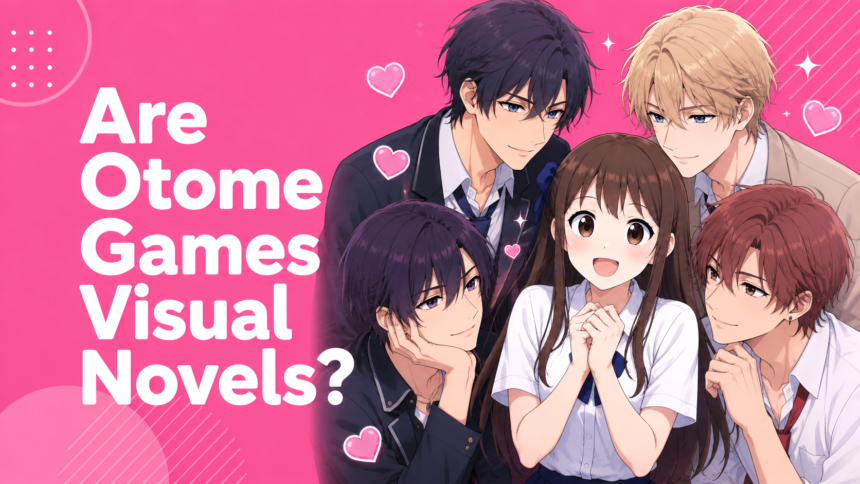
Are otome games visual novels? The short answer is yes — otome games are a subgenre of visual novels. They share the same core format: text-driven storytelling, character sprites, background art, music, and reader-controlled pacing. What makes an otome game distinct is its target audience and romantic structure, not a fundamentally different format.
Understanding the relationship between otome games and visual novels helps you navigate the broader catalogue more effectively and set the right expectations before you start reading.
What Is an Otome Game?
The word “otome” (乙女) means “maiden” or “young woman” in Japanese. An otome game is a story-driven game — almost always a visual novel — designed primarily for a female audience, in which the player character is a woman who pursues romantic relationships with one or more male characters.
The typical structure involves a female protagonist, a cast of romanceable male love interests, and multiple routes — one for each love interest — that the player can unlock through choices made throughout the story. Each route explores a different relationship in depth and usually ends with a romantic resolution.
This structure places otome games squarely within the visual novel format. They use the same engines, the same presentation style, the same choice and route mechanics, and the same blend of text, art, and music that defines what a visual novel is.
How Otome Games Differ From Other Visual Novels
While otome games are visual novels, they have some consistent characteristics that distinguish them within the broader category.
The Protagonist Is Female
Most visual novels use a male protagonist or a gender-neutral perspective. Otome games centre on a female protagonist — sometimes named and voiced, sometimes a blank-slate character the player projects themselves onto. This shift in perspective is the defining structural feature of the subgenre.
Romance Is the Central Narrative Focus
Visual novels span many genres — mystery, horror, science fiction, slice of life, literary fiction. Romance is often present but not always primary. In otome games, the romantic routes are the main content. The story is built around the relationships between the protagonist and the love interests, and the emotional payoff of each route is almost always romantic.
The Love Interests Are Typically Male
Standard otome games feature male love interests. Some titles include female love interests as well, and the broader category of games targeting women with romance mechanics has diversified, but the male love interest cast is the conventional format.
Production Values Lean Toward Character Art
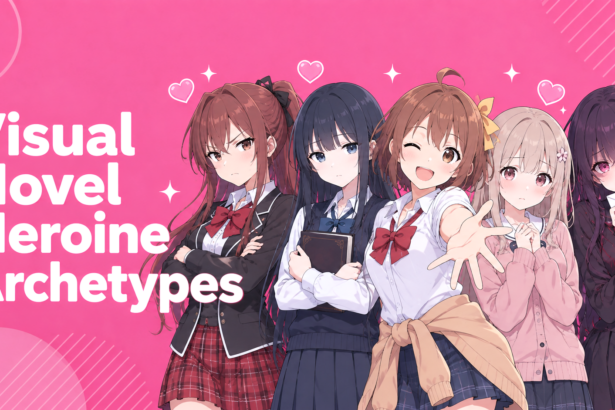
Because the love interests are the focal point, otome games typically invest heavily in detailed character art — multiple sprite variations showing different expressions and outfits, high-quality CG illustrations for key romantic moments, and in many commercial releases, full voice acting for the male cast. The CG artwork in otome games often centres on the relationship climax scenes that reward completing each route.
The Overlap Between Otome Games and Visual Novels
The question of whether otome games are visual novels sometimes generates debate because the two terms are used differently in different communities.
In Japanese usage, “otome game” and “visual novel” are treated as somewhat separate categories by the industry, even though the format is functionally identical. Japanese developers and publishers classify their products by audience and genre — otome games are marketed as otome games, not as visual novels, even when the format is the same.
In Western usage, “visual novel” tends to be used as a broader umbrella term that includes otome games, dating simulators, kinetic novels, and other text-driven interactive formats. Most Western fans would describe an otome game as a type of visual novel without hesitation.
The practical takeaway: if you enjoy visual novels, you will find otome games immediately familiar. If you enjoy otome games, you already have a good foundation for engaging with the wider visual novel catalogue. The debate over terminology matters less than understanding how the formats relate, which is also explored in the article on whether visual novels are games or books.
Popular Otome Games Worth Playing
The otome game catalogue is extensive, with strong representation on Nintendo Switch, PlayStation, and PC. These titles are among the most widely recommended across different experience levels.
Collar x Malice
A mystery otome game set in a near-future Tokyo under threat from a terrorist organisation. The protagonist is a police officer, and each route involves one of five male characters connected to the investigation. Collar x Malice is notable for integrating its mystery plot tightly with its romantic routes — completing all routes gives a fuller picture of the overarching story. Available on Switch, PS Vita, and PC.
Bustafellows
A legal thriller otome game set in a fictional American city. The protagonist is a journalist with the ability to briefly possess dying people’s bodies. Bustafellows is praised for its distinctive setting, strong writing, and cast of memorable love interests. Available on Switch and PC.
Code: Realize
A steampunk otome game featuring a cast drawn from Victorian literary characters — Arsène Lupin, Victor Frankenstein, Abraham Van Helsing, and others. Code: Realize is one of the most recommended starting points for players new to the subgenre because of its strong protagonist and accessible structure. Available on Switch, PS4, and PC.
Hakuoki: Demon of the Fleeting Blossom
One of the most internationally recognised otome franchises, set during the Shinsengumi period of Japanese history. Hakuoki combines historical drama with supernatural elements and a large cast of historical figures as love interests. It has received multiple remasters and is available on Switch, PC, and mobile.
Mystic Messenger
A free-to-play mobile otome game with a distinctive real-time mechanic — messages and calls from the love interests arrive on your actual phone in real time, timed to match the in-game clock. Mystic Messenger is unusual enough in format to be worth experiencing even for players who would not typically seek out otome games.
Olympia Soirée
A fantasy otome game with strong worldbuilding centred on a dying civilisation that segregates its population by colour. Olympia Soirée is notable for taking its premise seriously and producing routes with genuine emotional and thematic weight.
Piofiore: Fated Memories
Set in 1920s Italy among rival mafia organisations, Piofiore is a darker, more mature entry in the genre. It is frequently recommended for readers who want otome games with genuine narrative tension rather than primarily light romance.
Otome Games on Different Platforms
Otome games are available across several platforms, though availability varies by region.
Nintendo Switch
The Switch has become the primary platform for otome game releases in the West. Publishers like Aksys Games and Idea Factory International regularly localise and physically release otome titles for Switch. The portable form factor suits the format well, and the Switch’s popularity has made it the easiest platform for Western fans to access new releases.
PC (Steam and Direct)
Steam carries a growing catalogue of otome games, and several publishers sell direct downloads through their own storefronts. PC releases sometimes arrive later than console versions, but they are often the most affordable option and are accessible on both Windows and, for some titles, Mac. The guides on how to play visual novels on Windows and how to play visual novels on Mac cover the setup for either system.
Mobile
Mobile otome games represent one of the largest segments of the market globally. Platforms like Voltage, Cybird, Cheritz, and NTT Solmare have published dozens of free-to-play otome titles for iOS and Android. Mobile releases tend toward shorter episodic structures with premium unlocks, which differs from the complete route-based format of console and PC titles. The guides on how to play visual novels on iOS and how to play visual novels on Android cover mobile play in detail.
Physical Releases
Several otome games have received physical releases in the West, primarily through Aksys Games and Idea Factory International. The guide on where to buy physical visual novels covers the best places to find them, including limited editions with artbooks and extras.
How Long Are Otome Games?
Otome game length varies considerably depending on the number of routes and the depth of each one. A typical commercial otome title with five routes runs between 20 and 40 hours to complete all content. Shorter mobile-native titles can be finished in a few hours per route. Longer, more narratively ambitious titles can approach 60 hours or more for full completion.
Reading all routes is generally necessary to see the full picture of the story — many otome games withhold key plot information until late routes or a final true route that unlocks after completing the others. The breakdown of how long visual novels are gives broader context for reading time across different types of titles.
Can Anyone Play Otome Games?
Yes. While otome games are designed with a female audience in mind, there is no barrier to readers of any gender enjoying them. The subgenre has a significant following among male readers and non-binary players, particularly for titles that combine strong storytelling with their romance mechanics.
The relevant question is whether you enjoy character-focused romantic narratives. If the answer is yes, the audience the game was designed for matters less than the quality of the writing and the characters. Many readers who would not seek out romance fiction in other forms find otome games compelling because the interactivity — choosing which route to follow, making choices that shape the relationship — creates investment that passive reading does not.
Otome Games and the Broader Visual Novel Catalogue
If you enjoy otome games and want to explore further, the step into the wider visual novel catalogue is a short one. Many of the skills that make a good otome reader — patience with a slow-building story, investment in characters over plot mechanics, willingness to replay for different routes — apply directly to the broader format.
Titles that otome fans frequently enjoy outside the subgenre include Clannad (which has some structural similarities to multi-route otome games despite a male protagonist), The House in Fata Morgana (which handles romance as one thread in a larger gothic mystery), and the Ace Attorney series (which prioritises character relationship dynamics in a legal mystery format).
For a full introduction to navigating the format, the guide on how to play visual novels covers everything from reading interface basics to route management. And if you are thinking about creating your own otome game or visual novel, the overview of how to create a visual novel and the craft guide on how to write a good visual novel story are both worth reading before you start.
Are Otome Games Visual Novels? A Direct Answer
Otome games are visual novels. They use the same format, the same engines, the same structural conventions, and the same blend of text, art, and music. The distinction between the terms is one of genre and audience rather than format — otome games are romantic visual novels designed for women, in the same way that mystery visual novels or horror visual novels are defined by their genre rather than their format.
If you enjoy one, you have the foundation to enjoy the other. The visual novel glossary covers otome and other subgenre terms if you want clear definitions for the vocabulary the community uses, and the visual novel walkthroughs section has route guides for specific titles once you find something you want to read completely.