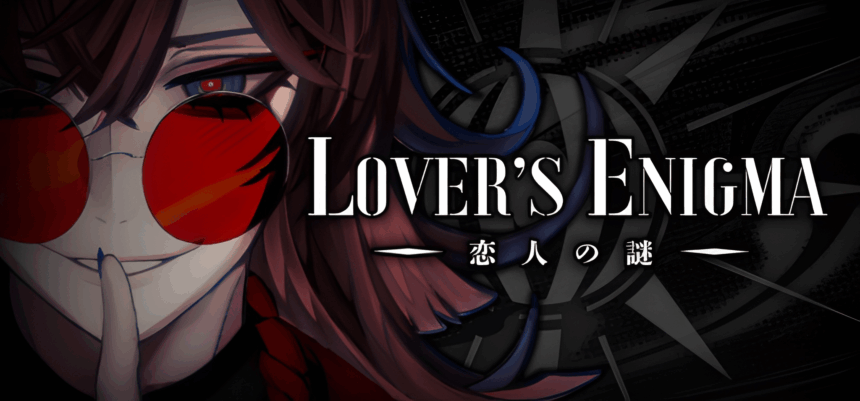
Grief makes suspicion feel reasonable. After Miyuki’s husband dies suddenly, almost anything can become evidence that she has missed something: a strange occurrence at home, an evasive answer, a familiar face behaving differently, another demand from a mother who already treated much of her life like a transaction. Lover’s Enigma understands that uncertainty is more effective than simply surrounding its heroine with obvious villains. Miyuki is trying to investigate a death while grieving it, and those two impulses rarely point in the same direction.
She is in her late twenties, newly married, and already accustomed to measuring her choices against the expectations of a conservative Asian family. Her husband’s death destroys the stability she had only just begun building. Then the haunting starts. A dangerous cult enters the picture. Four men become increasingly entangled in her search for answers, and none can be reduced immediately to protector, suspect, or romantic escape.
That uncertainty carried the story for me. Romance normally creates a safe route through an otome mystery because choosing someone gradually establishes who can be trusted. Lover’s Enigma resists giving me that comfort too quickly. Attraction can make someone’s behavior easier to excuse at exactly the point where I should probably be questioning it more closely. A reassuring man can still be withholding something. Someone who frightens Miyuki may know more about what happened than the person trying hardest to comfort her.
Her mother complicates those decisions from another direction. The pressure is not supernatural, but it can feel just as invasive. Miyuki has spent enough of her life accommodating other people’s expectations that choosing what she personally wants becomes difficult even before the mystery starts threatening her. That gives the romance more weight than deciding which man she likes most. Every relationship also asks whether she is making another choice for herself or slipping into another version of a life somebody else has arranged.
The cult plot works because it enters an already unstable situation. Miyuki does not begin the story from a position where she can cleanly separate danger from grief. Her husband’s death, the disturbing events around her home, her family, and the people now approaching her all overlap. The mystery therefore feels personal even when it moves toward more overt horror. Someone is not merely threatening her. Something has already happened to the person she loved, and she has to decide how much of what remains around her can still be trusted.
Choices matter heavily across more than 200,000 words, leading toward over ten endings that range from romance to considerably darker outcomes. The scale gives each of the four male leads enough room to develop beyond a first impression, while decisions can also push people away rather than automatically turning proximity into affection. That suits a story where suspicion is part of the relationship instead of an obstacle waiting to disappear once a route begins.
The sanity system gives that psychological pressure a mechanical form. Miyuki can use a rhythm game on her phone as a small act of self-care, with successful play helping restore her stability. I liked the idea because it makes recovery deliberately mundane. The answer to mounting horror is not always another clue or confrontation. Sometimes she needs to do something ordinary enough to regain control of herself.
It also creates a useful contrast with the investigation. One side of the game keeps encouraging me to dig deeper, ask questions, and expose whatever people are hiding. The other acknowledges that constant investigation has a cost. Miyuki cannot treat herself like an endless resource simply because the mystery is important.
Visually, Lover’s Enigma moves between pixel-art elements and more detailed character portraits, with static and animated CGs breaking up the longer stretches of dialogue. The mixture gives the game a slightly unstable visual identity that fits the story better than a perfectly uniform presentation would have. Familiar spaces can feel ordinary one moment and wrong the next, especially once the supernatural material begins intruding into Miyuki’s home life.
The animated scenes are most effective when movement is used sparingly. This is still a text-heavy visual novel, so a change in expression or a CG suddenly gaining motion attracts attention immediately. That restraint keeps the horror from depending on constant spectacle.
The darker material goes well beyond a conventional romantic mystery. Murder, psychological manipulation, depression, anxiety, PTSD, self-harm, and suicide all sit inside Miyuki’s investigation. The game treats grief as something affecting how she thinks and functions rather than a tragic event that conveniently disappears once the romance develops. That seriousness is important because the central mystery would feel exploitative if her husband’s death existed only to make four new relationships possible.
FallenCranberry Studio released Lover’s Enigma on Steam on May 20, 2026, with Okasan’s Recipe publishing it. The finished game is substantially larger than its earlier Koibito no Nazo identity suggested, but the central idea remains focused: Miyuki has to decide what kind of future she wants while surrounded by people who may know more about her past and present than they are willing to admit.
The mystery kept me reading because romance never completely neutralized that doubt. I wanted Miyuki to find somebody she could trust, but I also wanted her to become capable of choosing that person without needing them to rescue her from every other part of her life.
Verdict
Lover’s Enigma makes grief part of the mystery rather than merely its starting point, leaving Miyuki unsure whether comfort and danger are coming from different people at all. Four complicated relationships, meaningful branching, and a smart sanity mechanic give the investigation real psychological weight. Its strongest tension comes from making trust feel like another clue that can be misread.