The most important thing Analogue: A Hate Story gives me is not access to the Mugunghwa’s records. It gives me two people who disagree about what those records mean. Every log is already filtered through whoever originally wrote it, then filtered again through either *Hyun-ae or *Mute before I decide what to make of it. The mystery works because information is never neutral. The unnamed investigator never physically boards the Mugunghwa. Everything happens through a remote computer interface after the generation ship, missing for centuries, finally reappears without a living crew. That limitation could have made the investigation feel detached. Instead, the terminal becomes the whole point. I am not exploring rooms looking for clues. I am opening private records, comparing testimony, unlocking files, and gradually reconstructing a civilization from what its dead inhabitants thought was worth writing down.
*Hyun-ae is the warmer presence at first, eager to talk and much easier to read emotionally. *Mute is more rigid, confrontational, and deeply invested in the social order preserved inside the records. Showing the same material to each AI can produce completely different reactions, and neither perspective feels disposable. Their biases tell me almost as much about the Mugunghwa as the documents themselves.
That becomes especially important once the logs reveal what happened to the ship’s culture. A mission launched in the 25th century to establish humanity’s first interstellar colony somehow regressed into a society structured around intensely patriarchal traditions resembling Korea’s Joseon period. Women lose autonomy, marriage becomes a mechanism of control, and customs that would once have been unthinkable gradually become ordinary because each generation inherits them from the last.
The horror is in that gradualness. There is no single log where everyone agrees to destroy centuries of social progress. I watched restrictions become customs, customs become expectations, and expectations become truths people stopped questioning. The Mugunghwa did not need one monster to ruin it. It needed enough people willing to treat inherited cruelty as normal.
The Pale Bride gives that history a human center. Her story appears in fragments rather than as one uninterrupted account, so I had to understand her through correspondence, family records, and people talking around circumstances they considered perfectly acceptable. Knowing where her story was heading never made those documents easier to read. If anything, the fragmented format made the cruelty worse because so many people recording it did not think they were documenting anything extraordinary.
Analogue rarely tells me exactly how to feel about what I uncover. It lets *Hyun-ae and *Mute argue, react, retreat, or reveal something about themselves, then leaves me to decide whose interpretation I trust. I sometimes agreed with one AI’s reading of a log and still disliked what that agreement revealed about her. That is much more interesting than choosing between a simple correct guide and an incorrect one.
My relationship with either AI also changes what I can reach. There are five endings, and committing to *Hyun-ae or *Mute opens different material rather than merely changing who appears in the final scene. That made replaying feel appropriate for an investigation built around incomplete access. One route can leave gaps that another fills from a completely different direction.
The terminal eventually stops being just a reading device. A late sequence involving the Mugunghwa’s failing systems forces me to work through commands while time is running out. Nothing about the presentation suddenly becomes action-heavy. I am still staring at the same kind of interface, which is precisely why the sequence works. The game turns the tool I have spent hours calmly using for research into something I suddenly need to operate correctly under pressure.
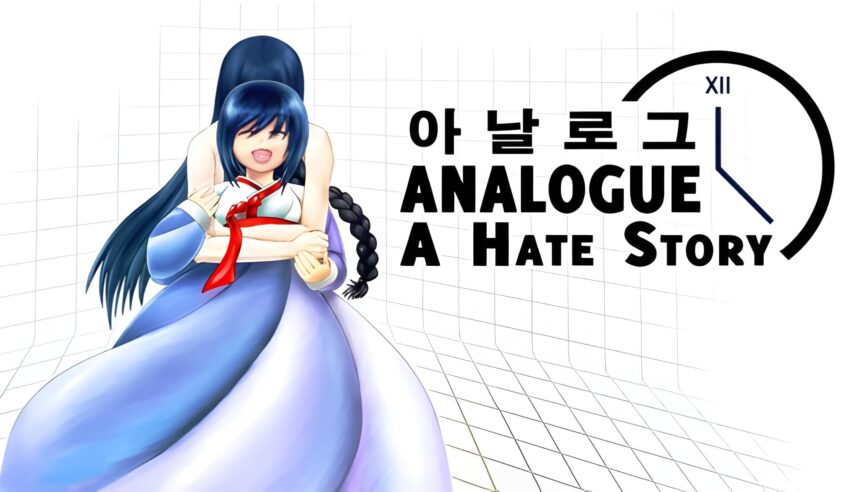
Raide’s character art provides most of the visual personality outside the terminal itself. *Hyun-ae and *Mute are expressive enough that small changes in posture and face can completely alter the temperature of a conversation. The interface around them stays deliberately functional, keeping the focus on files, access permissions, and communication rather than trying to make a dead generation ship visually spectacular. Isaac Schankler’s score has the same restraint. It gives the investigation atmosphere without trying to dictate every emotional response to the logs. That matters in a story where some of the most disturbing material arrives as plain text written by people who saw nothing remarkable about what they were describing.
Analogue originally released on February 1, 2012 for Windows, macOS, and Linux, with its Steam release following on April 27. Christine Love wrote and designed it in Ren’Py as a successor to Digital: A Love Story, but this feels less like an extension of that game’s plot than a deeper commitment to the same idea that interfaces themselves can be part of storytelling.
That is ultimately what makes the Mugunghwa convincing. I never walk its corridors, see its abandoned rooms, or inspect the physical aftermath directly. I know the ship almost entirely through what people left behind and what two surviving AIs want me to understand about it. The distance never made the tragedy feel remote. It made me responsible for piecing it together.
Verdict
Analogue: A Hate Story turns reading into investigation by making every surviving record dependent on perspective. *Hyun-ae, *Mute, and the Pale Bride give the Mugunghwa’s collapse a personal weight that the terminal interface never diminishes. Its strongest horror comes from watching an oppressive society become normal one document at a time.