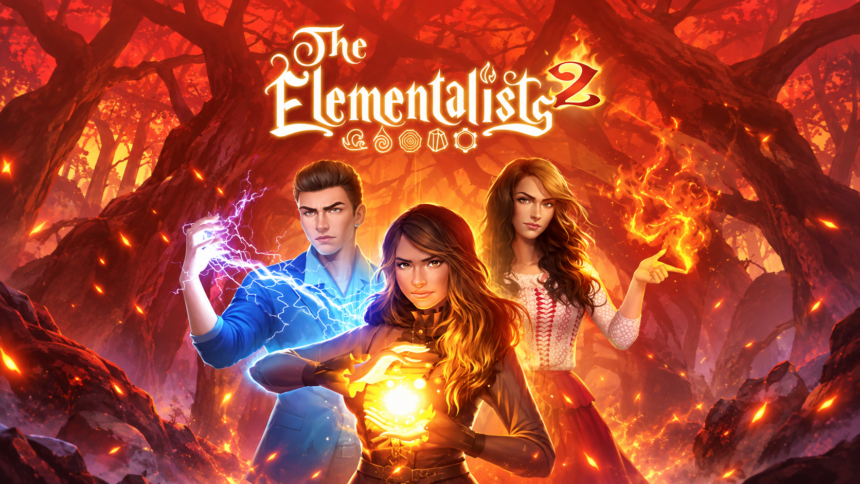
Book 2 is at its best when Eli’s magic stops feeling like a tool and starts behaving like a warning. She returns to Penderghast expecting another year of classes, friends, and controlled spellwork, only for her powers to begin misfiring in ways she cannot predict. That instability changes the whole tone of the sequel. Book 1 was about discovering what Eli was. This one is about discovering what that inheritance is capable of doing to her. The loose thread involving the woman connected to Dean Goeffe becomes important almost immediately. Gemma is not just another mystery attached to the previous book’s ending. Learning that she is the Earth Source ties her directly to the larger structure of magick, the history of the Sources, and the conflict now surrounding Eli and Atlas. That makes the sequel feel connected to what came before instead of resetting Penderghast for another unrelated villain.
Kane is the reason that continuity becomes dangerous. He is the Air Source, flamboyant enough to make nearly every appearance feel like a performance, but much harder to reduce to a simple evil counterpart to Raife. He lies, manipulates, flatters, and causes chaos, yet he also knows enough about the Sources and their history to make some of his criticisms difficult to dismiss immediately. I never trusted him, but I understood why Eli could be tempted to listen.
That distinction gives the choices around him more bite. Some decisions push Eli toward peace, restraint, or loyalty to the people already protecting her. Others let her entertain power for its own sake or question whether the existing magical order deserves automatic obedience. Book 2 tracks enough of those choices that Eli can start feeling more ideologically defined than she did in the first story.
Atlas benefits even more from the sequel format. The shock of discovering Eli has a twin is already gone, so the writing has to make the relationship interesting without relying on revelation. It does. Atlas can be defensive, competitive, funny, and painfully protective, and their sibling dynamic becomes one of the strongest parts of the book because it is allowed to be messy. They share an extraordinary magical connection without instantly becoming perfectly adjusted family.
Their Sun and Moon magick gives that relationship a mechanical identity too. The bond is not just discussed in dialogue. It becomes something the story can use in spells, combat, and larger questions about where their power actually comes from. That connection gives the back half much more emotional weight because Eli and Atlas are no longer simply reacting to the same threat. Their existence is part of the reason the threat matters.
Penderghast itself changes with them. Second-year spellwork is more demanding, and the new magic builds naturally on the Attunement system rather than replacing it. Combining elements opens more advanced possibilities, while the spellbook continues tracking what Eli has mastered across the year. The best additions make progression feel academic, like Eli is genuinely learning a more difficult level of magick instead of receiving stronger abilities because the sequel needs bigger set pieces.
The familiar system also receives more attention, giving creatures such as Tim or the Arylu additional presence instead of leaving them as decorative companions. That kind of continuation is small, but I liked it because it makes earlier choices feel remembered. Book 2 works much better when it behaves like Eli’s second year rather than another first year with higher stakes.
The returning friend group helps with that sense of continuity. Beckett is still rigid enough to make every experiment sound like an exam. Shreya has ambitions extending well beyond being the wealthy member of the group. Griffin remains the easiest source of warmth, while Aster’s connection to the natural side of magick becomes more useful as the story expands its idea of what the magical world contains. None of them need to be reintroduced from scratch, so their scenes can start from relationships that already have history behind them.
The romance structure carries those relationships forward rather than rebuilding them. Beckett, Griffin, Shreya, and Aster remain the primary options, with previous romantic choices affecting how later scenes read. I appreciated that the sequel remembers who Eli has already been close to instead of pretending sophomore year begins with everybody emotionally reset.
The middle of the book is where the pacing becomes less consistent. Kane and the Source conflict create urgency, then Penderghast life pulls the story sideways into social events, classes, relationship scenes, and smaller problems. I liked several of those chapters individually, but there were stretches where I wanted the central mystery to keep moving rather than pause just as the danger became more interesting.
At the same time, cutting all of that material would have weakened what makes The Elementalists feel like a school story. Eli still has professors to impress, spells to learn, friends to support, and a life at Penderghast that matters outside whatever crisis is currently threatening it. The sequel’s problem is not that those scenes exist. It is that the transition between them and Kane’s storyline can sometimes feel abrupt.
The visual side remains one of the stronger uses of the Choices format. New locations and spell effects give the second year enough fresh material that it never feels like Book 1 with different dialogue pasted over the same rooms. The original music continues doing more atmospheric work than I usually expect from this kind of mobile visual novel, especially when the Source storyline shifts into stranger territory.
The diamond economy is still there, and it still creates friction. Some spells, extra conversations, romantic moments, and side opportunities cost premium currency, while energy limits how quickly chapters can be read. The main conflict remains understandable without buying everything, but the book occasionally puts its most interesting optional material behind a paywall at exactly the moment I want more context.
What I liked most about Book 2 is that it treats power as something Eli has to form an opinion about, not just collect. Kane, Alma, Gemma, Atlas, and the Sources all force her to think about who gets to define responsible magick and whether strength itself is something she should pursue. That gives the sequel a different identity from Book 1. The first story made Eli belong at Penderghast. The second asks what she intends to do with that belonging.
Verdict
The Elementalists, Book 2 earns its sequel status by making Eli’s growing power more complicated rather than simply stronger. Kane brings more ambiguity than Raife, Atlas becomes a genuine emotional anchor, and the Source conflict gives the second year its own identity. The middle stretch loses momentum at times, but the larger questions about power make this a worthwhile continuation.