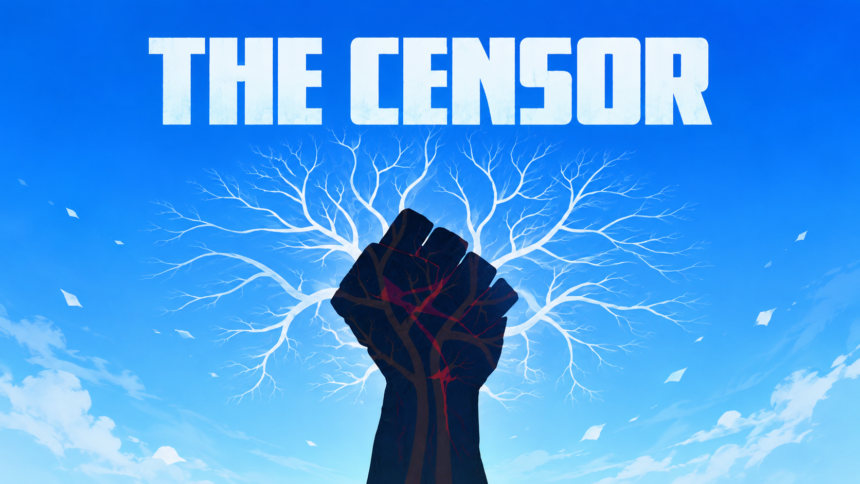
The Censor becomes disturbing the moment CJ489775 stops looking like somebody trapped inside the System and starts looking like somebody who has learned how to function comfortably within it. She is not hiding from the machinery of repression. She is part of the machinery. Her work decides what information survives, what disappears, and what people are permitted to know. That makes every later choice harder to excuse as simple self-preservation. By the time someone from CJ’s past forces her to look Outside again, she already has years of complicity to account for.
The story is only around 12,000 words, but that brevity suits a protagonist whose life has been narrowed down by obedience. CJ has made herself useful, predictable, and safe. Then the past intrudes and gives her a choice she has apparently spent years avoiding: continue serving the System or admit that the life she built inside it came at somebody else’s expense.
Sister and Mother make that internal conflict uglier because they rarely need to sound openly threatening. They speak to CJ with the confidence of people who already assume they know what is best for her. Their approval is soothing precisely because it removes the burden of deciding anything alone. I started noticing how easily CJ could mistake being patronized for being protected, especially when disobedience meant accepting responsibility for consequences the System normally chose for her.
Eff feels different because there is less institutional weight behind every interaction. Their presence gives CJ a relationship that is easier to read as personal rather than procedural. That contrast made the System feel more isolating than any speech about oppression could have. CJ has people around her, but very few relationships that exist outside the hierarchy shaping her behavior.
Rootpro is where the world opened up most effectively for me. The in-fiction social network can be explored separately from the main conversations, turning background reading into something closer to forbidden curiosity. I spent more time there than I expected because posts that initially looked incidental kept revealing what daily life Outside actually meant. The thread built around the withered tree image stayed with me in particular. It communicates loss more effectively than having another character simply tell CJ that people beyond the System have suffered.
That optionality matters. The game is about censorship, so allowing me to decide how much suppressed context I am willing to seek creates a small but fitting tension. CJ can move through the central story while knowing only what is immediately useful, or I can dig through material that makes obedience harder to rationalize. Information itself becomes morally inconvenient.
The five endings give those choices enough range that my first result did not feel like a slightly altered version of the second. I replayed the game twice in one night, partly because the runtime makes that easy and partly because I wanted to know whether changing a few decisions would actually change what CJ became. It did. The endings are brief, but they are distinct enough to make the choices preceding them feel consequential.
What I appreciated most is that rebellion is not automatically treated as moral purification. CJ cannot erase what she did by making one courageous choice near the end. Her guilt remains relevant because the damage happened while she was actively participating, not while she stood helplessly nearby. That gives the story more weight than a simpler dystopian arc where the protagonist discovers the regime is evil and immediately becomes innocent by opposing it.
The grey, washed-out visual palette fits that moral exhaustion. The world looks drained rather than violently oppressive, which feels appropriate for a society where control has become routine. Character portraits use subtle animation and fluid expression changes to keep the small cast alive, while the limited backgrounds occasionally make spaces feel more repetitive than I wanted. Given the setting, some repetition works thematically. There were still moments where I wished the environments changed as much as CJ’s understanding of them did.
Li’l Magic’s soundtrack provides more variation. Most of it sits comfortably behind the dialogue, but the fully orchestrated theme arrives with enough scale to make CJ’s private decision suddenly feel connected to something larger. Because the rest of the score avoids constantly demanding attention, that swell has actual impact.
The Censor is built in Ren’Py and keeps its source code unarchived, which suits a game preoccupied with access to information in a way I found quietly amusing. It is available free for Windows, macOS, and Linux, with both English and German text. The small file size and compact runtime make it easy to underestimate, but almost everything in the project is pointed toward the same question: how much responsibility belongs to the person enforcing a system when obedience has become ordinary enough to feel like a job?
CJ’s past gives that question its emotional weight. The more I understood why she had chosen assimilation, the less useful it became to divide her life into a clean before and after. She is not one person under the System and another once resistance becomes possible. The same woman made all of those choices. That is what lingered after I stopped playing. The System is frightening, but CJ being able to live inside it for years is worse.
Verdict
The Censor makes complicity more frightening than rebellion by focusing on a woman who has spent years turning censorship into routine. Rootpro, five sharply different endings, and a restrained visual style give its short runtime surprising weight. The repeated backgrounds are noticeable, but CJ’s guilt keeps the story focused long after the final choice.