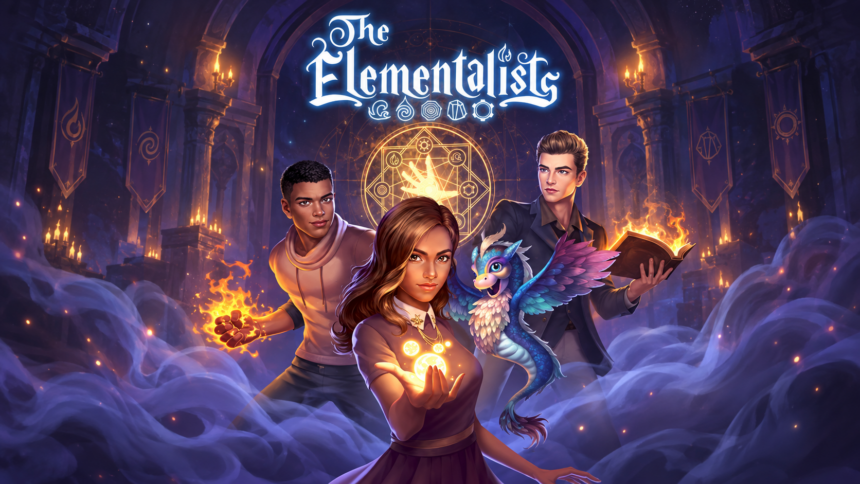
The Elementalists works because Penderghast never feels like a vague fantasy school where magic simply does whatever the plot needs. The first thing that pulled me in was the Attunement system. Students do not just “have magic.” They align with specific elements, train around those strengths, and build an identity around the way that affinity shapes what they can do. That one decision gives the setting structure before the larger mystery even starts.
Eli enters that world from the most ordinary place possible. She is a dissatisfied college student going through the motions until a bathroom mirror stops behaving like glass and becomes a doorway. On the other side is Penderghast College of Elemental Magicks, hidden from the Attuneless world and built around a kind of magic she had no reason to believe existed. The setup is familiar, but the book does not waste much time apologizing for that familiarity. It gets Eli through the threshold, gives her a place in the school, and starts building its own rules.
The nineteen chapters cover enough of an academic year that Penderghast starts feeling like somewhere people actually live rather than a backdrop for one conspiracy. Entrance exams and classes give way to dorm life, social conflicts, the magical sport Thief, a solstice party, and the kind of small college drama that matters mostly because it lets the cast exist outside the main plot. I appreciated that balance. The danger around Raife Highmore keeps growing, but the book rarely forgets that these characters are still students first.
Raife, known as The Dread, gives the mystery its long shadow. His connection to forbidden blood magick immediately makes him more than another distant villain, because an entire branch of magic has effectively been pushed outside acceptable study because of what he represents. That gives the world a believable scar. Penderghast is not simply teaching nine neat schools of magic in perfect harmony. One of them has been made taboo, and the reason for that taboo keeps pulling the story toward darker material.
The Pend Pals are what keep that material from swallowing everything else. Griffin Langley brings an easy warmth to the group and is often the person who makes Penderghast feel welcoming rather than competitive. Shreya Mistry initially looks like she might stay inside the rich-heiress archetype, but her confidence, ambition, and social ease make her much more useful than a stereotype. Beckett Harrington comes in with enough rigidity and superiority to make him difficult on purpose, and watching that edge soften without disappearing gives him one of the clearer character arcs in the book.
Aster D’Yew completes the romance roster from a very different angle. She belongs to the magical world in a way Eli does not, and her connection to nature gives the cast another perspective on what elemental magic actually means outside classroom exercises. Having four romance options who occupy noticeably different social and magical spaces helps the dating side feel tied to Penderghast rather than bolted onto it.
I also liked that the book lets me define Eli’s romantic interests instead of assuming attraction by default. I could set her preferences and leave romance alone entirely if I wanted. That sounds like a small structural decision, but it changes the tone of every friendship. Griffin, Beckett, Shreya, and Aster can matter without every private scene automatically carrying romantic pressure.
The mid-book reveal involving Eli’s past is where the story takes its biggest swing. I will not spoil the relationship it redefines, but the sun-and-moon duality attached to it gives the second half much more emotional weight than a simple “stop Raife” plot would have had on its own. The twist is melodramatic in exactly the way this kind of story can support, and what made it work for me was how many earlier details snapped into a different shape afterward. It felt like a turn the book had been preparing rather than a shock dropped in for momentum.
That reveal also changes the way Eli’s place at Penderghast reads. She begins as someone accidentally entering a hidden magical world, which is the classic outsider fantasy. By the back half, the question is no longer just whether she belongs there. It is what her existence means inside the history she has been walking through without understanding it.
The lighter chapters are what stop that material from becoming exhausting. Thief works especially well because it gives the book a way to make elemental abilities competitive instead of always dangerous. The championship arc gives the school its own culture, and the sport helps the different Attunements feel practical rather than purely academic. It is easier to believe in a magical college when students use their powers for things other than defeating villains.
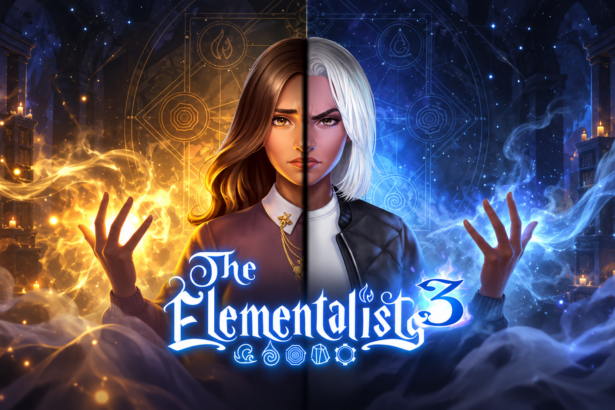
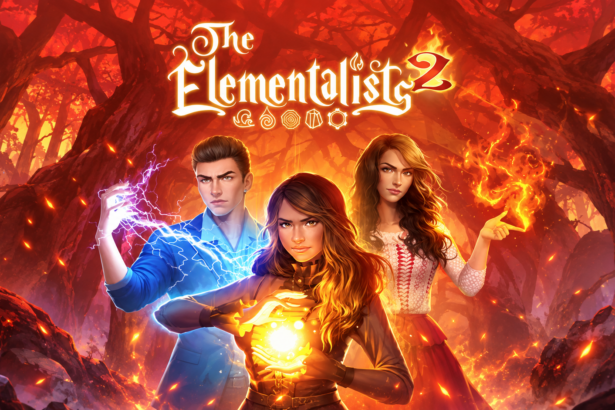
The visual presentation does a lot with the Choices format. Penderghast has enough original backgrounds and spell effects to avoid feeling like another story wearing recycled fantasy assets. The classrooms, dorm spaces, and tower give the campus its own identity, while spell animations make the Attunement system feel more physical than text alone would have managed. The static character-art format still has its limits, but the book works within them cleanly.
The soundtrack gives it another layer that most books in the app do not get. Having a full original score gives Penderghast a stronger sense of place, especially during larger magical scenes and the more emotional turns later in the book. I noticed the music doing more than filling silence, which made the bigger moments land with more confidence.
There is no voice acting, so everything depends on dialogue, music, sound cues, and the visual staging. I never felt that the book needed voices because Choices is built around reading rhythm rather than performance. The stronger conversations already move quickly enough without another layer slowing them down.
The diamond system is the one part that constantly reminds me I am still inside a freemium app. Premium currency gates outfits, some extra scenes, and flirtier moments, while energy limits how quickly chapters can be read in succession. None of the diamond choices I skipped made the main plot incomprehensible, but the nudges are persistent enough that they occasionally interrupt the flow. It is the format’s most obvious friction point.
That friction bothered me less here because the core mystery, friend group, and magic system are all strong enough without premium spending. The book does not hide its central revelations behind diamonds. What the paid scenes mostly change is how much extra time I spend with characters or how elaborate certain moments become.
By the end, what I remembered most was not the mirror portal or even the villain. It was how well the book turns Penderghast into a system rather than a mood. Attunements shape identity, blood magick has political consequences, Thief makes magic social, and Eli’s hidden past eventually ties personal stakes directly into that structure. The familiar magic-school skeleton is obvious, but The Elementalists gives it enough internal logic to stand on its own.
Verdict
The Elementalists, Book 1 succeeds by giving its magic-school premise real structure instead of relying on familiarity alone. The Attunement system, strong friend group, and carefully seeded mid-book reveal give Penderghast its own identity, while the diamond economy remains the main irritation. It is one of the stronger examples of Choices turning a familiar genre into something distinct.