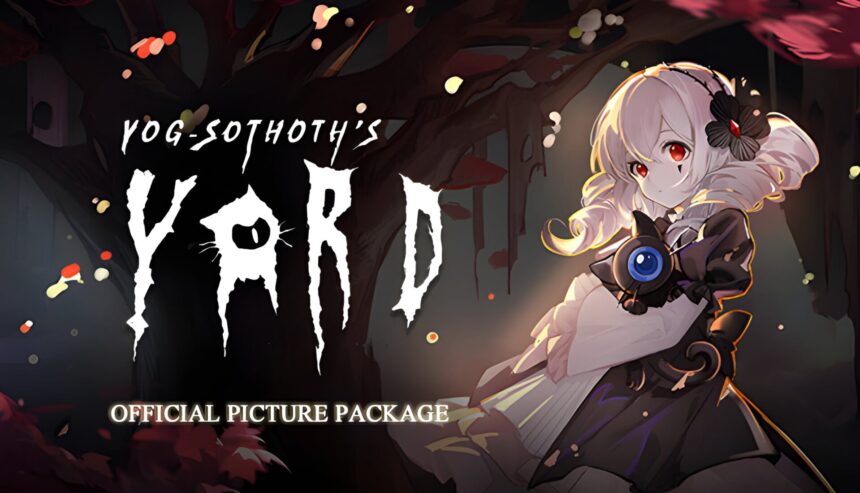
The first thing Bone Nail Studio released after Yog-Sothoth’s Yard wasn’t a sequel. It was a completely separate management game, The Piper of Dawn, set in the same universe and built around alchemy, factions, and cosmic horror rather than hotel management. That decision says a great deal about what the studio believed it had created. Yog-Sothoth’s Yard wasn’t designed as a one-off Lovecraft parody. It was intended as the foundation of a larger world where eldritch mythology, management simulation, and character-driven storytelling could comfortably coexist.
That ambition becomes obvious within the opening hours. The inherited villa at the center of the story initially feels like another “fix up the old property” premise before revealing just how much it expects the player to juggle. You’re not simply renovating a hotel. You’re managing employees, balancing finances, exploring forests, mining for resources, expanding restaurants, developing alchemy, responding to prophetic Oracles, and gradually uncovering why so many unusual people keep finding their way to your doorstep. Instead of feeling like several disconnected systems stitched together, they slowly begin feeding one another until almost every activity contributes to another somewhere else.
The setting helps sell that complexity. Plenty of games borrow names from H.P. Lovecraft’s mythology simply because they sound mysterious, but Yog-Sothoth’s Yard takes a different approach. Cosmic horror exists alongside surprisingly ordinary concerns. One moment you’re worrying about hotel revenue, the next you’re discussing alchemical formulas with a dragon or wondering whether a trainee Grim Reaper can survive another disastrous day at reception. The contrast never disappears, yet after a few in-game weeks it somehow starts feeling completely natural.
That tonal balancing act depends heavily on the staff you recruit. Tlipoca, the trainee Death, initially appears to exist purely for comic relief before gradually revealing more vulnerable motivations beneath her impossible debt. Yevna the Red Dragon becomes indispensable both mechanically and narratively because maintaining a good relationship with her steadily expands the possibilities inside the alchemy workshop. Little Leaf and Haa Lou Ling likewise avoid becoming simple management bonuses. Every employee has enough personal history that recruiting them feels less like unlocking another production building and more like inviting another complicated person into an already crowded household.
What surprised me wasn’t how much there was to manage but how often the game encouraged different solutions. Restaurant income, mining expeditions, exploration, alchemy, and resource gathering all remain viable priorities depending on how the current month unfolds. The Oracles constantly nudge planning in different directions, and monthly hotel evaluations quietly pressure you into thinking several weeks ahead rather than simply maximizing immediate profits. Even the recurring Blood Moon mechanics reinforce that feeling that the world operates according to rhythms larger than the hotel itself.
That freedom also extends to the narrative. Relationships matter because they genuinely influence the ending rather than simply unlocking extra scenes. With more than twenty possible conclusions available, conversations never felt entirely cosmetic. Some side stories ended just as I wanted to spend more time with those characters, but the larger structure succeeds in making every interaction feel capable of changing the direction of the game.
The pacing occasionally reflects the project’s ambition. As more mechanics unlock, the amount of information demanding attention grows substantially, and I occasionally found myself wishing certain supporting characters received as much narrative attention as the systems surrounding them. Yet even those moments felt less like evidence of weak design than evidence of a game attempting more ideas than many management simulations ever attempt in the first place.
Outside the game itself, Bone Nail continued treating Yog-Sothoth’s Yard as an evolving project. Anniversary updates introduced a new epilogue, additional CG artwork, summer outfits, and other content free of charge, while community crowdfunding supported extra merchandise and eventually helped the studio expand toward a Nintendo Switch release. That ongoing support explains why the game feels less like a finished product abandoned after launch and more like the centerpiece of an expanding universe the developers continue revisiting.
The Switch release finally broadened that audience even further. Alongside the console launch came Japanese language support, while players in Japan also received physical editions, including a limited version packaged with collectible bonuses. For a project that began as an indie PC release in 2023, it’s an impressive trajectory, and one that reflects the enthusiasm the game has built among its community over the past few years.
Verdict
Yog-Sothoth’s Yard succeeds because it refuses to simplify itself. It asks players to become hotel manager, explorer, alchemist, employer, and confidant all at once, trusting them to discover how those responsibilities connect instead of explaining every interaction in advance. Some character stories deserved more room to breathe, but few management hybrids combine simulation systems, relationship building, and Lovecraftian worldbuilding with this much confidence. It feels less like a game trying to fit neatly into one genre than one determined to build a world large enough for all of them.