Recognition became a liability almost immediately. Faces I already trusted were suddenly behaving like people I should avoid, while characters I had learned to treat with suspicion occupied completely different positions around them. The unsettling part was not simply seeing familiar relationships reversed. It was realizing how quickly I kept reaching for knowledge that no longer applied, then having the story punish that instinct. A worldline can change circumstances, but this one feels more disturbing because it changes what the people inside those circumstances have become.
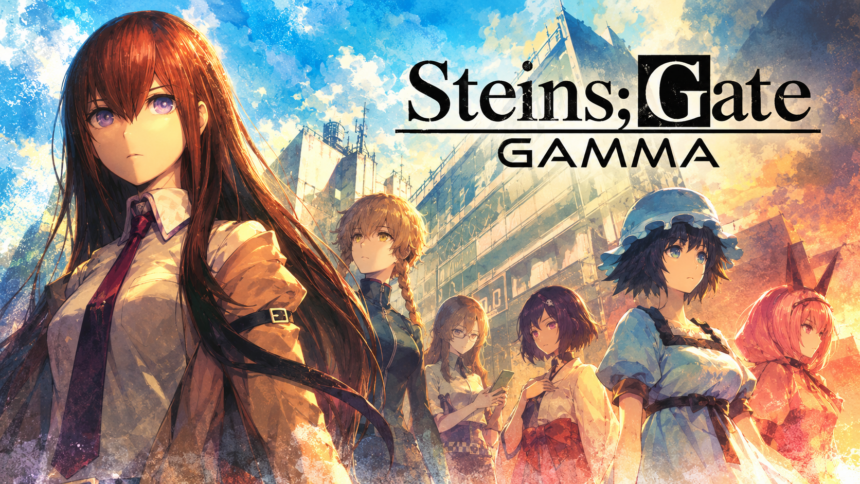
Steins;Gate Gamma gets much of its effect from that disorientation rather than from building anything visually new. Elm’s free 2019 fan project converts Steins;Gate Drama CD Gamma: Hyde of the Dark Dimension into a Unity visual novel using assets created for the original Steins;Gate. Familiar sprites, backgrounds, and music therefore arrive with years of associations already attached to them. Seeing those same images placed around relationships that no longer behave the way I remember made the reused material feel purposeful rather than cheap. No amount of narration explaining that this is a radically different worldline would have sold the change as quickly as watching a familiar ally speak to Okabe like someone they no longer trust.
The story slots between chapters eight and nine of the original visual novel, immediately after Okabe attempts to undo Luka’s D-Mail. Instead of returning to the worldline he expects, he wakes in a dark alley with blood on him and a dead man nearby. He has no memory of the life his counterpart has been living there, which put me in almost exactly the same position he occupies. Neither of us knows what happened before he regained awareness, who can safely be approached, or why people who should know him are reacting differently. Dropping him beside a corpse before explaining any of that gave the opening a sense of dread the main game usually takes much longer to build.
The central change is more disturbing than a simple swap of friends and enemies. On this Gamma worldline, Okabe is a Rounder, connected to the organization that carries such threatening associations elsewhere in Steins;Gate. Hyde of the Dark Dimension plays with that alternate identity through the Jekyll and Hyde idea attached to him, forcing the version of Okabe I know to inhabit a life created by choices he never remembers making. That is where the scenario became more interesting to me than a novelty worldline. It is one thing to discover that history changed around you. It is another to discover that history produced a version of you capable of becoming someone you would normally fear.
That idea also gives Moeka Kiryu a different weight than she carries through much of the original visual novel. The Gamma scenario comes from a drama CD released in 2010, where the altered worldline allowed familiar relationships to be rearranged without rewriting the main story itself. Elm’s adaptation keeps the focus narrow instead of expanding the material into a larger fan-written continuation. At roughly half an hour, there is little room for side material, optional routes, or prolonged explanation. I finished it in one sitting, and the short runtime never felt rushed because the scenario is not trying to establish Steins;Gate again. It assumes I already understand Okabe, the laboratory, the Rounders, D-Mails, and why seeing those pieces in the wrong configuration should bother me.
That dependence on prior knowledge is also its biggest limitation. Someone coming to Steins;Gate Gamma without the original visual novel would receive a murder mystery involving people whose emotional importance the adaptation barely has time to establish. For anyone who already knows the cast, that missing exposition becomes an advantage. A changed expression or hostile line can carry the weight of an entire earlier relationship because the game expects me to remember what that relationship normally looks like. The project is not interested in making Gamma approachable as a standalone story, and trying to do so would probably have weakened the exact effect that makes it worthwhile.
Visually, the recycled assets continually reinforce that familiarity. Huke’s character art and the original backgrounds were designed for another version of these relationships, so the lack of new artwork creates a strange continuity between worlds that otherwise feel fundamentally wrong. The same laboratory, streets, character portraits, and interface language can remain recognizable while their meaning shifts underneath them. I found that more effective than redrawing everyone to advertise that I had entered an alternate reality. Gamma looks like Steins;Gate because, from Okabe’s perspective, the frightening part is precisely that so much still looks normal.
The music works similarly. Familiar pieces from Steins;Gate return carrying emotional associations already established elsewhere, but the altered circumstances change how some of those cues land. A tense track does not need to introduce itself or teach me what sort of scene it belongs to. It already has history. Reusing the score therefore becomes part of the same recontextualization as the artwork, taking material I associate with one emotional situation and asking it to support another. For a fan project assembled around an existing audio scenario, that consistency matters more than having a new soundtrack simply for the sake of claiming original production.
There is very little traditional gameplay to distract from the scenario. Gamma functions as a short linear visual novel, so the interest comes from reading the changed worldline rather than steering Okabe through choices of my own. That suits Hyde of the Dark Dimension because Okabe’s lack of agency is part of what makes the situation frightening. He has inherited consequences without inheriting the decisions that produced them. Giving me a large branching system inside that setup would have shifted attention away from the question that kept the story moving for me: what did this version of Okabe do before the Okabe I recognize arrived in his place?
Piecing together the dead man’s place in that question worked because the opening image is not forgotten once the initial shock passes. The story gradually lets the blood, the Rounder identity, and the reversed relationships begin explaining one another without turning the corpse into a cheap shock placed there solely to demand attention. I will not say what happened to him, but following the answer alongside Okabe made the mystery feel earned rather than artificially withheld. His ignorance is real, so the story has a reason to delay information beyond simply keeping the audience guessing.
What stayed with me afterward was less the specific mechanics of this Gamma worldline than how little separates the Okabe I know from the person whose life he temporarily occupies. Steins;Gate spends so much time treating worldlines as chains of altered events that it can be easy to think of personality as something more stable, a core that survives while circumstances rearrange themselves around it. Hyde of the Dark Dimension is uncomfortable because it challenges that assumption. Change enough experiences, loyalties, and choices, and the person standing at the center can become unfamiliar too. Elm’s adaptation does not need more than half an hour to make that possibility land.
Verdict
Steins;Gate Gamma works because it uses familiarity against anyone who already knows the original story. Elm’s adaptation takes Hyde of the Dark Dimension and gives its Gamma worldline the visual language of Steins;Gate itself, allowing familiar art and music to become unsettling once allies, enemies, and Okabe’s own place among them stop matching what I remember. The opening murder immediately creates dread, while Okabe’s Rounder identity turns the scenario into something more interesting than a simple alternate-universe curiosity. There is almost nothing here for a newcomer because the project expects the original relationships to already matter, but that dependence is exactly why the reversals hit as hard as they do. I finished the half-hour detour thinking less about the worldline itself than about how easily another sequence of choices could have produced a completely different Rintaro Okabe.