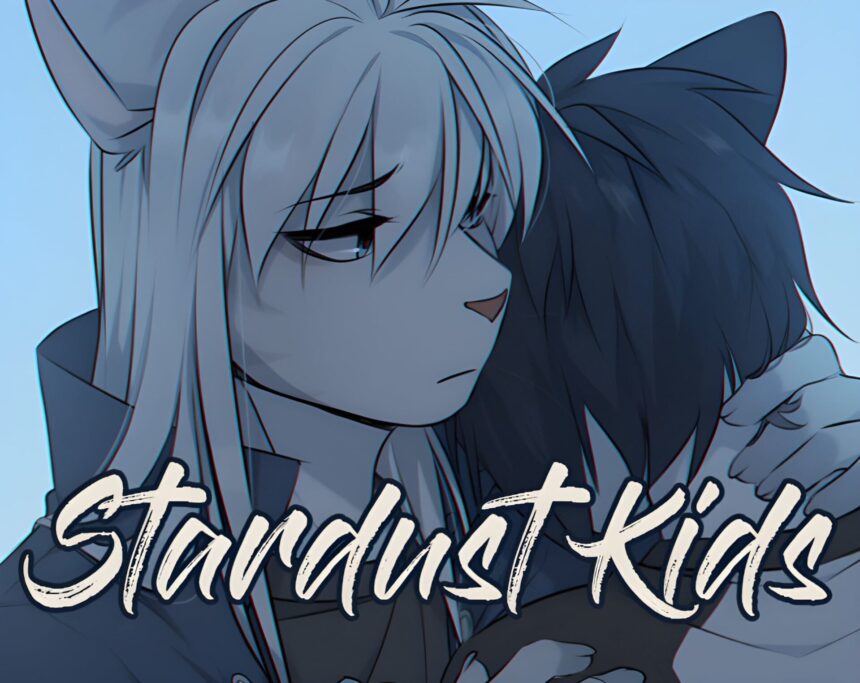
Reaching one of Stardust Kids’ several endings depends on which combination of successful and failed story branches a reader lands on along the way, rather than a single binary choice at the very end. Stardust Kids sends Kurt, deputy head of his school’s UFO study club, out with his friends Seth and Roma to track down a missing home planetarium before their long awaited summer break can properly begin. What starts as a low stakes hunt for lost property becomes the backdrop for a story about friendship among the three of them.
Fumi built the game under the Hazukashii Team banner, releasing it for free on November 11, 2017 for Windows, macOS, Linux, and Android, with both English and Russian language support.
The story unfolds in first person through a fairly standard ADV structure, Kurt’s own perspective carrying the narration throughout, and the various successful and failed branches a reader can land on determine which of the game’s several endings actually plays out by the finish.
The cast is rendered in an anthropomorphic, furry leaning art style rather than the more conventional character designs most of the genre defaults to, giving Kurt, Seth, and Roma a visual identity distinct from a typical slice of life visual novel cast.
Tags on the game’s own listing place it somewhere between drama, slice of life, and detective fiction, suggesting the search for that missing planetarium carries more of an investigative thread running through it than a simple lost and found errand would need.
A free, Russian developed visual novel built around three friends chasing down one small missing object across a school summer is a modest premise on paper, and Stardust Kids doesn’t overstate what it actually is beyond that setup.
Verdict
Kurt, Seth, and Roma’s search for one missing planetarium gives Stardust Kids a simple enough hook to build a first person, branch dependent summer around, and the multiple endings tied to which paths succeed or fail along the way give that search real structural weight. Its anthropomorphic art style sets the free, Russian developed project apart from a more conventional visual novel cast, and a listing that leans as much on drama and detective tags as slice of life suggests there’s more going on underneath that missing planetarium than the premise alone lets on.