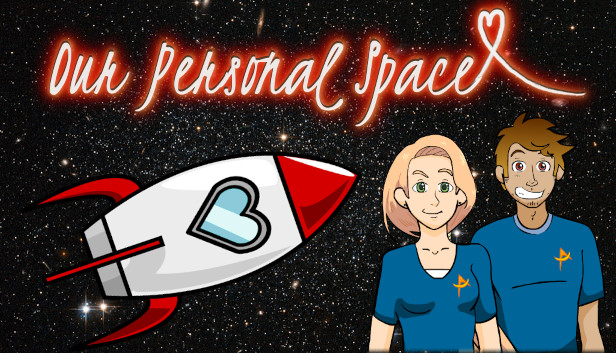
Life simulators often measure success in obvious ways. Do this by looking at money earned, skills mastered, houses upgraded, or even relationships completed. Our Personal Space asks a quieter question. How much of yourself can you invest in building a future before the future starts taking pieces of you back? That question sits beneath almost every decision Kelly makes after leaving Earth. She and her husband Jack join hundreds of settlers chosen to establish humanity’s first permanent colony on Talaam, an Earth-like world that promises opportunity while demanding sacrifice from everyone who lands there. Rather than casting the player as a heroic explorer or political leader, the game focuses on something considerably smaller: two ordinary people trying to make a marriage survive extraordinary circumstances.
Choosing Kelly’s profession during the opening immediately establishes that this isn’t a story about one predetermined protagonist. Whether she becomes a doctor, mechanic, carpenter, or teacher changes far more than occasional dialogue. It influences how she contributes to the colony, which events become available, and how her personal story develops over the years. Instead of offering different “classes,” the game asks players to imagine entirely different versions of Kelly’s working life.
That flexibility extends through the rest of the simulation. Each month presents only a handful of choices—how intensely Kelly works, which skill she studies, and how she spends her remaining free time—but those decisions quietly shape two statistics that rarely leave your mind: her health and the strength of her marriage. Neither exists simply to create failure conditions. They become competing responsibilities, forcing difficult compromises that feel surprisingly close to real adult life. Taking on extra work helps the colony but can leave Kelly exhausted. Prioritizing personal happiness might strengthen her relationship while slowing the settlement’s progress. The game rarely tells players which decision is morally correct because there usually isn’t one.
What impressed me wasn’t the complexity of those systems but their restraint. Modern management games often bury players beneath spreadsheets of interconnected mechanics. Our Personal Space achieves similar emotional tension using remarkably few variables. Every month feels meaningful because every decision pushes against another equally reasonable priority.
The colony itself reinforces those choices by refusing to become mere scenery. Talaam isn’t portrayed as an untouched paradise waiting for humanity’s arrival. Resources remain limited, infrastructure develops slowly, and every profession exists because someone genuinely needs to perform it. Jack’s farming becomes just as essential as Kelly’s own career, whatever path the player chooses, and their marriage gradually feels intertwined with the settlement’s success rather than isolated from it. Their domestic life and the colony’s survival become impossible to separate.
That wider community also keeps the narrative from collapsing into a simple romance. Other colonists build relationships, struggle with personal problems, pursue ambitions, and occasionally intersect with Kelly and Jack’s lives in meaningful ways. Because everyone is attempting to establish a permanent home rather than merely survive, Talaam develops the quiet rhythms of a real settlement instead of functioning as a backdrop for the protagonists.
Rachel Helps’ writing consistently favors understated conversations over dramatic confrontations. Conflicts emerge naturally from accumulated responsibilities rather than sudden plot twists, making smaller moments surprisingly memorable. A difficult month at work, a neglected evening together, or an unexpected opportunity often carries more emotional weight than scenes that openly announce themselves as major turning points.
The presentation follows that same philosophy. There are no voiced performances competing for attention and very little visual spectacle beyond expressive character artwork and clean interface design. Ehren Starks’ piano-led soundtrack fills the spaces between conversations without overwhelming them, allowing quieter scenes to breathe. It feels less like music written to manipulate emotion and more like accompaniment for long evenings spent reflecting on another month that didn’t quite unfold as planned.
One detail I especially appreciated was how respectfully the game handles replayability. With around 100,000 words, four professions, multiple hobbies, and three endings, there is plenty of content to revisit, but the inclusion of scene skipping for previously viewed dialogue acknowledges that players returning for another route probably want to explore new possibilities rather than repeatedly proving they’ve already read familiar conversations. It’s a small quality-of-life feature that reflects thoughtful design throughout the project.
The game’s history is almost as interesting as its premise. Developed by Metasepia Games with writing by Rachel Helps, Our Personal Space has remained free and open source under the GPLv3 license, receiving years of continued support across Windows, macOS, Linux, Android, Steam, and itch.io. Volunteer contributors have expanded accessibility through configurable controls, one-button play, subtitle support, and additional language options, including a French translation. Few visual novels continue evolving through community involvement in quite this way, and it feels fitting for a story built around collective effort.
Verdict
Our Personal Space succeeds because it understands that building a colony is ultimately less interesting than building a life within one. Its strongest ideas emerge not from science fiction spectacle but from the ordinary compromises that shape work, marriage, health, and community over time. By trusting simple systems, thoughtful writing, and meaningful player choice instead of constant drama, it creates a colony simulator where the emotional stakes remain just as important as the practical ones.