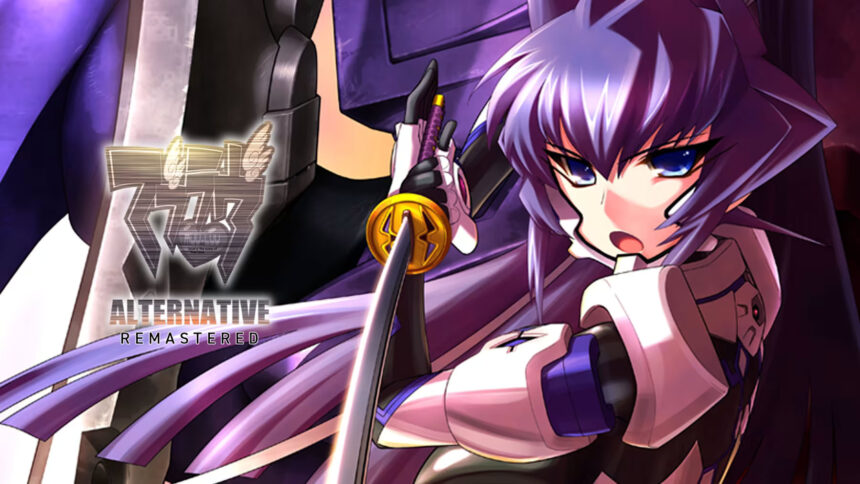
By the time I closed out Muv-Luv Alternative, I understood exactly why people talk about this trilogy the way they do, even though nothing about the first sixty hours of Extra and Unlimited prepared me for where it actually goes. A story that spends that much time setting up a school romance before revealing it was laying groundwork for one of the bleakest war narratives visual novels have ever produced isn’t a pitch that sounds like it should work. However, It works anyway.
Getting to Alternative means putting in real time first. This entry picks up after Unlimited’s ending, sending Takeru Shirogane back in time to relive the opening months of the war against the BETA with the knowledge of everything that’s coming, a world he’s already spent one full game’s worth of story fighting to survive. Skipping straight here without playing through Extra and Unlimited means missing roughly sixty hours of character and world building that this entry leans on constantly, and while jumping in cold is technically possible, doing so costs you most of what makes the eventual gut-punches land as hard as they do.
The scope explodes almost immediately. What started as a single military base under siege grows into a nationwide fight for survival, pulling in new factions, political maneuvering, and a cast far larger than either earlier game attempted. I found the middle stretch committing to hard science fiction with a level of detail that rewarded my close attention, tracing the geopolitics of a world losing a war against an incomprehensible enemy with real rigor instead of hand-waving the stakes away.
I’ll be honest that the opening hours tested my patience more than they probably needed to. This section retreads ground already covered in Unlimited with just enough variation to avoid being a pure repeat, but not quite enough to shake the feeling of redundancy. Once the story broke past that recap stretch and started introducing genuinely new material, though, the pacing tightened considerably, and the back half moved with a relentlessness that mirrored the desperation of the war it’s depicting. This isn’t a comfortable story, and it has zero interest in being one. Some of the most infamous sequences in the entire visual novel medium live here, and I found them staged with enough care that their brutality never felt gratuitous, even in stretches that were genuinely difficult to sit through.
Takeru anchors all of it, and his arc is where my own reactions split the most. Watching a character who spent two prior games as a fairly standard protagonist get systematically broken down by the horrors of this world produced some of the most effective psychological writing I encountered across the whole trilogy, and the trauma he carries by the story’s midpoint read as earned rather than manufactured for shock value. The flip side is a stretch of near-constant internal monologue that circles the same anguish and the same conclusions more than the story strictly needed to make its point, and during the roughest patches I found his handwringing grating rather than moving.
The cast around him fared better across the board. Familiar faces from Extra and Unlimited return in altered forms shaped by a much crueler world, and watching their core personalities persist despite drastically different circumstances gave me a real sense of continuity even as everything around these characters kept changing. New additions introduced once the scope widens carried their own weight well, and by the end, the ensemble as a whole earned the kind of investment that made the story’s darkest moments hit exactly as hard as they were clearly designed to.
Technically, the military and political worldbuilding stood out as some of the most detailed, internally consistent writing I’ve seen in the trilogy. Explanations of the BETA threat, the TSF units built to fight them, and the shifting alliances between nations trying to survive got handled with a specificity that rewarded my patience without ever tipping into a lecture. The prose commits fully to grim, unflinching territory once the true stakes arrive, and it never softened the material to make it more comfortable for me, for better or worse depending on your tolerance for genuinely disturbing content.
A few of the comedic and social attitudes carried over from the earlier games sat uneasily against how I’d expect a story to handle those beats today, and anyone going in should know this is very much a product of its era in that respect. The internal monologue issue I mentioned earlier is a writing-level problem more than just a characterization one too, with certain stretches circling the same emotional beat well past the point where the scene had already made it.
Presentation-wise, much of the game continues the static sprite-and-background approach from the earlier two entries, functional rather than visually ambitious for long conversation-heavy stretches. Once the story shifts into full wartime mode, though, CG frequency and quality jumped substantially, and several of the signature horror sequences landed with genuine visual impact even through the format’s inherent limitations. The soundtrack did a lot of quiet work throughout, shifting between somber, militaristic, and outright dreadful depending on exactly what the scene needed from it.
This is where Alternative separates itself from almost everything else I’ve read in this medium. Few stories simulate genuine psychological horror as effectively as this game’s back half does, and the specific, infamous sequences that built its reputation earned their notoriety honestly rather than through cheap shock tactics. The emotional toll compounded gradually rather than arriving all at once, built on sixty-plus hours of investment in characters who then get put through experiences that were legitimately hard for me to read. The glimmer of hope the story eventually offers felt hard-won rather than tacked on, and that’s exactly what made the whole trilogy’s ending resonate as strongly as it did for me.
Verdict
Muv-Luv Alternative is a demanding, occasionally brutal conclusion to a trilogy that spends its first two entries lulling readers into a false sense of comfort before pulling the floor out entirely. The worldbuilding is meticulous, the emotional stakes are enormous, and several of its most infamous sequences genuinely earn the reputation that precedes them. A repetitive early stretch and a protagonist whose internal monologue occasionally overstays its welcome kept it from being flawless for me, and its dated social attitudes are a real sticking point worth knowing about going in. None of that changes the fact that this stands as one of the most unforgettable experiences I’ve had in the visual novel medium, provided you’re willing to put in the sixty hours of setup that make it hit this hard.