Fried chicken, an ad campaign for a club he doesn’t even belong to, one more year of classes to get through before graduation, that’s the entire scope of what one restless teenager wants out of his final stretch of high school. Nothing about that routine prepares you for how far this same story is willing to go.
A chance encounter with an eccentric stranger claiming to be a detective is what actually breaks that routine in Lucid9: Inciting Incident, the first chapter of developer Fallen Snow Studios’ planned three part mystery. Yama Ishimoto, a third year at the prestigious, security obsessed Isamu Imperial Boarding Academy, gets pulled into her orbit right as a string of disappearances at his own school starts echoing an unsolved string of killings from years earlier, one the city never fully recovered from.
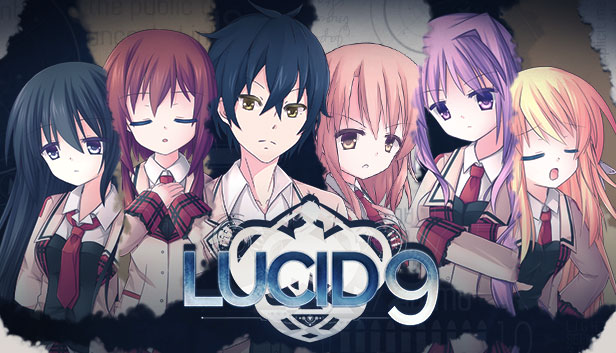
What kept me reading past the opening stretch was how much of an actual personality the supporting cast gets for a project built without a commercial budget behind it. Shigure, the detective who drags Yama into all of this, tests him with riddles and treasure hunts rather than straightforward exposition, and childhood friends Rui Hayata and Misaki Kazehaya feel like people Yama has an actual history with rather than convenient plot devices. A couple of the wider cast, Akira in particular, read thinner than the rest, mostly defined by a single relationship rather than much beyond it, but that’s the exception rather than the rule.
This first chapter covers the entirety of what the story calls its common route, one linear narrative rather than separate heroine paths, though the choices along the way still shape how specific scenes and relationships play out. A second chapter, set three years after this one and structured around branching routes for each heroine, has been in development for years, with a third chapter built around a true route planned to follow it, so what’s here functions as a complete opening movement in a much longer story rather than a fully closed book.
The prose doesn’t flinch from what it puts Yama and his friends through, describing violence and grief in specific, uncomfortable detail rather than cutting away from it, and that refusal to soften things is exactly what made the mystery underneath it land as hard as it did for me. It’s a bold choice for a free release built by an international volunteer team with no budget behind it, and one that earns the story’s reputation as more than just a solid free curiosity.
Presentation carries real ambition for a project this size. A washed-out color palette gives most scenes a specific, lived-in mood, and a broad range of cinematic cuts and transitions shows real thought behind how each scene is framed, closer to what I’d expect from a team with proper production support. Character sprites are the clear weak link by comparison, distinguishable by body type and style but forgettable next to how much care went into the backgrounds and camera work around them, and I found myself paying far more attention to where the camera was pointing than to who was actually standing in frame. The game itself is built around more than a hundred fifty of those sprites, ten CG scenes, and thirty original music tracks across its roughly ten hour runtime.
Despite an early trailer that showed off a recorded voice cast, the actual release plays entirely without voice acting, text and the soundtrack carrying every scene on their own. That soundtrack does real work picking up the slack, shifting comfortably between the story’s lighter classroom stretches and its considerably heavier investigative ones.
Fallen Snow Studios built the game in Ren’Py as an international, noncommercial team formed in 2014, with Sekai Project helping get it in front of a wider audience on release in April 2016. The current build carries a notice that it isn’t compatible with macOS 10.15 Catalina or later, worth knowing before booting it up on anything but an older Mac or a PC. The opening hours read rougher than the back half too, both in how the prose handles its slower, slice-of-life stretches and in a handful of earlier scenes where the visual polish hasn’t caught up to what the later chapters manage, evidence of a small team’s skills improving in real time over the course of development without a later pass smoothing out where it started.
Verdict
Lucid9: Inciting Incident earns its reputation as one of the stronger free original English-language visual novels through sheer commitment, refusing to soften its central mystery’s trauma for the sake of comfort while still closing its first chapter as a complete opening movement rather than an unfinished tease. Its supporting cast carries real depth for a volunteer-made release, and a distinctive color palette and confident scene direction do more for the presentation than the character sprites manage on their own. Rougher early pacing and a thinner side character or two are real, worth knowing about going in, but for a mystery this committed to its own presentation than the character sprites manage on their own.