


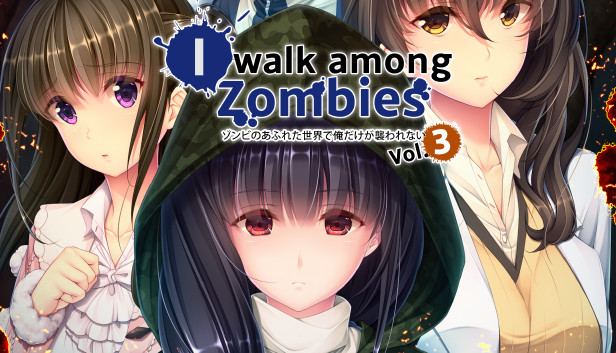
I Walk Among Zombies Vol. 3 closes out the trilogy that’s followed Yuusuke since the outbreak first hit, a man the infected simply don’t register as prey. The original Japanese title translates roughly to I Am the Only One Who Is Not Attacked in the World Filled with Zombies, and that premise carries the entire series right through to this closing volume. Yuusuke started out in the first entry as an office worker with a dislike for people, someone who lost his job when the company he worked for went bankrupt and turned into a complete shut-in not long after, and this closing chapter still carries the shape of that isolation even after everything he’s survived since.
This entry opens with Yuusuke hauling supplies alongside his group toward a mountain lodging they’ve used before, one of the few places that still feels like safety. Reuniting with Mitsuki there comes loaded with history the earlier volumes built up, the kind of tension that made me wish I’d replayed Vol. 2 the week before instead of jumping straight in.
A rival faction pushes into the town hall not long after, aiming to take it by force, and the story stops being shy about who’s expendable. Point of view rotates between Yuusuke, Makiura, and Mitsuki as the siege unfolds, a structure the series had already leaned on once in Vol. 2 but pushes further here now that all three of them have real stakes riding on the outcome. That structural choice let me watch the same crisis land differently on three people, each with their own reasons to be scared. Vol. 3 also keeps the same limited-choice approach Vol. 2 used, one meaningful decision standing in for the branching structure a lot of visual novels rely on more heavily, which put real weight behind the single choice I actually got to make. I won’t say who makes it through, but I will say the game stopped feeling safe for anyone about halfway in, which is more than I expected walking in.
Sayaka Makiura carried real weight in the previous volume, and Vol. 3 pulls back on her presence noticeably, letting Mitsuki take more of the emotional load instead. Mitsuki’s own arc leans into unresolved feelings the game keeps circling without rushing to resolve, giving her scenes a nervous, unfinished conversation energy that Makiura’s more settled presence doesn’t share.
A companion release called Vol. 0 exists alongside the numbered trilogy, built from nine short scenarios that give Mitsuki, Tokiko, and Sayaka standalone time the main story doesn’t always have room for. Individual scenarios carry titles like Mitsuki’s Notebook, Rooftop Camping, and Makiura’s Misunderstanding, small slice of life detours that fill in exactly the kind of quiet character beats a siege focused finale has no room to slow down for. It tells me the writers knew exactly which characters needed more space than the plot could spare.
Saburo’s art carries the whole production, mixing new backgrounds with a few returning ones from earlier volumes. The character CGs range wider than I expected too, covering everything from quiet character moments to the game’s tenser action beats. That range surprised me, since series entries this far into a run can start recycling poses out of habit, and this one mostly didn’t. Saburo also illustrated the original web novel this trilogy adapts, written by Rokuro Uraji and first posted to the adult fiction site Nocturne Novels back in January 2013. Frontier Works picked it up for print under its Nox Novels imprint starting in 2016. That same source material later grew into a manga adaptation from Chihiro Masuda and an anime series scheduled for a 2027 premiere, so the character designs on screen trace all the way back to where the story actually started.
Every major heroine gets a Japanese voice actress, Yuusuke stays silent the way these protagonists usually do, and that’s where the polish starts to wear thin. A good chunk of the supporting cast goes unvoiced, which meant sitting through stretches of dialogue with nothing but text on screen right when a scene needed some urgency behind it. The score doesn’t help much either. A lot of what plays under these scenes gets pulled straight from the earlier two volumes instead of written fresh for the conclusion. I noticed the repeats often enough that a couple of tense moments landed softer than they should have.
None of that undercuts how well the actual writing controls pace, though, slowing down for a quiet supply run and then snapping tight the moment gunfire breaks out at the town hall. Two different endings wait at the finish, and reaching the one I got left me sitting with the screen for a minute before closing it, which isn’t something every visual novel earns from me by its final scene. Finishing the story once unlocks an additional scenes tab back on the title screen too, a chapter called Mitsuki’s Shopping Trip tucked in among the rewards for anyone who sees the whole thing through.
The trilogy spends three volumes building toward that stretch of chaos, and by the time the town hall scenes hit, side characters I’d only half paid attention to in earlier chapters started mattering enough that losing any of them actually hurt. Seacoxx built this as the last entry in the trilogy, and Sekai Project brought it west. Steam’s own listing flags graphic depictions of gore and violence involving both humans and zombies, plus mature content and situations not suitable for every audience, a warning that tracks with how bluntly the town hall siege treats its own body count. An uncensored edition is available separately through Denpasoft, or through Kagura Games as a DRM-free download, for anyone who wants the mature content Steam trims out by default. The source material itself comes from Nocturne Novels, the adult-fiction division of the same Shousetsuka ni Narou platform that’s produced plenty of other translated light novels, which explains why an uncensored option exists at all for a story that started out that explicit. Playing Vol. 1 and Vol. 2 first isn’t optional advice so much as a requirement, since Vol. 3 leans hard on relationships and stakes those earlier chapters spent hours setting up. Coming in cold would strip most of the ending’s weight before it gets a chance to land.
Verdict
Three volumes of buildup pay off hard once the siege actually reaches I Walk Among Zombies Vol. 3’s town hall, Mitsuki’s unresolved feelings finally getting room to breathe while nobody in the cast gets to feel safe anymore. Reused music and a supporting cast that goes unvoiced too often keep the presentation from fully matching the writing’s control of pace, but the ending justifies sticking with Yuusuke through all three volumes and the prequel scenarios in Vol. 0 to get there.



