Morino becomes interesting before it becomes dangerous. The demilitarized district sits between two versions of Japan that have spent decades learning how not to restart a war, and the protagonist enters it under a name that does not belong to him. “Kaito Toubu” is an identity assigned for an infiltration mission at Tenshudo Academy, complete with a school life he is expected to perform convincingly enough that nobody notices the soldier underneath it. What stayed with me was how quickly that false identity stopped feeling like a simple spy-story device. The longer he answers to Kaito, the more the game starts asking what remains of a person once everyone around him knows only the version he was ordered to become.
The mission initially sounds straightforward enough. Kaito infiltrates Morino from the United Provinces of Japan, enrolls as a transfer student, and begins learning the routines of a territory held together by the Morino Ceasefire Treaty. Then he meets May Yukishiro tending lilies and makes one of the worst mistakes an undercover operative can make by letting information about his real identity slip out. The scene has enough comedy around it that the mistake almost feels harmless, but it immediately establishes how fragile his cover actually is. Hello, Good-bye spends much of its common material balancing that tension against ordinary school life, letting espionage, romance, and comedy share the same scenes instead of dividing them into separate genres.
The opening stretch runs for a while before the route structure becomes obvious, which worked for me because Morino needs time to stop feeling like a map of factions and start feeling like somewhere Kaito could plausibly live. The story introduces the school, the ceasefire district, his classmates, and the political division surrounding them before asking the player to choose a heroine. Once branching begins, May, Suguri Saotome, and Natsume Rindou become the first three full paths, while Koharu Hiiragi remains locked until those routes are finished. That order matters. Koharu’s route is not simply a fourth romance placed at the end of a checklist. It uses details from earlier routes in ways that made several scenes I had previously dismissed as jokes or filler suddenly feel much more deliberate.
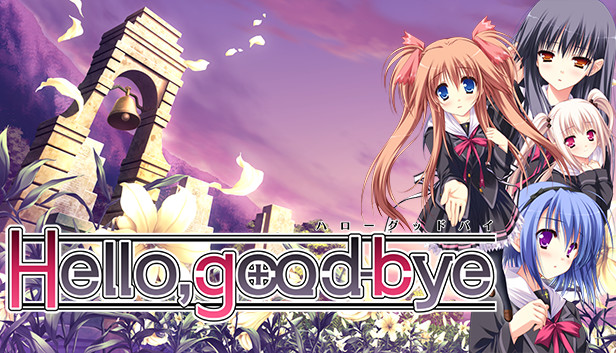
May is the gentlest entry point into the cast. She is warm, helpful, and heavily involved with people around Morino, but her kindness can slide into a kind of trusting obliviousness that makes her easy to underestimate. Her connection with Kaito works because his entire life in Morino is based on concealment while she approaches people with almost no instinct to protect herself through suspicion. The contrast creates a route where lying becomes emotionally harder the more naturally she accepts him. I liked that her softness never made her irrelevant to the spy plot. If anything, it makes Kaito’s false identity feel uglier because she gives him fewer excuses to keep hiding behind it.
Suguri operates at a much louder frequency. She mistakes Kaito for someone from her childhood almost immediately and follows the misunderstanding with a punch before the situation has properly settled. The tsundere surface is obvious, but her route works better once the competitive energy stops being treated as her entire personality. She is direct in a story built around concealment, which makes her a useful counterweight to Kaito even when the romantic pacing moves faster than I would have preferred. Their chemistry comes from friction rather than mystery, and that gives her path a very different rhythm from May’s.
Natsume is stranger because she initially looks like the person Kaito should understand most easily. She transfers into the academy soon after he does and is herself an intelligence operative tied to the other side of the ceasefire line. In theory, that should make her the obvious threat. In practice, her earnestness and lack of menace make the espionage angle almost funny at first. She is serious about her duties but surprisingly innocent in ordinary life, especially around romance, which lets the route play with the difference between professional competence and social awkwardness. Having two spies circle each other while both are trying to pass as normal students could have become mechanical, but the game gets more mileage from how badly their everyday selves fit the roles assigned to them.
Koharu sits outside that triangle from the beginning. She simply decides Kaito is her older brother despite having no blood relationship to justify it, then behaves with enough confidence that the joke almost becomes easier to accept than challenge. Her teasing can look like pure comic relief the first time through, especially beside the more overt political material elsewhere. That made her locked route much more effective for me. Once it becomes available, seemingly minor exchanges from earlier playthroughs start carrying different weight, and the game finally cashes in on details it had been leaving in plain sight.
That delayed payoff is one of Hello, Good-bye’s strongest writing habits. The scenario does not constantly announce which conversations matter. A joke can remain a joke for several routes before another piece of context turns it into setup. That structure rewards completing the first three heroines before Koharu because the later route is built around recognition as much as revelation. I felt that shift several times, the specific satisfaction of realizing that I had already been shown something important and simply lacked the perspective to understand it.
Morino itself benefits from the same slow accumulation. The ceasefire line, competing national identities, and political tension appear through school life and background conversation rather than arriving in one giant history lecture. Tenshudo Academy becomes part of that world instead of simply functioning as the standard visual-novel school dropped into an alternate-history setting. Sister Therese teaching history helps make the political division feel like something these students have actually grown up with rather than lore written for the player’s benefit. The setting occasionally feels underused compared with how much potential it contains, but the pieces that do reach the routes give the romances more weight than they would have had in an ordinary contemporary school story.
Munenori Iwashimizu is much less interested in geopolitical stability. He spends most of his time acting as Kaito’s comic pressure valve, breaking up scenes whenever the espionage or romance threatens to become too self-serious. I usually dread characters built almost entirely around this function because their jokes can become exhausting, but Munenori worked more often than he irritated me. His presence gives Kaito someone to interact with outside the heroine structure, which makes the school feel less like a building populated exclusively by romance options.
Fumitake Moekibara’s character designs give the cast the polished look associated with Lump of Sugar’s work from this period. The sprites are expressive enough to support both the broad comedy and the more serious route material, while the CGs carry the larger romantic and dramatic beats without feeling visually disconnected from ordinary scenes. I found myself stopping on several backgrounds as well, particularly when Morino’s architecture or open spaces were allowed to fill the screen without characters covering them. The presentation is still fundamentally static visual-novel staging, but it is unusually polished static staging.
RMG’s video work and Silver Link’s animation provide bursts of motion at moments where the game benefits from breaking away from sprites and backgrounds. They are used sparingly enough that they still feel like events when they appear. That restraint suits a story where most of the tension comes from conversation and withheld information rather than action spectacle.
The score from Shigenobu Okawa and Yuta Yamaguchi works in much the same way. Around thirty background tracks carry school life, romantic scenes, political tension, and the more serious route material without constantly trying to announce themselves. I could not have reproduced most of the melodies after finishing, but I mean that positively. The music knew when to support a scene instead of competing with it. “Goodbye Crisis,” performed by Masami Okui, gives the opening much more dramatic energy, while Haruka Shimotsuki’s “Unnamed Place” closes the story from a softer direction. Insert songs appear at larger emotional moments and work because the game does not overuse them.
The Japanese voice cast gives the heroines equally distinct identities. Ryoka Yuzuki’s May stays warm without turning her innocence into empty sweetness, Yuko Goto gives Suguri enough force to sell her confrontational first impression, and Akiko Yajima lets Natsume’s seriousness sit beside an unexpectedly awkward romantic side. Mai Kadowaki has perhaps the trickiest job with Koharu because the constant “older brother” teasing could become grating very quickly, yet the performance keeps enough affection underneath it that the behavior reads as intentional intimacy rather than noise. The protagonist remains unvoiced, keeping Kaito’s false identity and internal thoughts separated from the fully performed cast around him.
The romance is where the game feels most conventional. Some relationships accelerate faster than the political and personal setup seems to justify, especially after the common route has spent so much time carefully establishing how guarded Kaito needs to be. I wanted a little more space between suspicion and intimacy in places. That problem does not affect every route equally, and Koharu benefits from the accumulated history of the entire game, but it keeps some of the earlier romances from feeling as gradual as the broader story surrounding them.
The English release arrived on Steam in April 2019 through NekoNyan, years after Lump of Sugar’s original Japanese release in December 2010. The Steam edition presents the all-ages version of the story, with the explicit material separated from the standard storefront release. That distinction barely matters to how I read the game because the espionage, alternate history, character relationships, and route progression are doing the meaningful work. The story does not need explicit scenes to explain why these characters matter to Kaito.
The original release found a substantial audience in Japan, ranking sixth among Getchu’s visual-novel sales for 2010 and first for December of that year. Its movie production also received Getchu’s top 2010 recognition, while “Goodbye Crisis” later earned silver in the song category at the Moe Game Awards. A drama CD, fan book, and other merchandise followed. By the time I had finished Koharu’s route, that response made sense. Hello, Good-bye has the polish of a game designed to make its heroines immediately marketable, but there is enough structural planning underneath that polish to keep the finished story from feeling like four disconnected character showcases.
What stayed with me most was how often identity becomes something other people decide for Kaito before he gets to decide it himself. His mission gives him a fake name. Morino gives that name relationships and memories it was never supposed to have. Koharu assigns him a family role without permission. May, Suguri, and Natsume each build a different understanding of the person behind the cover. By the final route, the spy premise matters less to me as a question of whether Kaito will be exposed than as a question of whether the identity he was ordered to perform has become something real enough that losing it would hurt.
Verdict
Hello, Good-bye gets more mileage from Kaito’s borrowed identity than from espionage alone, using four distinct heroine routes to keep redefining who he becomes in Morino. Some romances move too quickly and the alternate-history setting could do more, but the polished art, strong voice cast, and Koharu’s payoff make completing every route worthwhile.