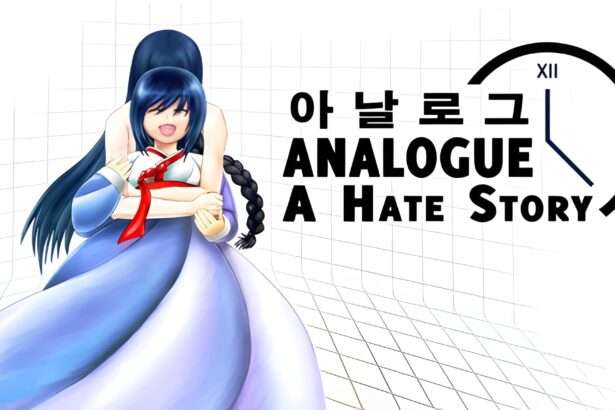
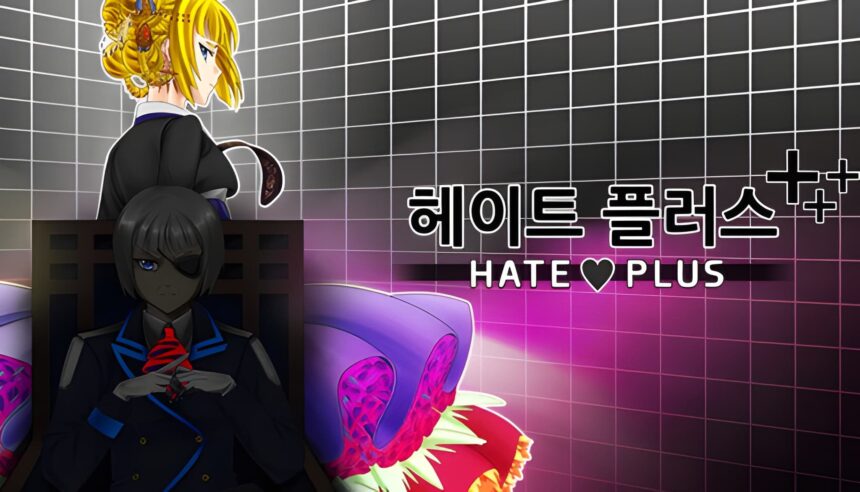
There is something unsettling about watching a disaster become understandable. The closer I got to seeing how each decision connected to the next, the less comforting the explanation became, because none of it required a single impossible mistake. It only required enough people to accept one compromise after another. Hate Plus returns to the derelict generation ship Mugunghwa immediately after Analogue: A Hate Story, but its mystery points backward rather than forward. The recovered logs deal with the period leading up to Year 0, when the ship’s society changed into the rigid patriarchal culture uncovered in the first game. Christine Love originally conceived the project as downloadable content before its scope expanded into a full sequel, released on August 19, 2013. That history makes sense once the investigation begins. This is not an appendix to Analogue. It is an attempt to explain the machinery behind its most disturbing discovery.
The biggest change for me was the kind of question I was asking. Analogue encouraged me to reconstruct what had happened to particular people. Hate Plus made me watch institutions change while people inside them kept finding reasons not to resist. Reading document after document turned into a study of accumulation. A rule changes. Someone justifies it. Another concession follows. By the time the consequences become impossible to ignore, the earlier decisions no longer look isolated. That gradual movement gave the game a kind of dread I rarely get from a visual novel because I was not waiting for a twist. I was watching a pattern become harder to stop.
*Hyun-ae and *Mute return as the AI companions at the center of the investigation, and continuing from an Analogue save lets the sequel preserve choices from the previous game. I appreciated that continuity more than I expected. Hate Plus could have treated the first game as solved history and simply handed me a new archive, but bringing an existing relationship forward makes the old records feel less detached. I was not only deciding what I thought about the past. I was also seeing how the AI beside me reacted to learning more about it.
That matters most with *Mute. Christine Love described Analogue as *Hyun-ae’s backstory and Hate Plus as *Mute’s, and the sequel earns that distinction by forcing the investigation much deeper into the foundations of the society she was built to serve. I liked the discomfort this creates. The archive is not neutral information to her, and watching established assumptions collide with documentary evidence gave the reading process a personal tension that straightforward exposition would not have had.
*Hyun-ae changes the mood in a different way. Her presence keeps the connection to Analogue immediate, but she also prevents the historical material from becoming an abstract political timeline. The game repeatedly pulls the investigation back toward personalities, reactions, and relationships. I needed that human scale because the archive can become dense. Hate Plus asks for patience, and there were stretches where opening another record felt more like research than discovery. When the documents connected cleanly to the AI conversations around them, though, that density became one of the game’s strengths.
The interface helps sell the idea that I am conducting an investigation instead of passively advancing through a conventional story. Rather than receiving one uninterrupted narrative, I move through records and build context from fragments. It is a simple distinction mechanically, but it changes the rhythm. I had to remember names, relationships, and earlier decisions long enough to understand why a later document mattered. That occasionally slowed me down, yet it also made the strongest connections feel earned rather than delivered.
Hate Plus takes another unusual step by dividing its story across three real-time days. I expected the restriction to feel like a gimmick, but it gave each session a natural stopping point and made the act of returning to the archive part of the experience. The waiting period also suited a story built around absorbing uncomfortable information in pieces. I would not want every visual novel to impose that structure, and impatience with artificial delays is understandable, but here it reinforced the deliberate pace instead of fighting it.
The character portraits preserve the bright anime-style presentation of Analogue while the interface receives its own refinements. I still like the contrast between those clean, expressive portraits and the increasingly grim material they are discussing. Nothing about the visual presentation prepares me for how oppressive the historical record becomes, and that mismatch works in the game’s favor. It prevents the art from announcing every emotional beat before the writing reaches it.
Isaac Schankler composed the soundtrack, including the theme song “It’s Not Ero!”, performed by Senah Kim with lyrics by Christine Love. The score has more personality than I expected from a game where so much of my attention was directed toward reading. Individual tracks give the archive different emotional temperatures without making every document feel melodramatic. The theme song is especially memorable because its playful surface sits comfortably beside a series that has always mixed affection, technology, and much darker social material.
There is no voice acting, so every conversation remains dependent on the writing, portraits, and music. I did not miss voices as much as I might have in a more conventionally staged visual novel. The terminal-like presentation already encourages a slower, more deliberate reading style, and silent dialogue fits that rhythm. At the same time, it means weak or repetitive passages have nowhere to hide. When a document drags, I feel every extra line.
My biggest frustration came from that density. Hate Plus has a great deal it wants me to understand, and sometimes the accumulation of records becomes tiring before it becomes illuminating. I occasionally caught myself reading for the next important connection rather than because the current document held my attention on its own. The game rewards concentration, but it also demands enough of it that the experience can become mentally exhausting.
Still, that exhaustion never erased what made the investigation effective. The most disturbing part was not discovering that the Mugunghwa changed. Analogue had already established the result. It was seeing how change could be normalized through decisions that looked survivable in isolation. Hate Plus made me think less about villains than about permission, precedent, and the point at which people become accustomed to conditions they once would have rejected.
Verdict
Hate Plus is a denser and more demanding sequel than Analogue: A Hate Story, but I also found its central investigation more unsettling. Following the Mugunghwa’s decline through recovered records turns a known historical outcome into a study of how gradual concessions can reshape an entire society. *Hyun-ae and *Mute keep that history emotionally connected to the present, while the save import, three-day structure, interface, art, and Isaac Schankler’s soundtrack give the sequel an identity beyond simply providing more lore. The amount of reading can become exhausting, and some records held my attention far less than others, but the strongest sections made that patience worthwhile. I would recommend playing Analogue first, then approaching Hate Plus when you are ready for something slower, heavier, and much more interested in how a catastrophe becomes normal before it becomes obvious.