A skateboarding angel doing ollies and kickflips shows up somewhere in the middle of Gloom and Doom’s supporting cast, wings and all, alongside goth assassins and an archangel who treats his own subordinates as expendable labor rather than anything close to family. These are just a few things that makes this game awesome.
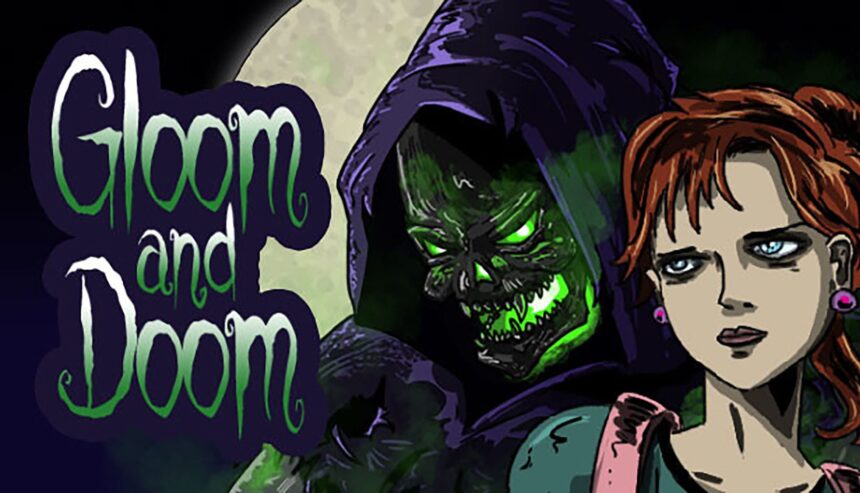
Gloom and Doom builds its entire premise around an impossible want, pairing an ancient wraith named Gloom, sent to kill demons for centuries in exchange for entry into heaven, with Wynona. She’s the young woman he’s been ordered to kill as his final task. She’s supposedly the Doom Bringer destined to end the world, which should make her an easy target, except she can’t actually be killed, and she’s spent just as long wanting to die as Gloom has spent wanting to finish his sentence.
Drew Pan built the whole thing largely alone as Neo Tegoel Games, a Singapore based studio he founded in 2020, writing, drawing, and programming most of it himself during COVID lockdowns while working his day job as a freelance writer. Viridian Software published the game in Europe and North America, with Soft Source Pte handling the Asian release.
Gloom and Doom first released on Steam for Windows and Mac on January 19, 2021, before reaching Switch, PlayStation 4 and 5, and Xbox One and Series consoles in July 2022.
An earlier version of the story leaned so heavily into its heavier themes that early playtesters found it too bleak to actually sit with. Pan reworked the tone toward the 90s slacker comedy influences that shaped the final release instead, movies like Clerks and Dazed and Confused sitting right alongside the demons and angels in spirit if not in setting.
Choices push an invisible morality gauge that shapes which of seven possible endings you land on. The game lets you rewind and reconsider earlier decisions freely, which made experimenting with Gloom and Wynona’s dynamic feel low stakes even when the story itself wasn’t.
Gloom holds centuries of exhaustion in every sarcastic line he delivers, the kind of burnout that comes from doing the same thankless job for far too long.
An angel named Michael oversees the whole arrangement, reading as manipulative rather than benevolent about any of it, one more boss figure treating his subordinates as expendable labor rather than anything resembling family.
Wynona meets that exhaustion from the opposite direction, worn down by wanting an end she can’t reach rather than one she’s been forced to keep chasing. Watching the two of them slowly choose each other’s company over completing their opposing goals gave the story its real emotional center.
The story treats Wynona’s wish to die as a real symptom of something worth taking seriously rather than a punchline, even inside a script this committed to dark comedy and 90s pop culture references. Gloom and Wynona’s quest for her actual peace earns the weight it asks a reader to carry, rather than using that weight as a shock hook to open the story and then abandoning it once the jokes start landing.
Drew Pan’s own art leans into a 90s superhero comic book style rather than the anime look most visual novels default to, all shadow and extreme lighting on a small but expressive cast of character designs. A handful of animated moments landed with more impact than I expected from a project this scope. Backgrounds don’t get the same attention the characters do, and a few locations repeat often enough that I noticed the reuse, though it never once pulled me out of the story the way weaker art elsewhere might have.
The game carries an ESRB rating flagging blood, sexual themes, strong language, and violence, worth knowing going in given how much heavier material sits underneath the comedy.
Reaching whichever of the seven endings I found myself on left me thinking less about whether Gloom finally made it to heaven. I thought more about what Wynona actually needed the whole time, something that neither killing her nor keeping her alive could have solved on its own. Gloom and Doom runs on the shorter side, but it uses that runtime efficiently instead of padding out a premise this specific with filler.
Verdict
A skateboarding angel and a goth assassin or two give Gloom and Doom’s world its lighter edges, but the real weight sits in an exhausted immortal and a girl who can’t die pairing up against opposite versions of the same impossible want. Drew Pan built nearly all of it alone, and that solo scope shows in a distinctive comic book art style and a rewind friendly seven ending structure that make this an easy game to sit with, even when the backgrounds show the limits of a small production. A story willing to take Wynona’s depression seriously without ever losing its sense of humor earns the trust it’s asking a reader to put in it.