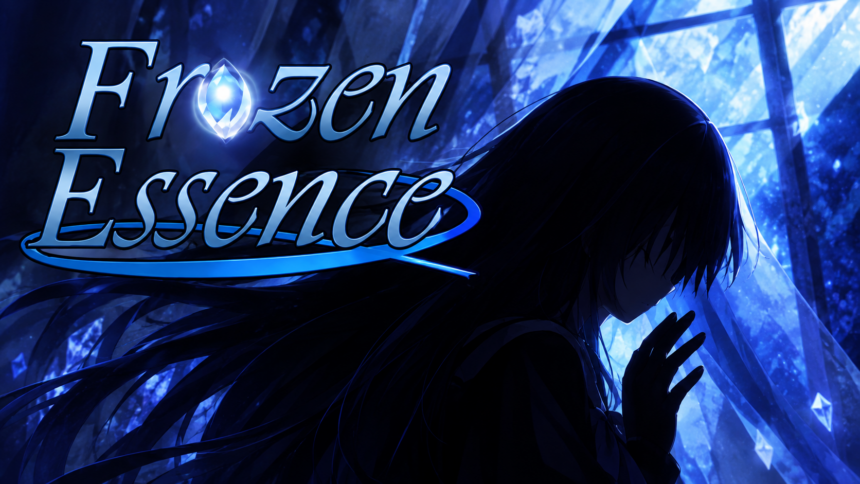
Frozen Essence became much more interesting to me once I stopped treating survival, romance, and freedom as versions of the same reward. Mina can find someone who loves her, remain protected, and still end up living inside boundaries she never chose. Another path can cost her more emotionally while giving her something the safer outcomes cannot. That tension is the game’s strongest idea. It takes the familiar otome promise that the happiest romance must also be the best ending and quietly refuses to agree. Mina begins with almost nothing except a body. She wakes after a thousand years sealed inside crystal, unable to remember the life she lived before being imprisoned or why anyone considered that imprisonment necessary. A hooded stranger releases her, and she is brought into a realm she apparently created herself before losing her memories. The Oracle understands far more about her circumstances than Mina does, while Rune, Caius, and Aysel are among the people responsible for keeping her alive and protected.
Protection is unusually literal here. Mina depends on Life essence to survive, and the people around her know that the world beyond the realm has good reason to fear what she represents. She is associated with the Death Sphere, a force dangerous enough that confinement has become the easiest answer to the question of what should be done with her. Everyone can tell Mina that remaining inside is for her own safety, but the longer she is kept somewhere she does not remember creating, the harder it becomes to separate care from control.
That is why the nearby village festival matters as much as it does. Mina’s decision to leave the realm and experience the outside world is reckless from the perspective of the people guarding her, but it is also one of the first decisions that feels completely hers. The festival gives the story room to expand beyond rooms full of people explaining what she is supposed to fear. Ordinary shops, strangers, celebrations, and the simple freedom to go somewhere without permission make the outside world appealing long before the larger plot explains why reaching it is dangerous.
Frozen Essence takes a while to reach that point. The opening is the roughest part of the game because a lot of terminology arrives before I have enough emotional context to care about it. Essence, Mina’s powers, the Death Sphere, the realm, the Oracle, and the rules surrounding her existence all need explanation, and several early conversations feel more interested in transferring that information than letting me discover it naturally. I understood why the setup was necessary, but the first hour asked more patience from me than the later routes did.
Once the route structure opens, the game improves considerably. Frozen Essence has more than a dozen endings and several substantially different paths rather than one common storyline with lightly altered romance scenes. The route I choose changes where Mina goes, which characters become central, and what parts of her history or the surrounding conflict receive attention. That makes replaying feel less like returning to the same story for a different boyfriend and more like approaching Mina’s situation from another direction.
Rune is the easiest character to associate with safety. He is laid-back but takes his role as Mina’s bodyguard seriously, and his protectiveness gives their relationship a natural emotional foundation. That same protectiveness also fits the game’s larger discomfort with being cared for inside restrictions. Someone can sincerely want Mina safe and still contribute to a life where she has very little control over where she goes or what she is allowed to know.
Caius is almost the opposite. He is chaotic, unpredictable, and far more comfortable with other people’s misery than Rune is. Conversations with him carry more uncertainty because I never felt as though Mina could rely on the same assumptions that work around Rune. His presence gives the cast an edge it needs, especially when so many people around Mina claim their decisions are being made for her protection.
Aurelius and Varian widen the romantic possibilities beyond the people guarding Mina inside the realm. Aurelius is charming, confident, and socially comfortable in a way that contrasts sharply with Mina’s isolation. Varian is colder and more work-focused, which gives his scenes a much heavier atmosphere. The hidden route adds another reason to look beyond the obvious choices, and together the romance options keep the game from reducing Mina’s future to whichever bodyguard she spends the most time beside.
The route differences matter because the game is much more willing than I expected to let apparently successful outcomes remain compromised. A romantic ending does not automatically erase the fact that Mina is still feared, dependent on essence, or restricted by the identity attached to the Death Sphere. Some conclusions preserve love at the cost of freedom. Others offer different kinds of resolution while asking Mina to lose something she wanted to keep.
That is where Frozen Essence finally justifies all the early exposition. The rules surrounding Mina’s existence stop being lore and become limitations she has to live inside. If Life essence were just another fantasy term, I would not care about it. Once it determines who Mina depends on and how far she can safely separate herself from the people protecting her, it becomes part of the relationship structure. The same is true of the Death Sphere. Its importance comes from what that identity prevents Mina from doing, not from how elaborate the mythology sounds.
The True path pushes that distinction between safety and autonomy furthest. I appreciated that the game does not define the most complete resolution as the version where Mina simply keeps everything she wants. Freedom has a cost, and the story is willing to let that cost hurt rather than quietly undo it in a final scene. That choice gives the ending considerably more weight than a conventional route where every major conflict disappears because the affection meter was high enough.
The other endings become more interesting because of that contrast. A Light ending can still be emotionally satisfying without representing the most complete escape from Mina’s circumstances. Darker endings can reveal how badly dependence, fear, or obsession can distort relationships that initially looked protective. The number of outcomes would mean very little if they were only cosmetic variations, but Frozen Essence uses them to test different answers to the same question: what should Mina be willing to surrender in exchange for love, safety, knowledge, or independence?
The game’s strongest routes also make better use of Mina’s missing memories. Amnesia is an easy way to turn a protagonist into a blank slate, but here it gradually becomes part of the control other people have over her. Nearly everyone around Mina knows something she does not. Advice can be sincere and still leave her dependent on the person giving it. A warning can be completely accurate and still function as a reason she is expected to obey. Remembering more therefore does not simply solve a mystery. It changes who gets to define her.
That is why I found Mina’s curiosity more important than any individual romance. The safest version of her life would be the one where she stops asking questions and accepts the realm as enough. The entire game exists because she cannot do that. Sneaking away, speaking to outsiders, questioning the Oracle, and choosing which relationships to trust all carry danger, but they are also the only ways she can become someone other than the person everybody else tells her she used to be.
The presentation is much more modest. Frozen Essence is a Ren’Py visual novel from 2010, and the anime-style character art, backgrounds, and interface show the limits of a first freeware project. The designs communicate personality clearly, but there is a noticeable gap between the stronger character portraits and some of the rougher secondary artwork. I never found it difficult to follow a scene, though the visuals rarely carry emotional weight on their own.
There are more than seventy-five CGs across the routes, which gives the game more illustrated material than its small production initially suggests. That volume helps distinguish the paths because important scenes receive their own artwork rather than relying entirely on repeated sprites. The quality varies, but the willingness to illustrate so many route-specific moments gives the project a sense of ambition beyond its presentation budget.
The original soundtrack contains twenty-two tracks. Carmen Chow composed several pieces, including “Good Morning,” “Hopeless,” “Legend,” “Oracle,” “Together,” and “Reveal the Truth,” while the remaining tracks were composed by Unbroken Hours. The music is functional rather than one of the game’s major attractions, but it gives the different realms, romantic scenes, and darker turns enough identity that the long reading stretches never feel completely flat. There is no voice acting, so characterization rests entirely on the writing, artwork, and music.
Individual paths generally run around an hour to eighty minutes, but seeing the wider ending structure obviously takes much longer. That compact route length works in the game’s favor because the early exposition would become much harder to forgive if every branch demanded several additional hours before showing substantially different material. Instead, once I understood the basic rules, I could explore another path without feeling as though I had committed to replaying the entire game from scratch.
Unbroken Hours released Frozen Essence in August 2010 as its first completed visual novel, and it remains free for Windows and macOS. The downloadable soundtrack is available alongside the game. Its age shows, particularly in the artwork, interface, and the density of the opening explanations, but those limitations became less important to me once the routes started revealing how seriously the game takes Mina’s lack of freedom.
What stayed with me was not the mythology surrounding the Death Sphere so much as the uncomfortable possibility that someone can genuinely love Mina and still participate in keeping her confined. Frozen Essence never needs those people to become secretly malicious for that idea to work. Protection can come from sincere affection. Restrictions can be imposed for understandable reasons. Mina can even choose them willingly. That does not make them freedom.
Verdict
Frozen Essence is roughest when its opening buries Mina under exposition, but its branching structure eventually turns all that mythology into a thoughtful conflict between love, safety, and autonomy. The art and presentation show their age, yet the many substantially different endings give the story more ambition than its freeware scale suggests. Its best idea is refusing to pretend that being protected is automatically the same thing as being free.