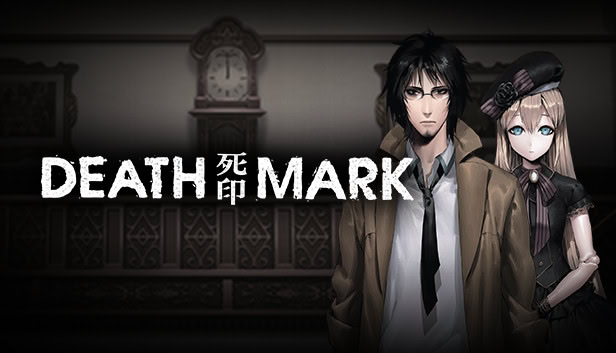
Waking up with no memory of your own name is bad enough. Waking up with no memory and a grotesque, disfiguring mark spreading across your arm, one that local rumor says spells a horrifying death at the hands of something inhuman, is the kind of setup Experience Inc. clearly relished building an entire horror series around. Kazuo Yashiki finds himself in exactly that position in the shadowed streets of Tokyo’s fictional H City, and his search for answers leads him to a mansion belonging to researcher Saya Kujou, one of the few people who seems to actually understand what the Mark is and how it might be removed.
That investigation carries Death Mark through a series of individual chapters, each centered on a different vengeful spirit drawn from real Japanese urban legends and folklore, and the game’s approach to horror leans hard into slow-building dread rather than cheap jump scares. Comparisons to Ace Attorney’s investigation-and-puzzle structure are apt, blending genuine point-and-click exploration with visual novel storytelling and real consequence for wrong choices, up to and including actual game-over states that force a retry. That willingness to let failure carry real weight gives the tension genuine stakes rather than treating every scare as purely cosmetic.
Where the game draws its most consistent, minor criticism is presentation repetition. More than one reviewer notes that backgrounds and character models recur often enough to feel repetitive across the game’s considerable length, and the soundtrack similarly leans on a fairly limited rotation of tracks. Navigating the game’s map has also drawn complaints for feeling genuinely confusing, directional controls that don’t always map intuitively onto the actual geography being explored. The character designs, while praised for their culturally grounded, genuinely creepy Japanese horror sensibility, read to some reviewers as more functional than deeply transformative on an individual level, prioritizing atmosphere and dread over sustained character-driven drama, a trade-off that suits horror-first readers well but may leave anyone chasing deeper personal arcs wanting more.
What elevates the whole experience past its presentation limitations is the strength of the actual writing and atmosphere. The game consistently earns praise for genuinely unsettling implication, letting horrifying possibilities linger in a reader’s imagination rather than spelling everything out directly, and the CG artwork accompanying key story beats carries real, grotesque impact even within an otherwise more modest visual presentation. Several critics single it out as one of the stronger horror releases of its console generation specifically because it trusts restraint and suggestion over spectacle.
Verdict
Death Mark earns its reputation as a genre standout by leaning into patient, atmosphere-driven dread rather than cheap scares, using real consequence in its choice-driven investigation structure to keep tension genuinely high throughout. Its individual spirit-focused chapters, drawn from real Japanese folklore, deliver consistently unsettling material even where the surrounding cast reads more as atmospheric vessels than deeply personal characters. Repeated backgrounds, a limited soundtrack rotation, and a genuinely confusing map system are real, recurring criticisms, but the strength of the writing and its willingness to let horror live in implication rather than spectacle make this a worthwhile, still-influential entry point into the Spirit Hunter series.