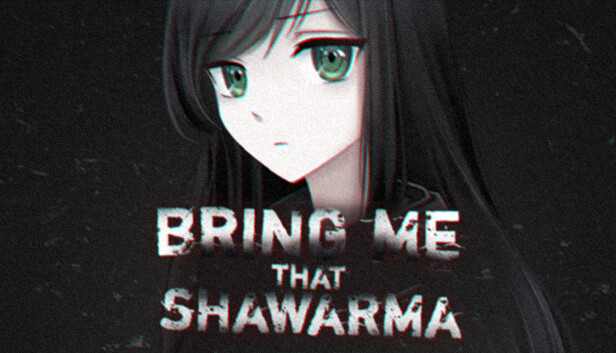
The strangest thing about Roman’s delivery is how long the shawarma remains important. Plenty of horror comedies introduce an absurd objective and then abandon it once the monsters, conspiracies, or murders arrive. Bring Me that Shawarma keeps dragging its food obsession into situations where nobody should reasonably still be thinking about dinner. People behave suspiciously, animals across Samara start acting wrong, and Roman’s routine courier job begins looking increasingly unsafe, yet somehow the question of whether this order will reach its destination survives alongside everything else. That stubborn commitment to the joke is what makes the episode work. Roman is an ordinary courier employed by a thoroughly unimpressive food-delivery company in Samara. A large shawarma order sends him toward a less familiar part of the city at precisely the moment when the city itself appears to be coming apart in small, unsettling ways. Animals are behaving strangely. People around him appear connected to something sinister. Even before Roman understands whether those details have anything to do with his delivery, the trip has stopped feeling routine. The premise never needs to make him heroic. He is trying to finish a job that becomes increasingly unreasonable to finish.
That makes Roman a particularly good protagonist for this kind of horror. He is skeptical enough that the stranger explanations surrounding him sound ridiculous even when the player can see the world becoming ridiculous enough to support them. The old man at the shawarma shop embodies that mismatch perfectly. He rambles about reptilians, tentacled aliens, solar winds, and the possibility of thoughts being carried under the right conditions, while Roman treats most of it like exactly what it sounds like: conspiracy nonsense from an eccentric man working behind a food counter.
The joke becomes better once some of the surrounding events stop being easily dismissible. Bring Me that Shawarma does not suddenly transform the old man into a trustworthy prophet whose every ridiculous statement was secretly correct. Instead, it lets Roman occupy the much funnier position of realizing that the world may be more absurd than his skepticism can comfortably accommodate. I liked that tension because it stops the conspiracy humor from becoming a simple setup-and-payoff routine. The player can laugh at what the old man says and still become increasingly uncomfortable about how much room the game is leaving for something impossible to be happening.
Death is treated with the same disregard for tonal boundaries. Roman can meet bad ends in a surprising range of ways, sometimes before the delivery has properly begun. One of the nastier outcomes reduces him to ingredients for the shop’s own food, which is exactly the kind of joke Bring Me that Shawarma likes making: grotesque enough to belong in horror, ridiculous enough that the absurdity arrives before disgust has time to settle. The game repeatedly treats death as both consequence and punchline, which keeps failure from feeling like an interruption to the comedy.
That willingness to kill Roman also makes the delivery feel less predetermined. He is not simply walking through a fixed sequence of increasingly bizarre scenes until the script decides he has survived enough. Wrong decisions can end his story early, and the bad outcomes are memorable partly because the game commits to making them specific rather than relying on a generic death screen. The resulting structure encourages curiosity about what another response might produce without turning every choice into an obvious survival test.
The visual style matches that refusal to separate horror from stupidity. Ordinary urban locations, food imagery, exaggerated characters, and more disturbing illustrations all belong to the same presentation, so the game rarely signals in advance whether the next scene wants to be funny or threatening. That uncertainty matters more than visual polish by itself. A shawarma shop can be comforting in one episode, disgusting in another, and potentially lethal in the next without the larger project needing to reinvent its entire aesthetic each time.
Bring Me that Shawarma is also only one part of the larger SHAWAVERSE rather than a single continuous Roman story stretched across every available episode. The Steam collection currently contains six main episodes and two bonus episodes, with ten main episodes planned for the completed version alongside additional bonus material. That anthology-like structure gives the project permission to leave Roman behind and approach the same universe from another direction instead of forcing one protagonist to encounter every strange thing happening in Samara.
Doner Kebab: Fear and Loathing in Samara is one of those other stories, built around a favorite shawarma shop approaching its final day of operation. White Blood follows Katya after she is discharged from the hospital following food poisoning and discovers that she can no longer eat shawarma normally. Those premises are linked less by conventional serialized plotting than by the project’s fixation on food, bodily unease, urban misery, conspiracy, and the possibility that something fundamentally wrong is hiding behind an extremely ordinary meal.
That approach makes the collection feel more like a shared nightmare about Samara than a straightforward episodic sequel chain. One story can lean toward depression, another toward survival horror, another toward body horror or aliens, and the common elements keep pulling them back into the same universe. Shawarma becomes almost a genre device of its own. It can be comfort food, employment, obsession, evidence, threat, or something much worse depending on the episode.
The Steam release labels the project across comedy, horror, thriller, aliens, food horror, and body horror, and that mixture is more useful than trying to force the entire thing into one category. The comedy is not simply there to relieve tension after scary scenes. Often the joke and the frightening image are the same event. Roman dying can be horrible and funny simultaneously, and the game is comfortable enough with that contradiction that it rarely stops to tell the player which reaction is correct.
That tonal confidence is what kept me interested more than the conspiracy itself. I was not reading primarily because I needed the definitive explanation for the animals or wanted every piece of SHAWAVERSE lore assembled into a neat timeline. I wanted to see how much worse a delivery could become while the story continued behaving as though completing it was still a perfectly reasonable objective. The funniest moments come from that persistence. Reality may be collapsing around Roman, but somebody still ordered food.
The collection runs in Ren’Py and keeps its technical demands extremely low, which suits a project built around text, still artwork, choices, and episodic releases rather than elaborate mechanical systems. The Steam version supports Windows and Linux, while the standalone release also has an Android version. English and Russian text are available, and there is no full voice acting. Nothing about the presentation suggests the project needs heavier technology than that. Its personality comes from writing, illustration, abrupt tonal turns, and the increasingly questionable things people do with shawarma.
The current Early Access structure is important because this is still an expanding collection rather than a finished ten-episode package. It launched on Steam in June 2024 with six of the planned ten main episodes prepared, and the available build now presents six main episodes plus two bonus episodes. The completed version is planned to include ten main stories and additional bonus entries. The base game is free and is intended to remain free for the foreseeable future, making the unfinished state easier to accept than it would be in a full-price episodic project.
Being unfinished also matters when judging the larger universe. Some connections are deliberately loose, and the available episodes do not yet have to answer everything they introduce. That can make SHAWAVERSE feel messy if approached as one giant mystery that should already fit together cleanly. I found it more enjoyable as a collection of stories sharing obsessions and recurring weirdness. The lack of complete closure becomes less irritating when each episode is allowed to have its own premise and protagonist.
Roman’s story is the clearest example of why that works. Nothing about an ordinary courier delivering shawarma demands a sprawling mythology. The episode succeeds because it takes an almost aggressively mundane task and refuses to abandon it while the surrounding world becomes hostile and absurd. His skepticism gives the conspiracy material someone to push against, his numerous deaths keep choices dangerous, and the food fixation prevents the horror from becoming too self-important.
What stayed with me was that the game never seems embarrassed by how stupid its central joke sounds. It does not gradually replace shawarma with a more respectable science-fiction or horror concept once the conspiracy grows. The food remains part of the threat, the humor, and the identity of the universe itself. That commitment turns a joke premise into something much more memorable than it has any right to be.
Verdict
Bring Me that Shawarma works because it treats a food delivery, grotesque death, alien nonsense, and urban horror as equally valid parts of the same joke. Roman’s skepticism gives the absurdity something to push against, while the episodic SHAWAVERSE structure lets the weirdness expand without exhausting one protagonist. It is messy, unfinished, and deliberately ridiculous, but its horror-comedy identity is already remarkably confident.