Sai barely helps, which makes Atom’s attention feel more intense than it otherwise would. One is the malfunctioning ship AI that should be the obvious source of answers and instead remains cold, limited, and frustratingly unhelpful. The other is a stranger who seems fascinated by nearly everything the player says and remembers those details with unsettling care. Astronought gets most of its tension from forcing those two extremes into the same confined space. When the system designed to keep you alive refuses to behave like a source of comfort, the person paying too much attention can start looking safer than they probably should.
The player wakes aboard a malfunctioning spaceship as its mechanic, with no clear understanding of what has gone wrong or how much danger the situation actually represents. Sai offers very little reassurance, and the isolation would already be enough to make the setting uncomfortable before Atom appears. Atom is warm almost immediately, curious in a way that can read as flattering at first, but that warmth comes with an intensity that never fully lets the player relax. He wants to know everything, and the more he learns, the more obvious it becomes that he treats each shared detail as something worth keeping.
That attentiveness is what kept me uneasy. A character who remembers what you tell them can feel thoughtful in an ordinary romance, but Astronought makes the exact same behavior difficult to read cleanly as affectionate. Atom’s interest is so complete that there is always a question hanging over it: is this the first person aboard the ship who genuinely cares about what happens to you, or is being cared about this intensely its own kind of danger? The game never needs to turn him into an obvious threat for that uncertainty to work. It is enough that the player cannot easily tell where attention stops being comforting and starts becoming possessive.
Sai makes that ambiguity worse by failing to provide a reliable alternative. A more helpful AI would give the player somewhere emotionally neutral to stand, but Sai’s distance removes that option. The result is an odd emotional triangle between the player, the ship, and Atom, where one presence feels indifferent and the other feels almost overwhelmingly invested. I found myself reading Atom differently depending on what Sai had just failed to explain. The less useful the system became, the easier it was to understand why someone might lean toward the person who at least seems to care.
Choices shape the experience along the way, particularly how the player responds to Atom and the situation around them. Astronought does not use those decisions to split into a large route map or multiple endings. The story currently resolves through a single ending, so the choices matter more for tone, closeness, and how the player character reacts than for sending the narrative toward completely separate conclusions. That could make the structure feel cosmetic in another game, but here it fits a story built around uncertainty rather than route completion. The player is still deciding how much trust, suspicion, or openness to bring into a relationship that never becomes easy to classify.
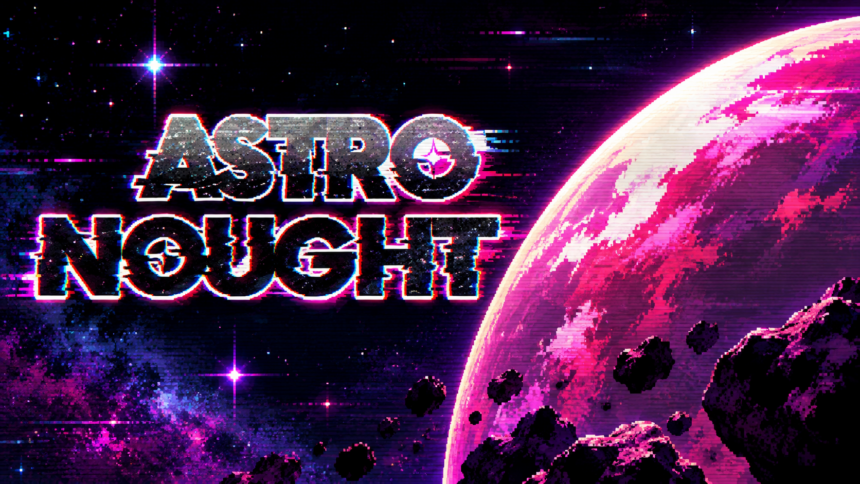
That narrow structure suits the game’s jam origins. DeersphereStudios created Astronought for Monstrous Desires 2024 and released it free for Windows, macOS, and Linux. The short scope works in its favor because the game is not trying to become a sprawling science-fiction romance with hours of lore and branching routes. It is interested in one enclosed relationship, one malfunctioning environment, and the discomfort of not knowing whether the person sharing that environment is keeping you safe or keeping you close.
The art does a lot to sustain that discomfort. Atom’s design manages to feel approachable and grotesque at the same time, which is exactly what the character needs. There is enough warmth in the expressions and presentation to make affection believable, but enough strangeness underneath that the player never fully forgets they are dealing with something monstrous. That balance is difficult to maintain because leaning too far toward cute would soften the horror, while leaning too far toward grotesque would make the emotional uncertainty disappear. The character works because both readings remain possible.
The customizable player character also helps the relationship feel personal without locking the game into one fixed protagonist identity. That flexibility fits the way Astronought centers the player’s responses to Atom rather than building a large cast around them. With so few people competing for attention, every exchange carries more weight, and Atom ends up bearing most of the emotional burden of the story. The game does not need a huge roster to create attachment because nearly everything important is concentrated in how the player reads him.
The audio supports the setting with background music credited to White Bat Audio and a separate character theme created specifically for the project. The soundtrack does not need to dominate because the strongest scenes depend more on silence, machinery, and the discomfort of conversation in an enclosed space. The score works best when it lets the ship feel empty around the player rather than trying to make every scene overtly frightening. That restraint leaves more room for Atom’s warmth to become strange on its own.
There is no large supporting cast offering relief from that intensity. In a longer visual novel, a character like Atom might need breaks from the spotlight to avoid exhausting the player. Astronought instead uses brevity as a pressure tool. There is nowhere else for the emotional focus to go. The player wakes, tries to understand the ship, deals with Sai, and keeps returning to Atom because there simply are not many other options.
That is also why the horror works better as unease than spectacle. The game carries warnings for obsessive behavior, death, murder, and body horror, but the relationship tension does more lasting work than any single shocking image. I was less interested in waiting for Atom to prove himself dangerous than in noticing how much I wanted a definitive answer either way. The story is strongest when it refuses to make that decision easy.
The title’s misspelling of “astronaut” into Astronought even fits the mood, suggesting something familiar that has been altered slightly enough to feel wrong. The ship setting looks recognizable, the mechanic role is understandable, the AI is a standard science-fiction presence, and Atom can initially be read through the familiar language of romance. Then each of those elements starts behaving just a little differently than expected. The environment does not help, the AI does not reassure, and the affectionate stranger becomes difficult to separate from the threat.
What actually stayed with me was Atom’s memory. He listens closely, remembers what the player says, and treats personal details as though they matter enormously. In almost any ordinary romance that would be one of the clearest signs of care. Here, it becomes the thing that makes the relationship hardest to read. Being remembered can feel intimate. It can also feel like being catalogued.
Verdict
Astronought gets most of its power from making warmth feel as suspicious as coldness. Sai’s malfunctioning detachment leaves the player without a reliable source of comfort, while Atom’s intense attention offers exactly the opposite problem, someone who listens too closely, remembers too much, and never quite stops making his interest feel flattering and threatening at the same time. The single-ending structure means the choices shape tone and relationship dynamics more than they create a sprawling route system, but that narrow design fits a short jam project built around one relationship and one enclosed setting. DeersphereStudios’ art keeps Atom balanced between appealing and monstrous, while the sparse sci-fi presentation gives the uncertainty room to breathe. What kept me engaged was never waiting for the story to tell me whether Atom was safe. It was realizing how badly I wanted a clean answer and how effectively the game refused to provide one.