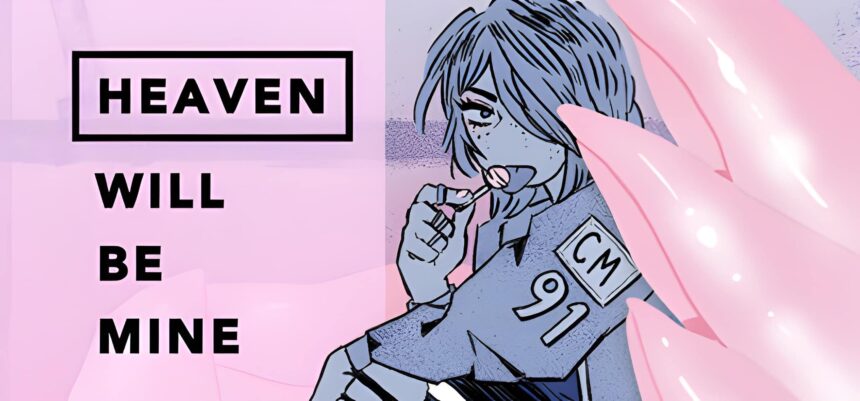
Giant robots piloted by women who spend as much time flirting with their enemies as fighting them is a pitch that shouldn’t work as a coherent story, and Aevee Bee and Mia Schwartz commit fully to that tension rather than smoothing it over. Set during the final eight days of an alternate 1980s space program, three women pilot enormous mechas representing three competing visions for humanity’s future in space. Luna-Terra, a battle scarred veteran, fights for the pessimistic Memorial Foundation. Pluto, an overwhelmingly powerful and optimistic psychic, represents the idealistic colonist nation Cradle’s Graces. Saturn, a hacker for the megacorporation Celestial Mechanics, explicitly treats fighting and flirting as the same act.
Aevee Bee wrote and directed the game, with Mia Schwartz handling art and Alec Lambert returning from the pair’s earlier We Know the Devil to compose a soundtrack of surreal, cosmic lo-fi electronics. Christopher Simon joined the team specifically for UI design, giving the whole interface a retro aesthetic distinct from either creator’s earlier work. Pillow Fight Games published the finished project, developed in Unity alongside Worst Girl Games’ mobile port.
Heaven Will Be Mine released July 25, 2018 for Windows, Mac, Linux, and iOS.
Bee has described the project as a loose thematic sequel to We Know the Devil, framing the earlier game as being about awkward teen feelings and this one as being about messier, twentysomething feelings instead, set in a different place and time but tied into the same wider fictional world.
Every pilot in the game is the product of a now defunded training program that took children young and shaped them to fight something called the Existential Threat. With that threat no longer a concern, all three women have been left adrift, searching for meaning in a war that increasingly looks like it exists to give them somewhere to put that leftover purpose.
Luna-Terra carries the weight of having actually lived through the period when the Threat still mattered, her sturdy, outdated mecha model matching a veteran’s wariness about fighting for a cause everyone else seems to have already moved past. Pluto’s overwhelming psychic power and her faction’s idealism about humanity’s future make her the most outwardly confident of the three, though that confidence never quite explains away the same searching restlessness underneath. Saturn treats her role as a rebellious wild card seriously, piloting an experimental mecha built from exotic matter that lets her infiltrate and exploit enemy craft directly, and her habit of blurring the line between combat and flirtation gives every one of her scenes a charge the other two routes handle more cautiously.
The mecha battles are really in service of a much more intimate story about queer and specifically trans identity, communication, and the mess of unresolved feelings between people who keep circling back to each other. The writing stays deliberately loose around the edges, detailed enough to orient a reader in the plot and the three factions’ competing philosophies, vague enough that filling in gaps becomes an active part of reading it. That’s a structural choice that rewards close reading and multiple playthroughs, since each of the three protagonist routes shapes not just who wins the war but how the underlying relationships resolve.
Presentation shifts constantly and on purpose, mediums blending mid scene from combat art into abstract color clouds or hand drawn notebook sketches, matching the story’s own refusal to stay in one register for long. Dialogue stays sharp, flirty, and clever without dragging, generating real investment in these three specific women well before the later, heavier beats have any chance to land.
That density asks real trust and patience from a reader too. The impressionistic structure and loose plotting mean some scenes only fully click on a second pass, or once a different route fills in context the first playthrough left deliberately vague. Completing all three routes runs to something like twenty eight to thirty hours total, a real investment for a game built more around mood and voice than a plot that resolves cleanly. Anyone put off by ambiguity or a story that trusts a reader to do real interpretive work is going to find less to hold onto here than someone willing to meet the game on its own impressionistic terms.
Set against a backdrop this specific, real lunar and planetary geography standing in for three women fighting a war that was never really about ideology in the first place, Heaven Will Be Mine earns its own strange, specific voice rather than borrowing one from anywhere else in the genre.
Verdict
Heaven Will Be Mine is a distinctive, ambitious piece of queer science fiction that uses giant mechs and an eight day space war as scaffolding for a much messier, more intimate story about identity, communication, and unresolved feelings between three compellingly written women. Its shifting, mixed media art style and flirty, clever dialogue earn real investment early, and Ship Selves named after actual lunar and planetary geography ground the story’s cosmic scale in something concretely real. The loose, impressionistic plotting asks genuine patience across a roughly thirty hour full completion, and readers who need cleaner resolution or more conventional pacing may find that patience tested, but for anyone willing to meet its specific voice and thematic ambitions on their own terms, this delivers something few other visual novels attempt.