Sometimes the hardest part of grief is not surviving the first shock. It is noticing how quietly it can reorganize everything afterward, until routines, relationships, and even kindness start orbiting around something that is no longer there. I kept coming back to that while playing, because the more the story moved forward, the more obvious it became that moving forward was exactly what its characters were afraid to do.
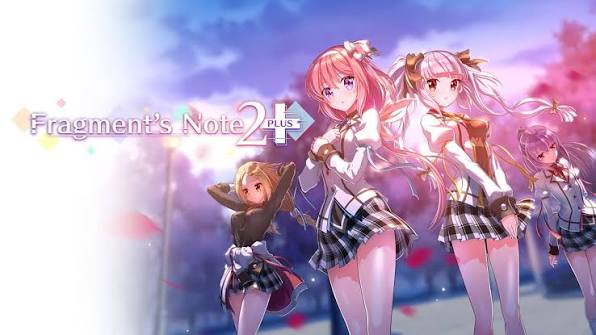
Fragment’s Note2+ follows Kyoichi Akikawa, who lost his family in a plane crash when he was a child. Years later, that loss still shapes the way he relates to the people closest to him. His stepsister Shizuku has her own history of trauma, and the two have grown used to supporting each other so completely that the support itself has become part of the problem. Yukitsuki Asaka creates a different kind of pressure because she closely resembles Kyoichi’s late older sister. The game divides its story between Side and Side, bringing together the two routes that were originally released separately in Fragment’s Note2.
That separation matters because the two routes do not simply offer different romantic outcomes. They examine different ways Kyoichi remains tied to the past. Shizuku’s side is the more claustrophobic of the two for me. Their relationship is caring, but it is also built on shared wounds and habits that have become difficult to question. I liked how uncomfortable that made some of their quieter interactions. The problem is not that either character lacks affection. It is that affection can become a shelter from change, and the game is strongest when it lets that contradiction sit there without rushing to simplify it.
Yukitsuki’s route has a different emotional shape. Kyoichi’s reaction to her is tangled up immediately with memory, which gives their connection a built-in unease. I was more interested in the moments where the story forced me to think about who Kyoichi was actually looking at than in the romance by itself. Yukitsuki is not interesting because she resembles someone he lost. She becomes interesting when that resemblance stops being enough to define what she means to him. That distinction gives the route its best tension.
The supporting cast helps keep both sides from becoming sealed emotional bubbles. Kazuha Tokimiya, Ayame Otori, Tsukasa Shiramine, Rina Akikawa, Takatsugu Sawamura, and Naotaka Yuki all give the central relationships more social context, while returning characters connect this sequel to the broader Fragment’s Note setting. I appreciated that the game does not treat Kyoichi’s grief as though it exists in isolation. Other people have their own attachments, worries, and expectations, and that makes his inability to move on feel less like an abstract theme and more like something with consequences for the people around him.
The writing is at its best when it stays close to those consequences. Small shifts in trust, dependence, guilt, and reassurance carried more weight for me than the larger science-fiction material. Fragment’s Note2+ openly introduces a mechanical god into its premise, so the story is never purely domestic drama, but the more elaborate ideas occasionally pull attention away from the emotional conflicts that already work on their own. I never disliked that side of the game, yet I did sometimes feel that it was trying to make an intimate problem larger when it was already interesting enough at human scale.
Pacing also changes noticeably depending on which part of the story is doing the work. Conversations about loss and dependence benefit from the slower pace because the characters need time to repeat themselves, hesitate, and resist conclusions they are not ready to accept. The downside is that some stretches linger after I had already understood the emotional point. I did not mind repetition when it revealed how stuck a character was. I became less patient when the same concern returned without changing the relationship around it.
The presentation is much easier to appreciate. Fragment’s Note2+ is a remake of the original smartphone release, and this edition brings the two routes together with full voice acting and updated graphics. The character art has a clean, polished anime look that suits the series without making the heavier material feel visually oppressive. Expressions do a lot of work in a story that spends so much time inside conversations, and the portraits give the cast enough warmth that even tense scenes avoid feeling visually static. I also liked the contrast between the soft character designs and a story so preoccupied with trauma, memory, and emotional dependence.
The full Japanese voice cast gives those conversations another layer that the material benefits from. Aimi Tanaka voices Shizuku, while Rie Takahashi voices Yukitsuki, and both performances helped separate two relationships that could otherwise have been defined too heavily by Kyoichi’s grief. Shizuku’s softer presence fits the intimacy and fragility of her bond with him. Yukitsuki has a steadier presence that makes the distance between who she is and who Kyoichi remembers more noticeable. I ended up relying on those vocal differences more than I expected, especially during scenes where the writing deliberately circles familiar emotional territory.
Music is used more quietly than the voice work, but the opening theme, “last message,” gives the game an identity immediately. Yuiko performs and wrote the lyrics, with Yusuke Toyama credited as composer. I did not come away thinking of the soundtrack as the dominant part of the presentation, which actually suits the material. The music generally supports the emotional direction rather than demanding attention from it. When the story is already dealing with grief this directly, restraint helps.
I was less convinced by the way the story sometimes leans on familiar visual-novel emotional beats to underline material that was already clear. Fragment’s Note2+ does not need to remind me constantly that these characters are hurting because their relationships make that obvious. The strongest scenes trust the discomfort. The weaker ones explain it again. That difference became more noticeable the longer I played, and it kept a few otherwise effective stretches from landing as sharply as they could have.
Even so, I liked that neither central relationship reduced recovery to a single breakthrough. Kyoichi’s problem is not a locked door waiting for the correct speech. He has built habits around grief, and those habits involve other people. Changing therefore threatens more than his own sense of stability. It risks changing relationships that have been keeping multiple people afloat. That gave the story enough emotional friction to hold my attention even when individual scenes moved slowly.
The remake format also makes sense for this particular sequel. Side and Side were once separate releases, and having them together makes the contrast between them much easier to appreciate. One route focuses more directly on two damaged people sustaining each other, while the other places memory and projection between Kyoichi and someone he is still learning to see clearly. Experiencing both within one package made the larger theme feel more deliberate. The routes are not interchangeable versions of the same romance. They challenge the same protagonist from different emotional angles.
Verdict
Fragment’s Note2+ worked for me most when it kept its attention on people who care about each other but have learned unhealthy ways of surviving together. Kyoichi’s grief gives both routes a common foundation, yet Shizuku and Yukitsuki bring out different weaknesses in him, which keeps the two-part structure from feeling redundant. The slower pacing and occasional overemphasis can dull scenes that already made their point, and the larger science-fiction elements are not always as convincing as the personal drama. Still, the full voice acting, updated presentation, and stronger relationship writing give the remake a clear reason to exist. I would recommend it most to visual-novel players who value character-driven drama and do not mind spending a long time with people who take small, difficult steps before they are ready to change.