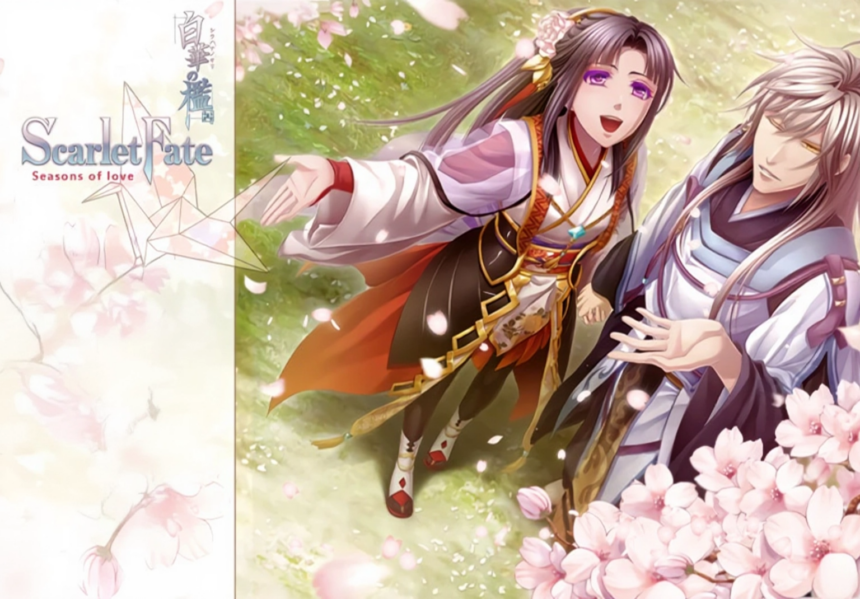
Kifu village hosts most of the seasonal turning points in Shall we Date?: Scarlet Fate II ~Seasons of Love~, the same setting where Shiki and her five comrades spend the fandisc’s Summer Festival chapter together once the story’s harsher winter has finally passed.
Fandiscs built entirely around the reward of a happy ending are a specific, comforting genre unto themselves, and Seasons of Love commits fully to that comfort after the trauma laden setup of the original Scarlet Fate. This continuation picks up after Shiki’s ordeal in the base game, letting a reader develop romantic relationships with the five comrades who helped free her from her fate, now that spring has finally arrived.
Design Factory and Otomate developed the original, known in Japan as Shirahana no Ori -Hiiro no Kakera 4- Shiki no Uta, originally releasing it as a Japan-only PSP exclusive. NTT Solmare localized and published the game worldwide on iOS and Android on November 25, 2015, marking the third collaboration between the two companies under the Shall We Date? banner.
Individual stories run between ninety nine cents and four dollars and ninety nine cents apiece, purchasable one at a time or bundled together at a discount, a pricing structure that shapes how much of the full collection a given reader actually ends up experiencing. The original base game, Scarlet Fate -Fragments of the past-, had already crossed three million downloads worldwide by the time this fandisc arrived, giving Seasons of Love a built-in audience already invested in Shiki’s story.
The structure here splits across four seasonal sections, and that seasonal framing gives the whole collection real, deliberate shape rather than reading as a loose grab-bag of bonus scenes.
Song of Spring functions as the emotional core, delivering individual happy-ending romance stories for each of the five original comrades now that Shiki’s circumstances allow for actual courtship rather than survival.
Summer Festival gathers the full cast together in Kifu village for a lighter, more communal storyline centered on the festival itself, notable specifically for bringing back antagonists from the original game and giving them a chance to reveal unexpected, more sympathetic sides previously withheld by their roles as obstacles. Using a comparatively low stakes seasonal chapter to deepen the wider cast, rather than forcing a full redemption arc into the main story, let that complexity breathe without disrupting the fandisc’s overall emphasis on comfort and closure.
Autumn Harvest offers shorter, quieter slice of life vignettes exploring daily domestic life with a chosen partner, a gentler middle stretch between the festival energy before it and the more substantial stories waiting in the season after.
Winter Snowflakes stands out as the most substantial addition of the four, giving two significant supporting characters from the original game, Tomonori and Aterui, their own dedicated storylines for the first time. Aterui in particular, previously known by the more antagonistic name Akuro within the base game, gets a substantial recontextualization here. He’s an unusual looking man marked by scars and a lingering, eerie reputation for slaying nobles in pursuit of revenge, and his own story fills in real motivation and depth that the original Scarlet Fate only gestured toward. Giving a character this significant to the wider Hiiro no Kakera mythology a full story of his own, despite previously having no dedicated romantic path, rewards anyone who’d followed his role in the base game closely.
Presentation carries over the qualities that made the base Shirahana no Ori series notable within its niche, detailed seasonal artwork and a well regarded soundtrack across all four sections, gorgeous photos and exquisite background music tracking each season’s own mood shift from spring’s warmth through winter’s quieter close.
Reading through all four seasons after everything Shiki and her comrades survived in the original story left me appreciating just how deliberately unhurried this fandisc’s version of happiness actually is, never rushing any of the five comrades, or Tomonori and Aterui, toward a resolution that hadn’t been earned first.
Verdict
Seasons of Love succeeds as exactly what a fandisc following a difficult, trauma heavy original game should deliver, real, earned happiness for a cast that’s already suffered plenty, backed by a seasonal structure that gives even previously underserved characters, Aterui especially, real narrative attention for the first time. Its status as a mobile, segment purchased release means the full experience asks for real financial commitment across multiple stories, but for anyone who wanted unhurried closure for this specific cast, that cost buys exactly what it promises.