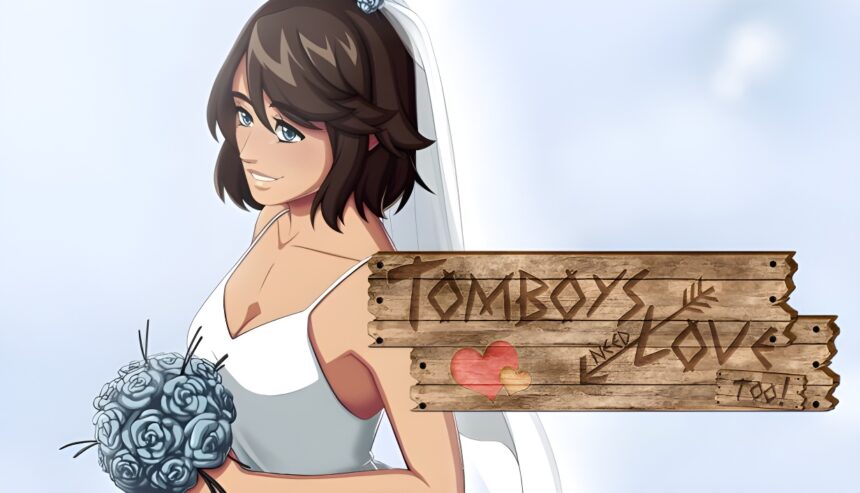
Comfort is an underrated quality in a visual novel. Not every story needs to reinvent the genre, and Tomboys Need Love Too has built years of goodwill on being exactly that, a short, cheap, low-stakes romance that knows precisely what it’s offering and doesn’t overreach. Its Very Positive standing on Steam reflects a game that delivers reliably on a simple promise, even if a closer look at what’s actually on the page reveals a more uneven experience than the friendly cover art suggests.
The setup gets straight to the point. Kai’s next door neighbor and childhood best friend Chris is staying with him while her parents are overseas, and what used to be an easy, platonic arrangement suddenly isn’t so easy anymore now that Chris wants Kai to finally notice her as an adult woman rather than “one of the guys.” Sophie, the kind, socially magnetic girl Kai’s actually had a crush on for months, complicates things further, and the game builds a classic two-heroine love triangle out of that tension, wrapped in a light school drama.
The plot barely pretends the outcome is in doubt. From fairly early on, the narrative pushes so hard toward Chris that any attempt at generating real tension with Sophie ends up feeling contrived rather than earned, which undercuts a game built around five separate endings. Branching structures exist to make decisions feel consequential, and too often here, they simply don’t; choosing the “wrong” option nudges the story right back onto its intended path almost immediately.
There’s real substance mixed in alongside the predictability, though. Threads about bullying and the lasting damage rumors can do to someone’s reputation get woven in naturally alongside the expected comedy and romance beats, and those moments land with more weight than the central love triangle does. The pacing moves fast, occasionally too fast, and most major decision points telegraph their outcome well before the story actually gets there. That works fine as a low-stakes, single-sitting read, but it leaves little room for genuine surprise.
Sophie is the character who determines how the rest of the cast reads. Chris, meanwhile, is easy to get behind on her own merits: confident, funny, and forward in a way that comes across as charming rather than pushy, carrying most of the game’s best written moments without much help. A version of this story built entirely around her and Kai figuring out how to turn a lifelong friendship into something more would probably be tighter and more satisfying overall.
Sophie’s tomboy credentials essentially begin and end with having short hair, an odd shortfall given that the entire title and marketing hook centers on that word. It’s a detail that seems minor at first glance but grows harder to ignore the longer the game leans on it without backing it up. She’s pleasant company scene to scene, and it’s easy to understand why Kai’s drawn to her, but she never quite earns the specific label the story keeps insisting on.
Kai gets the standard treatment reserved for protagonists in this corner of the genre: agreeable, a little too oblivious for his own good, mostly reactive rather than driving much of anything himself. The side cast barely registers given how little screen time anyone outside the core trio receives. That’s not a fatal flaw in a visual novel this short and this focused, but it does mean there’s very little texture to fall back on if the central relationships aren’t fully landing.
The prose blends Japanese visual novel conventions with a distinctly Western sensibility in a way that’s noticeable without ever getting in the way. It moves quickly and reads cleanly, which suits a story of this length well, and scene transitions stay efficient rather than lingering longer than they need to.
Dramatic tension is where the writing comes up short. Because the plot already knows who’s winning the love triangle, the stretch of the game meant to carry the most romantic weight doesn’t get the same sharp attention found elsewhere in the script. Conflicts resolve a little too neatly, and confrontations that should sting instead pass by quickly on the way to the next scene. This is competent, efficient writing rather than particularly memorable writing, and it’s honest about which of those two things it’s aiming for.
The general art style is the weakest technical element in the package, noticeably rougher than bigger-budget visual novels working in the same genre. Character designs fare better than the backgrounds and CGs around them, and Chris’s design in particular matches her personality well, playful and a little scrappy without losing an appealing softness.
There’s no voice acting anywhere in the game, which keeps scenes moving briskly but also means every ounce of emotional weight has to come from text and static art alone. The soundtrack is pleasant and functional throughout without ever becoming a genuine standout. Worth a quick, neutral note: the base Steam release strips out mature content to comply with platform policy, and a separate patch exists for those who want the unedited version.
The story’s biggest limitation shows up hardest here. Because the plot is so transparent about steering toward one predetermined outcome, the emotional stakes never really get room to build the way they should in a romance built around choice. It plays things safe in the most literal sense, competent and pleasant without letting decisions carry any lasting weight, which is a real shortfall in a genre whose whole appeal rests on choices mattering. It delivers exactly what a breezy tomboy romance with a bit of heart promises, and nothing more ambitious than that.
Verdict
Tomboys Need Love Too is easy to like in the moment and just as easy to forget shortly after finishing it. It’s short, cheap, and unpretentious, anchored by a genuinely likable lead heroine in Chris and clean, efficient prose that never wastes time. But it’s also a story that telegraphs its own ending almost from the opening scenes, saddles its second heroine with a tomboy identity that barely shows up on the page, and never quite builds the dramatic tension its five-ending structure seems to promise. As a low-commitment school romance meant to be finished in one sitting, it delivers precisely what it sets out to do, no more and no less.