Free-to-play mobile visual novels don’t usually invite comparisons to Ace Attorney or 999, and this one earns that comparison on its own terms once the mystery actually gets moving. Investigating a death inside a converted historical landmark, armed with nothing more than patience and a growing list of clues, becomes a real test of attention rather than a formality between story beats. It’s a mystery with real payoff but an uneven road getting there, hampered at points by pacing decisions that have nothing to do with the writing itself. Still, when the puzzle logic clicks and a piece of evidence lands exactly where it should, it’s a rare, satisfying kind of vindication for the format.
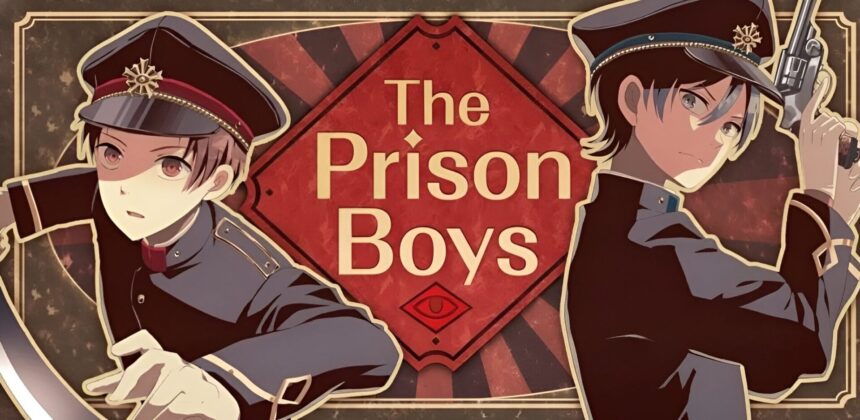
Set at the tail end of Japan’s Taisho era, in a version of the timeline where the Great Kanto Earthquake hasn’t happened yet, the game drops me into the role of Tetsu Akatsuki, a member of the secret police force TOKKOH. He discovers his superior hanged in the Asakusa 12-Story Prison and sets out to investigate a death that quickly reveals darker forces at work beneath the building’s walls. That alternate-history framing is deliberate rather than an oversight. The developer has said outright that keeping the earthquake from happening was one of the story’s founding ideas, letting the real Ryounkaku tower the prison is based on keep standing well past when it actually collapsed in 1923.
Atmospheric art carries that setting well, leaning into a muted, period-appropriate palette that makes the prison’s basement levels feel oppressive in a way plain dim lighting alone wouldn’t manage. A moody, similarly period-appropriate score sits underneath the investigation scenes, though I couldn’t turn up a specific credited artist or composer for this release despite looking. Given the game is entirely free to access outside its ticket pacing, the production quality on display across both is impressive for the price point.
The puzzle design is where this pulls ahead of a typical mobile mystery. Rather than treating investigation as a formality between story beats, the game builds challenging locked-room logic puzzles that require real attention, backed by an item-collection and interrogation system where tapping character portraits during questioning can push suspects toward honesty or cooperation. The puzzles stayed fairly clued and solvable through patience rather than trial and error the whole way through, a real accomplishment for a genre that often leans on obtuse pixel-hunting instead. Hidden backstory cards scattered through the environment add optional depth to the cast without forcing that material into the main narrative.
Nagi Saeki isn’t just Tetsu’s partner in the field but his adoptive brother and roommate, having taken Tetsu in through the Saeki household well before either of them joined TOKKOH, and that history gives their working relationship a weight a simple partnership wouldn’t carry. Kidou Yamato rounds out the cast as a fellow TOKKOH officer who takes real pride in the job’s uglier demands, a contrast that gives the organization’s internal culture some texture beyond faceless institutional menace. The developer has described the story going through several complete rewrites before landing here. An earlier draft framed Tetsu as a colder character investigating his own brother’s death rather than his superior’s, using harsher, openly propagandistic dialogue before the writers settled on the version that actually shipped.
TOKKOH itself borrows its name and mandate directly from Japan’s real historical special higher police, tasked here with suppressing communists, liberalists, and anarchists in the name of protecting the Empire, which gives the fiction real institutional weight even inside its altered timeline. Branching choices lead toward several different endings, including named bad endings tied to Nagi and to TOKKOH itself, with only one true resolution achievable through careful play, and that structure rewards attentive engagement with the mystery’s actual clues rather than random guessing.
Where the game earns real criticism is its monetization structure. Progress gates behind a daily ticket system, tickets required for most stages outside Chapter 1 or ones already paid for on a previous attempt, unless I paid for more directly. That pacing has a real cost. Waiting between story segments makes it harder to hold plot threads and character details in mind, undercutting momentum a stronger mystery like this deserves to build uninterrupted. The English localization, while broadly clear, also carries a noticeable number of grammatical errors, minor enough not to obscure meaning but frequent enough to notice across a full playthrough.
Developer SEEC Corporation released the original Japanese version in early May 2017, part of the same ESC-APE by SEEC line the studio has continued building on since. An English localization followed just weeks later that same year, with a Chinese version co-produced with QooApp arriving not long after.
Verdict
The Prison Boys earns its Ace Attorney comparisons through well-clued puzzle design and a historical mystery grounded in real institutions even inside its own altered timeline, wrapped around a Tetsu and Nagi relationship with real history behind it rather than a generic partnership. Its greatest asset, a mystery structure that rewards careful attention rather than guesswork, is undercut somewhat by a daily ticket system that artificially paces the experience in a way that hurts narrative momentum more than it helps monetization. Localization rough edges are a minor blemish rather than a real obstacle. For a free mobile release, the depth of puzzle design, historical atmosphere, and character writing on display here punches well above what the format usually delivers.