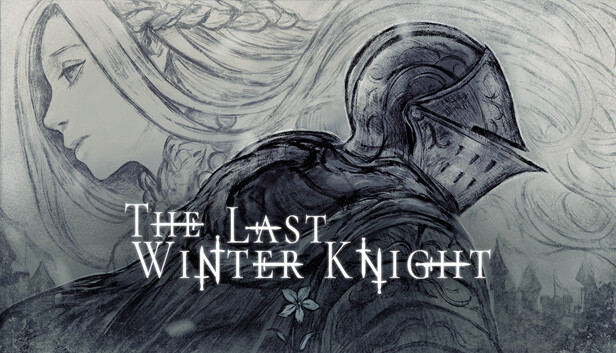
What does it mean to be tethered to a place you don’t remember? For me, it’s less like fear and more like an itch behind the ribs, the certainty that something is missing before you’ve even worked out what it was. You come back as a ghost with nothing but an empty suit of armour to explain how you got here, and The Last Winter Knight spends its opening hours letting that absence sit heavy before it starts filling it in. Wandering the abandoned castle you’re stuck in means clicking through rooms, examining objects, and piecing together fragments of a life that used to be yours, one broken promise and severed bond at a time. I kept catching myself hovering the cursor over the same tapestry or chair twice, half convinced I’d missed something the first pass through, and more often than not I had.
A side story called Trail of Stars, made for a game jam, rewrites a version of this same castle in second person, and reading the developer’s own description of that nameless, dry, slightly bitter narrator voice afterward clicked something into place about the tone I’d already been sitting in for hours. This knight isn’t warm company. He’s sombre, a little sharp around the edges, maybe not entirely a good person, and I found myself trusting his account of things less the more time I spent with him, which turned out to be exactly the right amount of suspicion to bring into a mystery about what he’s forgotten.
Puzzle difficulty swings hard from one room to the next, easy enough in places that I breezed through without thinking and then suddenly obtuse enough that I circled a single hallway for longer than I’d like to admit. The middle stretch sags the same way, momentum I’d built up in the first act leaking out slowly until later chapters picked it back up, and I felt that dip more as restlessness than boredom exactly, an itch to get back to whatever I’d been circling before things slowed down.
ENDYSIS, who goes by Eli, built this alone from a home in Canada over roughly three years, running on Ren’Py and credited for the art, the code, and the script in full. A handful of names get thanked for smaller pieces, armour consultation and foley work from Wanpans Armoury, cello performances from ArcanaXIX layered into the score, and a couple of playtesters, but the bulk of what’s on screen came from one person agonizing over word choice alone at a keyboard, and knowing that made the density of the castle’s lore hit differently for me than it would in a bigger studio’s game.
Hand-drawn artwork carries every room, leaning into a dark fairy tale look that never once felt like it was cutting corners to save time, which surprised me given how much of the castle there was to draw. A pensive piano score shifts depending on what you’re examining and where you’re standing, quiet and unresolved in a way that matched the not-knowing better than a fuller orchestral score would have, and the added cello underneath some of the later passages gave certain rooms a colder, heavier feeling I didn’t expect walking in.
None of it is voice acted. Every line runs as text only, which meant the writing itself had to carry tone entirely on its own, and between the knight’s dry internal voice and that shifting piano, it mostly managed to. Content warnings for violence, death, and light horror run under the surface the whole way through, occasionally touching on heavier themes without ever letting the castle’s quiet decay become just set dressing. I won’t say which memory or whose bond turns out to matter most, only that piecing it together felt less like solving a puzzle and more like slowly admitting something to myself I’d been avoiding.
Verdict
The Last Winter Knight takes a familiar amnesiac-ghost premise and makes it feel handmade in the truest sense, one person’s hand-drawn rooms and shifting piano score carrying real melancholy through every hallway. The dry, unreliable warmth of its narrator gives the mystery its own specific ache, even when inconsistent puzzles and a slower middle stretch pull at the pacing. Knowing one person built every inch of it changed how I read the whole thing, and I don’t think that’s a small trick to pull off.