Memory only matters when someone else has forgotten. That thought stayed with me long after I finished The Good Ending. Not because the game keeps reminding you of it, but because nearly every meaningful conversation is shaped by one person carrying the weight of experiences nobody else can remember. Watching that imbalance play out turned a familiar premise into something I found far more emotionally draining than I expected.
Rather than simply retelling Doki Doki Literature Club, The Good Ending hands self-awareness to the protagonist instead of Monika. He remembers every previous loop while the rest of the Literature Club begins each cycle without any knowledge of what came before, forcing him to navigate familiar tragedies armed with knowledge that rarely translates into easy solutions. Sam Capener has spent years developing the project as a solo writer and developer, releasing it free through the project’s website and Patreon while expanding it beyond its original prologue with multiple acts.
That single change reshapes the entire emotional rhythm of the story. Instead of waiting for the horror to arrive, I spent most of Act One wondering whether every conversation could become another missed opportunity. The repeated school days never felt like simple recycled scenes because my understanding of them kept changing alongside the protagonist’s. Even when I knew roughly where events were heading from the original game, I never felt like I had complete control over what came next, and that uncertainty carried far more tension than I expected from a time-loop structure.
The cast benefits from that approach because nobody has to become a radically different version of themselves to justify the new premise. Sayori’s warmth, Yuri’s anxious reserve, Natsuki’s defensive attitude, and Monika’s quiet confidence all remain recognizable without feeling frozen in place. Their interactions gain new meaning because I was constantly judging them through the protagonist’s accumulated memories instead of their own awareness. That kept the emotional burden where it belonged, on the one person who never gets the relief of forgetting.
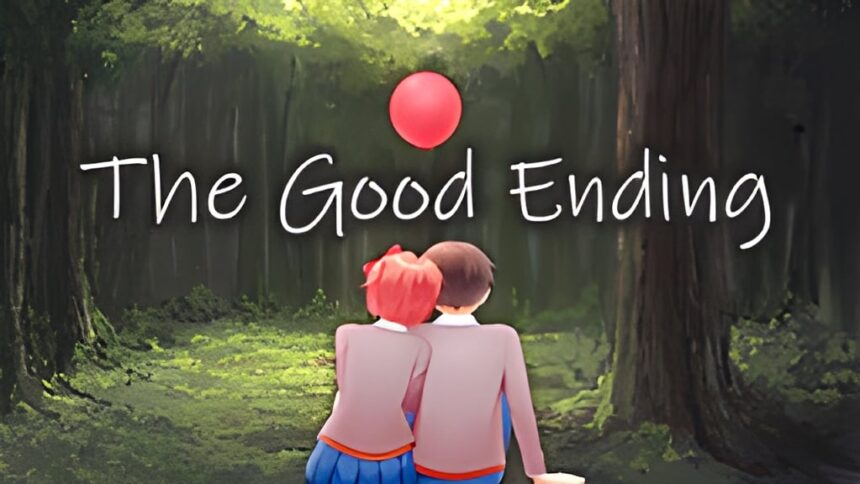
By the time I settled into that rhythm, the presentation had already convinced me this was aiming well above the average DDLC fan project. The familiar sprites and backgrounds are joined by a substantial amount of custom artwork, new backgrounds, and original CGs that blend naturally with the base game’s visual identity instead of calling attention to themselves. The soundtrack likewise expands beyond the original game’s music with additional compositions, helping the quieter scenes feel reflective before the horror pushes back in. (The Good Ending)
No spoken dialogue means every emotional beat depends entirely on the writing, and I rarely felt that limitation hurt the experience. Small differences in wording become surprisingly important because conversations often revisit similar situations from different emotional angles. When a scene did lose momentum, it was usually because the story lingered a little too long retracing familiar ground before introducing another meaningful variation. Those slower stretches never broke my investment, but they occasionally delayed revelations that felt ready to arrive sooner.
The horror itself also deserves credit for its restraint. Rather than relying on constant shocks, it builds anxiety from the knowledge that memory alone cannot guarantee a better outcome. I appreciated that the game resisted turning the protagonist into an all-knowing savior. He spends much of Act One reacting imperfectly to impossible circumstances, and that vulnerability made his determination much easier to believe than effortless competence ever could have.
Verdict
The Good Ending succeeds because it understands that changing one perspective can completely transform a familiar story. Giving the protagonist knowledge of every previous loop creates emotional stakes that feel distinct from Doki Doki Literature Club while remaining faithful to the personalities that made the original cast memorable. A few stretches revisit known material longer than I would have liked, but the strong character writing, polished presentation, and steady psychological tension kept me invested from beginning to end. Even after countless DDLC fan projects, this is one of the few that genuinely felt like it had found its own reason to exist.