Guiding a departed soul gently into whatever comes next, cracking a pun about someone’s glasses in the very next breath, then watching a scene of real grief land seconds later. There’s no tonal whiplash to any of it, and this otome refuses to pick a single emotional register and stick with it. Building on the same soft, lore-heavy foundation its two earlier entries established, this third chapter in an ongoing series revives the format’s cozy comfort while iterating on it with a darker undercurrent than either prior installment risked. It feels distinctly like the same hand behind the whole project, but five years of accumulated craft are also undeniably present, making for a bittersweet entry well worth the wait between updates.
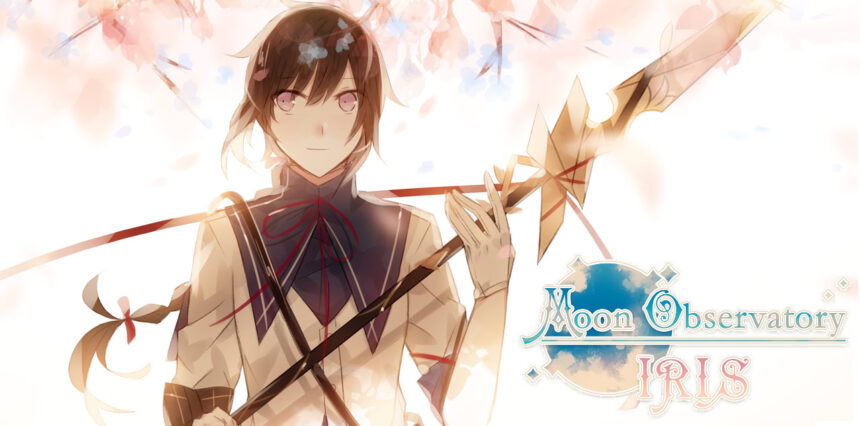
A purifier’s job sounds almost peaceful on paper, easing departed souls into whatever comes after death, and Iris settles into that quiet, sorrowful work with a gentleness that makes her easy to root for from the opening scenes. Moon Observatory Iris marks the third installment in the wider Moon Observatory series, following the first game’s two knight brothers and a guardian angel and the second’s story of a girl who accidentally froze her own hometown. Iris herself works specifically in the February world, one of many distinct settings the series has built out across its earlier entries.
Solo developer batensan writes and illustrates the entire Moon Observatory series alone, funding the project largely out of pocket and through Patreon and Ko-fi support from the people following along the way. Iris itself took roughly five years to reach its current shape, on and off, and an original route built around a character named Wynrou got cut partway through development, its stronger moments spliced directly into Rieffe’s own route instead rather than discarded outright.
Iris’s world shifts the moment the Magicians enter her life, half-immortal figures charged with watching over the Moon Observatory worlds, and figuring out who they are and what they’re actually protecting against becomes the real engine driving the plot forward. Four main routes carry the bulk of that unpacking. Rieffe, her childhood friend, wraps real warmth in real emotional distance. Lanneis stays sharp-tongued and perpetually exasperated behind his glasses. Reqieu, Iris’s former teacher, carries a quieter, wearier kind of care. Septem’s formal politeness slowly cracks open into something more shy and sincere the longer Iris spends with him. Batensan’s own suggested reading order starts with either Rieffe or Lanneis, moves to Reqieu, and finishes with Septem, a sequence that lets the wider lore build gradually rather than dumping it all at once.
A fifth route, Auggie’s, arrived later as a free update, complete with voice acting, and functions as something of a victory lap for the whole cast, a fitting sendoff for a project that spent five years finding its final shape. Four additional best-friend routes round out the cast further, Henri, Mikhail, Kann, and Juniper, giving Iris’s platonic relationships a place in the story that isn’t just filler between romantic content. That choice pays off given how much of the game’s heart lives in its side characters and their banter as much as in its central romances.
Where the writing occasionally stumbles is in how effortlessly Iris earns everyone’s affection. She’s kind and she tries hard, but the game doesn’t always do the work of explaining why five very different people all gravitate toward her as strongly and as quickly as they do, and that thinness shows more in some routes than others. Rieffe’s and Auggie’s routes, not coincidentally the two written furthest apart in the development timeline, read as the most fully realized of the set, while a couple of the earlier routes lean harder on established otome shorthand to get where they’re going. The lore holding the whole setting together fares much better, with a real sense that the Moon Observatory worlds have history and rules worth discovering, rewarding anyone willing to piece details together across routes rather than treating each one as an isolated loop.
This is a soft, gorgeous-looking game, character art and CGs that lean into warmth even during the story’s harder moments. The art style holds up consistently well across a cast this large, all of it illustrated by batensan personally rather than an outside artist. The score itself has no composer name attached that I could dig up, though it matches that visual warmth closely, understated where the story needs quiet and swelling appropriately during its bigger emotional turns.
Voice acting exists only for Auggie’s route, added alongside that final content update. It’s a nice touch for the character it accompanies, but its absence everywhere else means most of the cast has to sell their emotional beats through text alone, which the writing mostly manages given how distinct each character’s voice already is on the page. The story’s own marketing states a 75 percent rate of people reporting they cried by the end, a specific figure batensan collected through a post-release survey rather than a claim I’m passing along secondhand.
The full script runs close to 276,000 words in its original form, expanding to roughly 335,000 after Auggie’s route was folded in, putting total playtime somewhere past twenty hours for anyone chasing the whole cast. A physical art book was made available alongside the digital release for anyone who wants a tangible keepsake of batensan’s own illustration work. The story’s true ending closes on a deliberate cliffhanger, setting up whatever comes next in the wider Moon Observatory series rather than resolving everything within Iris’s own game.
Verdict
Moon Observatory Iris succeeds by refusing to let its cozy, punny exterior promise more safety than the story actually intends to deliver, using real comedy and warmth as a setup for real emotional gut-punches rather than a replacement for them. Rieffe’s and Auggie’s routes stand out as the strongest of the set, benefiting from a developer clearly more confident by the time she wrote them, while a couple of earlier routes lean on Iris’s easy likability more than they build toward it. The lore-rich worldbuilding around the Magicians and the wider Moon Observatory series gives the whole cast real texture beyond their individual romances. Even without full voice acting across the board, the writing carries enough distinct character voice to make five years of solo development feel like time well spent.