A fairy tale that never lets anything bad actually happen isn’t really offering comfort, it’s just avoiding the subject. The oldest, best versions of these stories work because the darkness is real and the hope has to fight through it to mean anything.
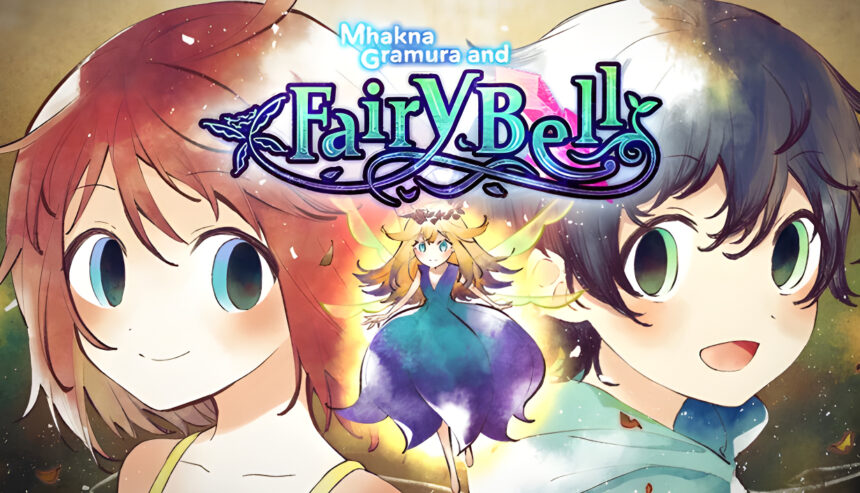
In Mullbear Orphanage, a young girl named Mhakna and her best friend Sebiarno endure a hard life under a cruel caretaker, Tighra Ann. Any child not adopted by the time they turn ten gets turned into an animal and sold off, a fate closing in fast on both of them. As Mhakna nears her own tenth birthday, she wishes on the stars just as Sebia once told her to. A fairy named Bell appears, offering to take her to Enles Land, a kingdom promising eternal childhood happiness, on one condition. She can never grow up.
Rather than the sprite-over-background format most visual novels default to, this one is built entirely from more than 150 individual illustrations, what its makers call a Cinematic Novel, using a real 3D camera system with actual panning and movement instead of static scene cuts. Backgrounds respond slightly to cursor movement, a small touch of interactivity in an otherwise fully kinetic, choiceless read. Scene transitions read closer to turning pages in a picture book than the screen-to-screen jumps a typical visual novel relies on.
Alice in Dissonance built this as a spin-off of its own fault series, commemorating that series passing 300,000 copies sold worldwide, and brought in Munisix, fault’s own writer, to script it specifically for anyone who had never touched the original games. Phoenixx published the whole thing on Steam starting in February 2018, with a PS4 and Switch release announced two years later. The final Steam release also bundles cleanly with the fault series proper, Milestone One, Milestone Two Side: Above, and their respective soundtrack and art book releases, for anyone who wants the wider setting alongside this standalone story.
Character and background art comes from Hare Konatsu, the same artist behind the fault series itself, animated by Saketai. The visual style leans on strong colors and a watercolor-like softness, closer in register to an illustrated children’s book than the anime-adjacent look most visual novels default to.
Foxtail-Grass Studio scores the whole thing, leaning heavily on orchestral and piano-led compositions that carry the fairy tale register without wearing thin across the runtime.
Mhakna and Sebia’s friendship anchors the story’s early stretch, and their specific, lived-in bond gives their eventual arrival in Enles Land real emotional weight instead of treating the happily-ever-after as a given. A woodcutter they meet along the way, cutting timber in the forest just outside the orphanage grounds, gives their world a little more texture before Enles Land even enters the picture. Once there, they’re joined by other rescued children, Cotonne, Chromie, and Mhaize among them, each carrying enough personality of their own that the utopia never feels like a single-note backdrop. What kept me most invested was the quiet unease that starts creeping into this utopia the deeper the story goes, noticeable well before anything gets spelled out directly. I won’t say more than that about what actually turns out to be wrong underneath the surface.
There are real, specific gaps in the finished package worth naming directly. There’s no artwork gallery to revisit any of the 150-plus illustrations after finishing, and no dialogue log or backlog feature to check missed text if you accidentally skip ahead. Both felt like real oversights to me for a release built this heavily around its own visuals, especially with no way to linger on a specific illustration after the credits roll.
There’s no voice acting anywhere in this release, consistent with the format’s kinetic, picture-book presentation. The current Steam build also won’t run on macOS 10.15 Catalina or anything newer.
The developer’s own estimate puts a full read at around 90 minutes, though reading at a slower pace could reasonably stretch that past two hours. It was originally priced at just $5 on Steam, cheap enough that the missing gallery and backlog features sting less than they might on a pricier release.
Verdict
Mhakna Gramura and Fairy Bell refuses to soften its own fairy tale premise, letting real unease build under a picture book surface until the hope underneath actually means something. The missing gallery and backlog are real, specific gaps worth knowing about. Hare Konatsu’s illustrations and Foxtail-Grass Studio’s score still make this a distinctive short read, one unafraid to let its darkness sit rather than resolving it too quickly, and a fitting way for the fault series to mark its own milestone.