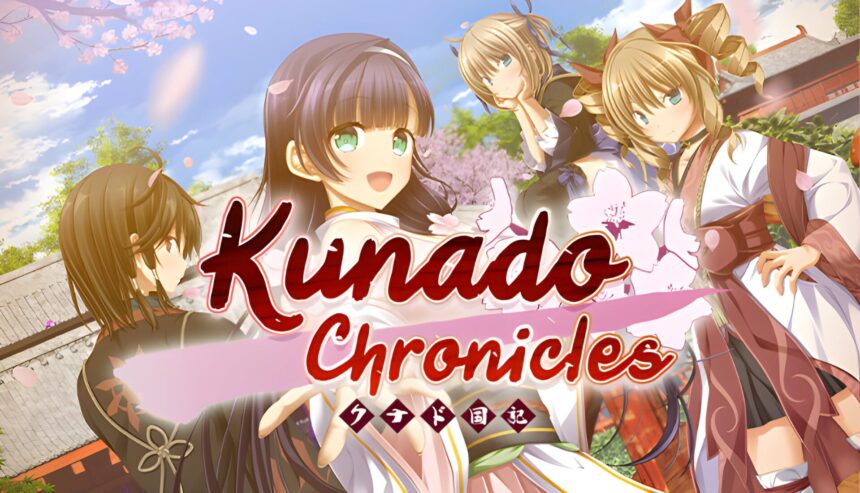
By 2034, metallic monsters called Tekki had already wiped out most of humanity, and their emergence brought with it a catastrophic failure of anything metal-based, accelerating civilization’s collapse well past the initial attacks. Survivors clung to whatever gaps in Tekki activity they could find. It took a thousand years before a single hero finally struck a decisive blow against the heart of the threat, ending what the story calls the battle for the fate of humanity a hundred days before it actually begins. What’s left is Kanto, a country of roughly eight hundred Powered individuals carrying extraordinary abilities, styled after a version of Japan pulled from deep in its own past.
Shin wakes into that world from a thousand years of cold sleep, discovered inside the corpse of a Kurokami, the ultimate Tekki. He carries knowledge of the old world but nothing of his own identity. He spends the story trying to pass what he knows on to a Kanto that’s rougher and less refined than the civilization he remembers, an uphill effort against a culture that doesn’t always want to hear it.
Purple Software, the studio also behind ChronoClock, Amatsutsumi, and Happy Maher, built Kunado Chronicles around a script from writer Mikage, who also wrote Amatsutsumi and ef, under director Yasushi Ishikawa, whose own credits include Seishun Fragile. Shiravune brought the English localization west on April 7, 2023, through Steam and the adult-content platform Johren simultaneously, priced at $24.99 with a 20 percent discount at launch. The original 2021 Japanese version had already picked up real recognition of its own, taking a Moe Game Award in December 2021 as that month’s best-selling title in Japan across both physical and digital distribution.
The route structure here breaks from the genre’s usual playbook. After the common route, the story automatically drops you into one heroine’s arc for several hours before giving you the choice to stay with her or branch off into someone else entirely, and that same choice repeats again later on. Getting pulled out of a growing romance and redirected toward someone new felt disorienting the first time around, but it also means the story cares more about plot momentum than locking you into a single relationship from the start. The base Steam release covers three routes this way, Yuri, Haruhime, and a joint Akane and Aoi route that stays locked unless the separate patch is applied.
Yuri carries the most straightforwardly romantic of the three routes, an ordinary woman without any Powered ability beyond exceptional physical strength, assigned to guard Shin despite an initial dislike of him that slowly gives way to real trust. Her arc traces her breaking out of Kanto’s mask culture, a place that discourages individual expression, and finding her own opinions and desires along the way, the most pronounced character growth of the three. Haruhime holds the title of Ichi-no-Kami, Kanto’s highest authority and leader of the Eight Blades that actually govern the country day to day. She’s kind on the surface but entirely willing to get her hands dirty when leadership demands it, known across Kanto for stashing snacks up her sleeves given how constantly hungry she is. She stepped into that role after her older sister Natsuhime was presumed dead, and her own route ends up spending as much time on family and unresolved plot threads as it does on her directly. Akane and Aoi round out the cast as twin sisters making up the Ni-no-Kami, wielding wind and lightning respectively and together forming the strongest fighting force in Kanto. Their energetic, aggressive dynamic gives their shared route some of the game’s most exciting battle sequences.
Kanto’s residents wearing fox masks throughout the story isn’t just visual flavor, it ties directly into the game’s central theme of individual identity versus belonging to something larger. Every heroine’s arc involves stepping outside that imposed anonymity in her own way, and that same tension gets mirrored darkly in the Tekki themselves, enemies defined entirely by their lack of individual thought. It’s a theme the writing returns to consistently enough that it gives the whole story real thematic spine rather than treating it as background dressing.
Battle sequences stand out as a real strength too, written with more care and clarity than combat usually gets in this genre, which matters given how often the plot escalates into real danger.
Tonal control is the writing’s real weak spot. The story wants to be taken seriously as a post-apocalyptic drama, but it keeps undercutting itself with badly timed comic horniness, including an odd recurring gag where Shin is treated as unusually perverted in a culture where women are typically the more sexually assertive party. That joke surfaces during scenes that should carry real dramatic weight, and the mismatch between tone and content happens often enough to pull me out of moments the story clearly wanted me invested in.
Presentation carries a distinctive, deeply considered vision for Kanto, traditional Japanese clothing and architecture laced with subtle anachronisms that mark this as a real future rather than a straight period pastiche, extending into the music as well. Character illustrations come from Hikage Asahina and COQ, chibi-style SD art comes from Haruka Komowata, and backgrounds come from Waisshu and Gakai Sai, a large enough art team that the consistency across so many named contributors is itself worth noting. The trade-off is a visual style that stays largely static in motion, which blunts the impact of scenes that could really use more life behind them given how much the writing is asking those moments to carry.
The full cast gets Japanese voice work, Hana Akino voicing Haruhime, Musubi Aono as Akane, Suzu Sazanami as Aoi, Maya Suzuya as Yuri, and Yui Ogura voicing Natsuhime, giving even the quieter dialogue scenes real texture underneath the writing’s tonal inconsistency.
One practical note before buying. The free eighteen plus patch restores the Akane and Aoi route along with additional After Stories epilogue content that’s absent from the base Steam release, neither of which are accessible without it. On the technical side, this western release also drops certain features present in the original Japanese version, including animated background CGs and the ability to adjust the top menu bar’s opacity. That same pattern has shown up in other Purple Software localizations from Shiravune too, including Amatsutsumi and Chrono Clock, rather than being unique to this specific release.
Verdict
Kunado Chronicles builds a thoughtful post-apocalyptic world around the tension between individuality and belonging, backed by well-written combat and a route structure that keeps the plot moving instead of settling into one relationship too early. Its tonal control slips often enough to be a real problem. The static presentation, along with features missing from this western port specifically, undercuts moments that deserved more visual weight, but the worldbuilding underneath both issues is strong enough to carry the story through them.