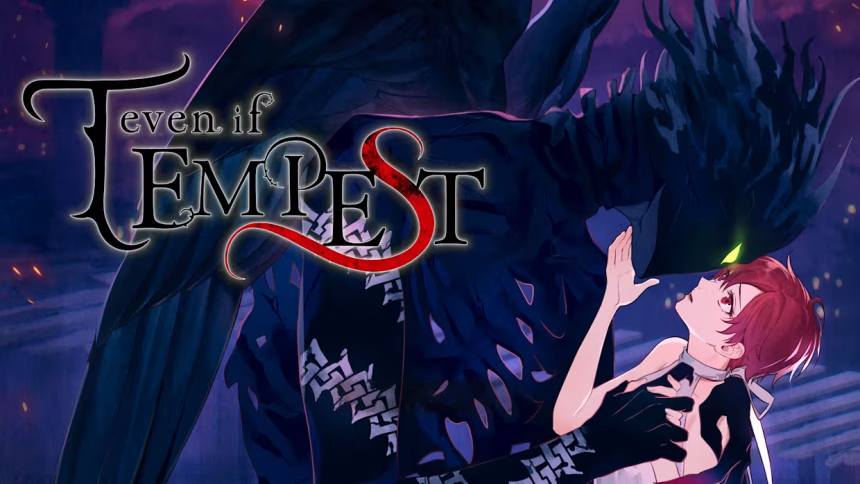
Being burned at the stake as a convicted witch is an unusually brutal inciting incident for a genre mostly known for gentle school romances, and even if TEMPEST wastes no time establishing that it has very different priorities than most otome titles chasing similar shelf space. Developed by Voltage Inc. as their first console-exclusive, fully voiced otome release, this dark fantasy follows Anastasia Lynzel, locked away for eight years in an attic by an abusive stepmother who considers her a witch, only to be pulled into a royal engagement, a conspiracy, and eventually an execution that kicks off the story’s real premise: the ability to rewind time itself by dying, and using that power to claw her way toward the truth and, eventually, revenge.
What sets this apart structurally from nearly every other otome game on the market is how directly it justifies its own genre conventions through plot rather than simply accepting them as an unquestioned format. Rather than treating each love interest’s route as a separate, parallel universe the player experiences independently, Anastasia herself remembers every single timeline, meaning each route is canon to her personal history rather than a hypothetical “what if.” That’s a genuinely clever solution to a problem most branching visual novels never bother addressing, and it gives replaying through different characters real narrative purpose rather than functioning as pure repetition; earlier routes with Crius and Tyril get to be genuinely романtic and plot-relevant in ways later routes, increasingly dominated by the central mystery’s escalating stakes, don’t always have room for. Because only certain routes unlock at a time, following a mostly fixed order rather than free selection, the overall structure reads more like a single, long, unified story told from shifting vantage points than a typical multi-route otome.
That plot-forward structure is also where the experience becomes most divisive depending on what you came here for. The mystery itself, involving witch trials, court conspiracy, and increasingly dark revelations about the kingdom’s ruling family, escalates with real intensity, and the investigative “witch trial” sequences, presenting evidence and cross-examining suspects under real time pressure, borrow enough from Ace Attorney and Danganronpa’s playbook to make otome newcomers who don’t typically care for pure romance find real engagement here. But the further into the game you go, particularly through Zenn and Lucien’s routes, the more romance itself gets sidelined in favor of exposition and plot mechanics, and at least one thorough account describes Lucien’s route specifically as reducing him to a plot device meant to push the mystery forward rather than a genuine romantic lead, a criticism that lands as fair given how much narrative weight gets crammed into the back half at the expense of character-focused breathing room. More than one account across multiple reviews independently arrives at similar frustration: revelations feel rushed and overloaded at certain points rather than spread out with the same patient care the earlier routes manage, and specific romantic turns, one account calls out how abruptly and unconvincingly Crius’s feelings develop given the age gap and mentor dynamic established between them, read as underwritten given how much else the plot has to accomplish.
Voice acting draws close to universal praise, described repeatedly as excellent across the entire cast, minor characters included, strong enough that even one reviewer specifically committed to hearing every voiced line despite the option to skip. The CG artwork and higher-budget FMV sequences are genuinely striking, while character sprites themselves draw more mixed reactions, competent but not the most expressive work in the genre, and backgrounds, while thoughtfully composed overall, are relatively few in number and occasionally look noticeably cheaper than the CGs surrounding them. The script carries real, if not severe, typos and grammatical hiccups throughout, and more than one account specifically flags software crashes as a genuine technical annoyance, frequent enough that saving compulsively in multiple slots becomes less a suggestion and more a survival habit given how punishing the trial sequences can be if things go wrong.
Verdict
even if TEMPEST distinguishes itself from typical otome fare by justifying its branching structure through genuine plot logic and pairing that ambition with investigative mystery sequences that give the format real mechanical variety beyond simple dialogue choices. Its back half sacrifices romantic development for plot machinery more than it probably should, and rushed pacing, technical crashes, and script errors keep it from feeling fully polished. For readers drawn to darker, mystery-forward stories willing to accept romance taking a backseat for long stretches, though, this remains a genuinely distinctive, ambitious entry that earns its passionate following.