
Knowing what someone is hiding can completely change the meaning of a familiar conversation. A joke stops feeling harmless, an ordinary school morning carries more weight, and a smile can become difficult to take at face value. Replaying the same days from the other side can be more uncomfortable than discovering something new.
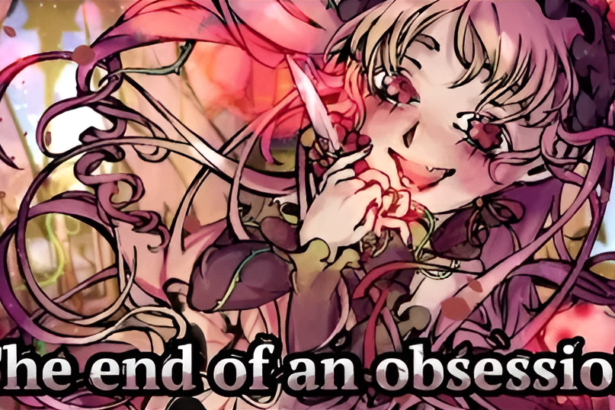
Doki Doki! RainClouds takes that approach to the first act of Doki Doki Literature Club, moving Sayori into the viewpoint role and filling in scenes that happen before and after school. The broad sequence of familiar school days remains recognizable, but I was no longer watching Sayori from somebody else’s perspective. Spending roughly six hours inside her side of those events changed how I read interactions that had once passed quickly, especially when the mod moved beyond recreated material and gave her time alone.
That extra material is essential because a straightforward retelling would have little reason to exist. RainClouds is interested in the distance between the personality Sayori presents around her friends and the thoughts she keeps private. I already knew the larger context from Doki Doki Literature Club, so there was no need for the mod to manufacture another mystery around her. Instead, I became more attentive to ordinary exchanges because I understood that Sayori could experience them differently from the people standing beside her. Some passages push that internal conflict harder than I needed, but the perspective change remained effective whenever the writing trusted a familiar scene to carry new meaning without overexplaining it.
Choices complicate that retelling. CykaDev explicitly presents them as opportunities to influence Sayori’s life, which kept me from treating RainClouds as a completely fixed reconstruction of Doki Doki Literature Club’s first act. I liked having occasional input because it introduced uncertainty into material whose broad shape I already recognized. The mod never needed to become a conventional romance route for those decisions to matter. Their more useful function was making me hesitate over how much control I actually expected to have inside somebody else’s version of an established story.
The visual side remains closely tied to Doki Doki Literature Club because RainClouds is a fan modification of Dan Salvato’s original game rather than a standalone production with an unrelated art direction. Familiar characters, school spaces, and the literature-club setting therefore carry much of the visual identity. That limits how much of the presentation I can credit specifically to RainClouds, but it also helps the perspective shift. I did not need to relearn the environment before noticing how differently the same spaces felt when Sayori became the person through whom I experienced them.
Music makes a much more noticeable change. CykaDev published a soundtrack list containing 17 pieces used by RainClouds, drawing heavily on melancholy piano music and arrangements from multiple outside musicians and existing works. The selections include David Nevue’s “Greensleeves,” Peder B. Helland’s “Abandoned,” Adrian von Ziegler’s “Loneliness,” BigRicePiano’s “Painting,” and arrangements associated with anime and film music. That gives RainClouds a substantially different musical character from simply replaying the original first act. I sometimes felt the sadness was being emphasized more directly than the writing required, but quieter piano pieces suited the mod’s slower stretches and helped separate Sayori’s private scenes from my memory of DDLC’s brighter school routine.
There is no full voice cast carrying those scenes, so my sense of Sayori still came primarily from the text, sprites, and music. I preferred that here. A performed voice could have imposed another interpretation on a project already built around reinterpreting an existing character, while reading her internal narration left more room for me to decide how restrained or overwhelmed a particular passage felt.
RainClouds was created by CykaDev, the name used by Paul Chartres for the project, and released in 2018 as a modification of Doki Doki Literature Club. The official page provides Windows and Mac downloads in English, Spanish, Russian, Korean, Japanese, and Chinese, with Windows requirements listing 300 MB of available storage. CykaDev describes it as a fan game that combines DDLC’s first act with numerous additional scenes, and that combination explains why the six-hour runtime is considerably more substantial than a simple viewpoint swap might suggest.
The short development cycle does show in places. RainClouds was announced in late January 2018 and released the following month, and I occasionally felt that speed in passages where the same emotional idea lingered longer than necessary. Repetition can fit Sayori’s state of mind, but repeating an idea does not automatically deepen it. The stronger scenes gave me a familiar interaction and trusted the changed perspective to do the work. Those moments were quieter, and they affected me more.
That distinction ultimately decided how I felt about the project. RainClouds cannot reproduce the surprise of encountering Doki Doki Literature Club for the first time, nor should it try. Its value comes from making me revisit material I already understood from one angle and remain there long enough to see what that angle excluded. I would not use it as a substitute for the original game, since its entire premise depends on recognizing the scenes and relationships being reframed. As a companion piece, though, I appreciated how firmly it commits to Sayori’s viewpoint even when the writing occasionally becomes too insistent.
Verdict
Doki Doki! RainClouds gave me a reason to reconsider familiar material rather than simply replay it. Moving Sayori into the viewpoint role changes the weight of ordinary club scenes, while the added material, choices, and melancholy soundtrack give the mod enough of its own identity to justify returning to DDLC’s first act. The writing can repeat its emotional points more than I wanted, especially when the changed perspective has already made them clear. Even with that roughness, I came away appreciating the central idea. Sometimes the most revealing change to a familiar story is simply being allowed to stand beside the person I previously watched from across the room.