There’s a particular kind of longing that comes from wanting to feel something new again, the specific ache of knowing exactly how a story works but wishing you could still be surprised by it. Historical romance carries that risk more than most genres, given how heavily its appeal rests on tropes readers already know cold going in. The stronger entries earn their familiarity anyway, letting a well-worn setup pay off through specific, believable character work rather than novelty alone.
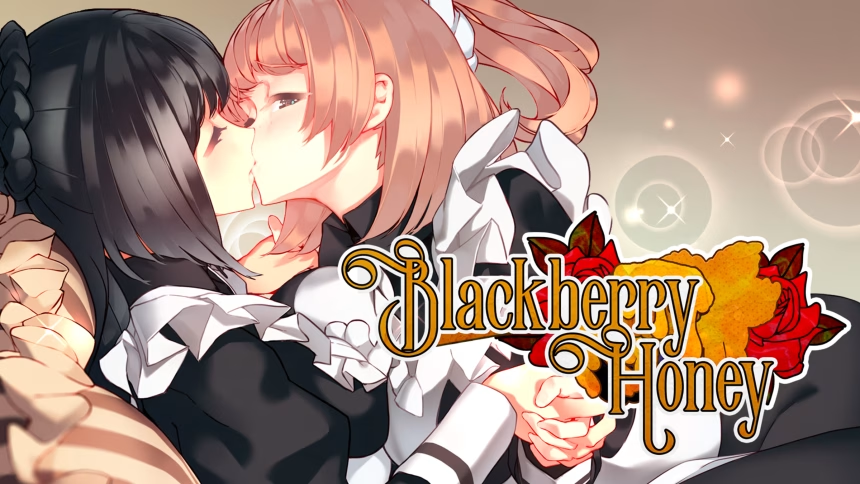
Lorina Waugh knows what it means to start over with nothing. A young Englishwoman from a poor family in Liverpool, she arrives at Bly, a Victorian estate belonging to the wealthy Lennard family, after getting fired from her previous position at Hartwell under a cloud of unsavory rumors she never gets to properly clear her name of. Life at Bly turns out to be exhausting on its own terms, fourteen-hour workdays, bullying from the senior maids, and open scorn from the household’s young daughter, twelve-year-old Lady Constance, who makes Lorina’s early days there miserable in the specific, casually cruel way only a spoiled child in a position of household authority can manage. The one maid willing to speak to Lorina at all is Taohua, a quiet, private figure who keeps her own bedroom, skips church with the rest of the staff, and generally stays apart from everyone else at Bly, an unusual set of privileges for someone technically ranked below the other senior maids. Lorina isn’t sure what to make of her at first, caught between gratitude for the only kindness she’s been shown at Bly and real suspicion about why Taohua gets away with living so differently from everyone else on staff. Blackberry Honey builds its entire story around the slow-burn romance that eventually develops between the two of them, an unlikely connection built on small kindnesses and shared isolation rather than anything sudden.
Ebi-hime built this as her twentieth visual novel overall and tenth release on Steam, originally launching in 2017. Ratalaika Games handled console ports to Nintendo Switch, PlayStation, and Xbox afterward, that release specifically arriving February 11, 2022, rated EU 12+ and USA T. That milestone placement matters more than it might elsewhere, landing at a point in ebi-hime’s catalog where her writing had already had nineteen prior releases to develop the same patient, character-first instincts this particular story leans on so heavily. The backgrounds carry a distinctive painterly quality that traces back to a specific production choice. Ebi-hime herself took reference photographs of real locations meant to evoke Victorian England, then commissioned an artist to build the game’s environments around those photos rather than working from imagination alone. That grounding shows clearly in how specific Bly’s grounds and interiors feel compared to the more generic manor-house backdrops a lot of period visual novels default to, giving the estate a considered sense of place beyond typical stock VN scenery.
A confirmed all-ages base version exists alongside a completely optional 18+ patch that unlocks additional explicit content, and even without that patch, the story includes occasional nudity and passionate kisses without any on-screen explicit scenes. The dialogue mostly holds its period setting together convincingly, though a handful of exchanges between Lorina and Taohua during their more intimate scenes slip into noticeably modern phrasing that briefly pulls against the otherwise careful Victorian atmosphere surrounding them. It’s a small enough slip that it never derails a scene entirely, but it’s noticeable specifically because everything else around it works so hard to stay period-appropriate.
Lorina’s quiet determination to keep her head down and earn her keep sits against Taohua’s own guarded reserve, a woman who goes out of her way to help Lorina through difficult moments while remaining strangely unwilling to let Lorina return the favor in kind. Watching those two very different kinds of caution slowly bend toward each other gave their romance real tension to actually work through rather than an instant, easy spark, the two of them essentially teaching each other how to accept help before either one can fully accept the other. Constance, meanwhile, stays exactly what she’s introduced as, an unpleasant child whose position in the household lets her make Lorina’s life difficult without consequence. The story is careful never to soften or redeem that dynamic into anything more sympathetic than it needs to be, keeping her firmly in the role of household nuisance rather than complicating her into someone worth rooting for.
Running roughly seven to ten hours as a kinetic novel, the story stays entirely linear from start to finish, with no branching choices anywhere along the way. Striking character sprites, varied and detailed backdrops, and simple, effective animation give the Victorian estate real visual life. Composer yuzuki built an original eighteen-track score for the release, and the opening theme, also titled Blackberry Honey, features vocals from a singer credited as Saki. Both yuzuki and ebi-hime have shared their own specific thoughts on individual tracks and classical music references baked into the score as part of the game’s separately sold soundtrack release, an unusually transparent bit of liner-note-style commentary for a visual novel this size, the kind of behind-the-scenes detail most soundtrack releases in this space never bother including at all. The music itself shifts between calmer melodies during quieter, trust-building moments and more aggressive, dramatic pieces used specifically to underscore Constance’s own disruptive presence in the household.
Physical copies of the game were later produced in collaboration with Studio Élan, a nice bit of physical media support for a self-published visual novel. A direct sequel of sorts, Bittersweet Blossoms, continued the wider Bly setting roughly seventy years later with a mostly new cast rather than picking Lorina and Taohua’s own story back up, a first draft ebi-hime has said dates back to 2021 even though the finished game didn’t actually release until years afterward. Ebi-hime has been direct about that choice, confirming plainly that anyone hoping for more of this specific couple shouldn’t expect Bittersweet Blossoms to deliver it, even though the sequel does offer small pieces of context about what became of the original cast along the way. That distance in time between the two stories means Bittersweet Blossoms works perfectly well as a starting point on its own, without any real need to have played Blackberry Honey first to understand what’s going on.
The real pull of this story is watching two women who’d both learned to expect very little kindness slowly let their guard down around each other anyway, especially given how differently each of them arrived at that same defensive posture. I won’t say how their relationship ultimately resolves, only that the imbalance in how easily each of them trusted the other made every small moment of real tenderness feel earned rather than convenient.
Verdict
Blackberry Honey grounds a Victorian maid romance in real, earned tension, letting Lorina’s quiet resolve and Taohua’s guarded reserve clash before either woman lets her guard down. Striking sprite work paired with a piano score that shifts between tenderness and household tension gives the estate real emotional texture, and the confirmed all-ages base version lets anyone choose their own comfort level going in. It’s a confidently written yuri romance that clearly earned enough devotion to warrant its own spiritual successor.