Historical romance has a well-worn habit of softening its darker instincts to keep a story palatable, smoothing over power imbalances or letting tension resolve a little too cleanly once the plot needs a happy ending. A smaller, more prolific corner of the genre has spent years carving out space for stories willing to sit with real discomfort instead, letting a relationship stay properly unsettling rather than defusing it for comfort’s sake. Salome’s Kiss commits to that harder path completely, and it never once apologizes for doing so.
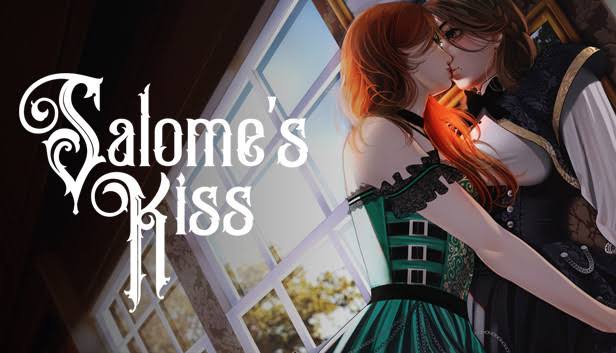
Letitia Reed has built her whole personality around staying quietly unremarkable, meek and mild enough that she actively avoids drawing attention to herself. Working as governess to the wealthy Mortimer family in London, she spends her days tutoring their pupil, Clara, toward the ideal of a proper young lady, a routine that suits Letitia’s own preference for staying invisible right up until it stops working for her entirely. Beneath that placid exterior, though, Letitia is hiding desires intense enough to frighten her, feelings that only grow harder to manage as Clara matures into young adulthood right in front of her, day after day, in a household she cannot simply avoid. Rather than risk acting on something she cannot take back, Letitia leaves her position entirely, finding a fresh start advertised in the pages of The Morning Post. The Langley family, isolated out in the Yorkshire moors, need a governess for their own unruly daughter, Genevieve, about as far from London and from Clara as Letitia could hope to get. Salome’s Kiss centers its whole plot on what happens once distance turns out not to be the escape Letitia was counting on.
Ebi-hime developed and self-published this on April 26, 2022, available for Windows, macOS, Linux, and Android, with support for English, Simplified Chinese, Spanish, and German. Localizing into four separate languages at launch is a meaningfully larger commitment than a lot of comparably sized indie visual novels bother with, especially for a title carrying content this specifically niche in its intended audience. The base release stands entirely all-ages on its own, with a separate, free adult patch available independently for anyone who specifically wants that additional content. Ebi-hime herself has been direct in interviews about a deliberate choice running through her adult-content work generally, keeping character ages explicit within the narrative itself rather than leaving them ambiguous the way plenty of comparable visual novels do. Letitia and Genevieve are stated as 24 and 19 respectively, a detail the developer has pointed to specifically as part of what keeps stories like this one comfortably within platform guidelines compared to other visual novels set in more ambiguous school-age settings.
The developer has been entirely upfront that this is a dark story too, listing suffering itself as a feature right on the game’s own store page rather than hiding what kind of experience it actually delivers. She’s since spoken publicly about being a little bemused by the reaction to just how dark and messed up the story turned out to be, given how plainly that warning sat right there in the marketing the whole time, joking that she wasn’t exactly being cagey about the story she’d set out to tell from the start. The label she’s used for the story herself, toxic yuri, sits right alongside the more traditional genre tags on the store page, an unusually blunt bit of self-labeling for a genre that more often undersells its own darker instincts rather than naming them outright before anyone’s even opened the game.
Letitia’s meek, self-effacing nature sits in constant tension against Genevieve’s own unruly, aggressively pursuing energy once the two of them actually meet, and watching those opposite temperaments clash gave the whole relationship a real, uncomfortable friction that never fully resolved into something simple. That Genevieve isn’t Clara only sharpens the irony sitting underneath the whole premise. Letitia fled halfway across the country specifically to escape one dangerous attachment, only to find herself facing down a strikingly similar situation in a house she assumed would be safe from it entirely. The story never treats that repetition as coincidence either, letting Letitia’s own growing awareness of the pattern become part of what makes her circumstances feel so thoroughly inescapable rather than simply unlucky.
Sprite and CG art comes from RockCR, background art from Lim Chin Yang, UI design by Kathaeris, an original score composed by Hope, and an opening video credited to Phinalgo, all working together to give this Victorian gothic setting real visual and atmospheric weight. That specific pairing of composer Hope and character artist RockCR has shown up across more than one ebi-hime release, giving stories like this one a consistent sonic and visual identity even as the actual cast and setting change from project to project. It’s the same kind of small, recurring creative team ebi-hime has leaned on repeatedly across a catalog that’s grown large enough to make that consistency actually noticeable to anyone who’s read more than one of her games.
The quiet discomfort of watching a relationship built on such a stark power imbalance slowly complicate itself further, rather than resolve cleanly one way or another, is what actually stayed with me. I won’t say how that dynamic or the story’s ending actually plays out, only that the discomfort itself felt intentional rather than accidental, baked into the premise from the very first newspaper advertisement Letitia answers.
Verdict
Salome’s Kiss commits fully to the dark, toxic yuri label it wears openly, letting Letitia’s meekness and Genevieve’s aggressive pursuit collide without ever softening the real power imbalance at the center of their relationship. Strong period-appropriate art and an original score give the Victorian gothic setting real atmosphere, and the story’s honesty about its own darkness, stated plainly on its own store page rather than discovered as an unpleasant surprise, feels earned rather than shocking for its own sake. It’s a deliberately uncomfortable romance that clearly knows exactly what kind of story it’s telling.