A pact with something far more powerful than you rarely stays convenient forever, especially once the thing you bargained with starts running out of whatever made the deal worth making in the first place. Luftschlösser, a wizard, learns that the hard way, having traded service for magical power in a pact with the demon Duke Luthedor, only to notice his own abilities fading and discover the source, his demon patron is dying too. He travels into the demon realm to investigate and finds three transcendents, Aurus, Candide, and Leon, transcendental fragments of Luthedor himself locked in a resurrection ritual, each claiming to be the true extension of the dying Duke and debating different incidents from his life in an attempt to retell his story for their own empowerment. Argumentum ad culpam turns everything that happens once Luftschlösser gets pulled into that battle into its whole reason for existing. The title itself translates roughly to an argument for guilt, a fitting name given that Luthedor is specifically established as the demon of guilt, and much of the story’s actual substance revolves around who’s really at fault for the events each transcendent is fighting to reframe.
Tagetes Team developed this alongside TellertSpyro_GTX and published it themselves, releasing April 30, 2024 for Windows and Linux before making the finished game permanently free to play that same day. Tagetes Team had previously made another Ukrainian visual novel, JUSFASLEX, which cast you as a god rather than a wizard but leaned on a similarly dark, morally knotty setting. The studio’s return to that same general territory here reads like a deliberate continuation of the specific kind of story they’ve decided to specialize in telling, one built consistently around characters wielding real power while still answering to something they cannot fully control.
You take on the role of observer and judge over the transcendents’ battles, using a system built around what the game itself calls a battle of wits, letting Luftschlösser support one of the three by offering arguments to sway the outcome, or fight directly to save his own fading powers instead. The stakes on that system are about as real as they come. Every single character involved, including Luftschlösser himself, can die as a direct result of how a given battle plays out. Knowing that going in changes how carefully you actually weigh each argument rather than picking a side on instinct, since a poorly reasoned defense of the wrong transcendent carries real consequences rather than existing purely to flavor the dialogue. Thirteen total endings exist in the finished release, each described by the developer as valuable and self-sufficient in its own right rather than treated as a single true ending surrounded by lesser failure states. That’s a meaningful jump from the roughly nine endings earlier previews of the game had described before launch, suggesting the scope grew somewhere between initial development coverage and the version that actually shipped.
One of the debates specifically revisits the exact moment Luftschlösser sealed his original pact, when Luthedor required him, as a condition of the arrangement, to end the life of someone who was already in the process of taking their own after committing a violent crime. Whether that act was actually justified, and whether the story Luthedor told him about the situation was even true in the first place, becomes exactly the kind of question the transcendents keep circling back to from different angles throughout the game. That refusal to settle on a single authoritative version of events is really the whole engine of the story, letting the same past moment mean something different depending on which transcendent is currently making their case for it.
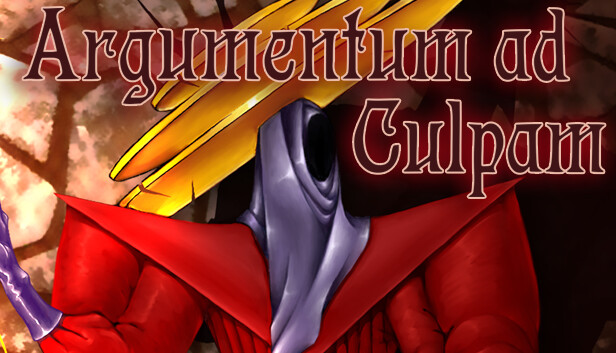
Hand-drawn illustrations of mythical beings carry a striking, unusual style that reminded me of biblical depictions of angels, and Luftschlösser’s own actual body is never shown on screen at all, dressed instead in robe-like clothing beneath an equally strange hat. Keeping the protagonist’s own form permanently obscured while every demon and transcendent gets rendered in exacting visual detail feels like a deliberate inversion of what a story like this would usually prioritize showing you. The demons and transcendents themselves each carry remarkably distinct, memorable designs that never blurred together despite how many strange creatures the story introduces, Aurus, Candide, and Leon reading as fully separate personalities visually rather than three variations on the same basic silhouette.
More than ten original live piano tracks give the decaying gothic world of Scarlet Fortress its central, haunting atmosphere, carrying the weight of the story’s darker themes without a single line of dialogue needing to do that work alone. The choice to record real live performances rather than relying purely on digital instrumentation gives the score a rawer, more human texture that suits a story preoccupied with guilt and imperfect memory.
Full Ukrainian voice acting rounds out the experience, added shortly after launch through a patch following a delay at release. The developers were upfront about that delay rather than letting the game ship silently and add voices later without comment, a small gesture of transparency that matched how directly the rest of the marketing handled the game’s own darker subject matter. The game’s second act leans heavily on the legendary tales of King Arthur for its own inspiration, weaving that mythology into the ongoing dispute over Luthedor’s legacy rather than treating it as a separate, disconnected reference. Localization support extends well beyond Ukrainian and English too, covering more than twenty languages total, an unusually broad rollout for a small, independently self-published visual novel this specific in its subject matter. Steam even lists the game under its own dedicated Ukrainian Visual Novels grouping, part of a small but growing wave of VN output the country’s developers have been putting out steadily over the past few years.
Some of the rhetorical argument sequences do run longer than they probably needed to, occasionally testing my patience even when I was properly invested in where a given debate was heading. That pacing drag is the one real, consistent knock against an otherwise tightly constructed premise, the kind of issue that shows up most clearly once you’re chasing multiple endings back to back rather than reading through a single playthrough.
Every argument made in Luthedor’s defense or against him carries the same underlying threat, that it could ultimately decide whether Luftschlösser’s own magic survives at all. I won’t say how any specific one of the thirteen endings actually resolves, only that carrying that weight into every debate gave the whole premise real stakes beyond simple philosophical exercise.
Verdict
Argumentum ad culpam turns a battle of wits into something properly unsettling by tying the outcome directly to Luftschlösser’s own survival, giving philosophical debate real personal stakes. Striking, unusual character designs paired with a haunting live piano score give the decaying world of Scarlet Fortress real atmosphere, even as some of its argument sequences run longer than they need to. It’s a strange, ambitious gothic visual novel that rewards patience with thirteen distinct, meaningful endings.