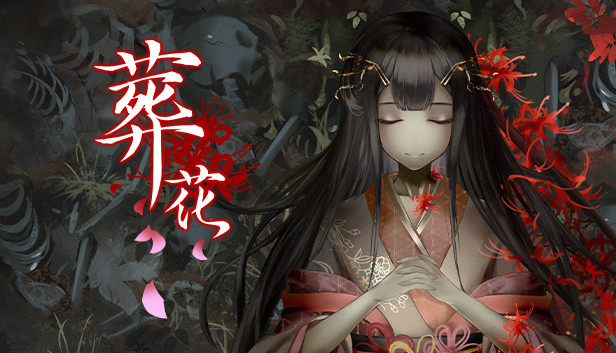

A story about the end of the world usually spends its energy on the collapse itself, the sirens, the empty streets, the last broadcast before the signal cuts out. Fewer stories bother asking the stranger question that comes after, what it actually means to keep waking up once almost nobody else does. In this game, a mysterious disease starts sweeping present-day Tokyo, causing anyone afflicted to disappear entirely, leaving nothing behind but the clothes they were wearing. One man flees to the mountains to escape it, and years later, once the world has gone all but silent, he returns to the ruins of the city hoping to find other survivors. Instead he meets an enigmatic girl named Tsubaki who claims, strangely, to be immortal. On a small, rustic island somewhere else entirely, a courier named Elena spends her days delivering cargo by boat between neighbors, until a storm washes a half-drowned stranger onto her route, a girl clutching a piece of glass crafted with a level of skill and technology Elena has never seen before. Winter Polaris splits its attention evenly between these two women’s stories, one steeped in the quiet devastation of a vanishing world, the other in a slower, more domestic kind of mystery, and spends its whole runtime letting each side earn its own separate weight before the two ever meet.
Stage-nana, the doujin circle behind Narcissu and Ame no Marginal -Rain Marginal-, built this one too, with scenario writer Tomo Kataoka once again handling the script. Narcissu itself, released back in 2005 as a free download, told the story of two terminally ill young people and went on to become one of the more quietly influential doujin visual novels of its era, translated by volunteer fans into English, Chinese, French, Korean, Russian, and Vietnamese long before Sekai Project ever got officially involved. Kataoka’s own history with the group goes back further than his writing credit suggests. Originally, he worked in graphics for Stage-nana before circumstances at its parent circle, Nekoneko Soft, left the group without anyone to handle scenarios, and he stepped into that role out of necessity as much as ambition. Nekoneko Soft itself later folded in the mid-2000s once its staff had grown past what its own maintenance costs could reasonably support, with several former staff going on to establish a separate studio, Cotton Soft, to keep working independently of Kataoka’s own continued output under the Stage-nana name. Sekai Project published Winter Polaris on Steam on December 12, 2019, continuing the same relationship that brought Kataoka’s earlier, much-loved Narcissu duology west years before, including a 2010 English release of Narcissu -Side 2nd- that its own western publisher described taking close to three years of sustained effort to finish. That prequel had already circulated in Japan for free years earlier, first sold as a preview at Comiket before the full version went up for download on stage-nana’s own website, a distribution path that speaks to how much of this studio’s reputation was built well outside conventional commercial channels before Sekai Project ever brought its work to a wider western audience.
The full game actually splits into two distinct stories, Winter Polaris itself and a second thread called Sweeper Swimmer, and progressing through either one requires playing both in tandem to unlock later chapters. That interlocking structure is a double-edged design choice. It rewards patience by letting each story color the other in ways that feel earned rather than forced, but it also means neither half moves entirely at its own pace, since chapters stay gated behind progress made in the story you’re not currently reading. It’s easy to imagine either half working better as a fully standalone read, and the game’s insistence on braiding them together this tightly is the one structural decision I’d have pushed back on if I’d had any say in it. As a kinetic novel, no choices exist anywhere in either thread, every outcome staying fixed regardless of how the story unfolds, which puts the full weight of pacing and revelation squarely on Kataoka’s own writing rather than on branching structure.
Sweeper Swimmer follows Elena and the girl she rescues as they piece together where that mysterious glass object came from, a journey that eventually turns into something closer to a treasure hunt once the two of them start following clues neither fully understands. Elena’s own life before any of this stays refreshingly ordinary right up until the moment it isn’t, a small island courier route and a quiet routine that the story never rushes past just to get to the stranger material waiting underneath it. Tsubaki and Elena end up tied together once both threads finally intertwine, a connection that becomes fairly easy to see coming well before the game confirms it outright, though the predictability never really undercuts how satisfying it feels to watch the pieces slot into place. Kataoka seems less interested in surprising you with the reveal itself than in making sure you actually feel the weight of it once it lands, which suits a writer whose whole reputation rests on patient, character-first storytelling rather than plot mechanics for their own sake. Between the two combined stories, the full script spans roughly sixty three music tracks and somewhere in the neighborhood of five hundred distinct illustrations once alternate poses and variants are set aside, closer to eight hundred once every variation gets counted individually, a real, substantial amount of content for a project this understated in its marketing. New art shows up often enough throughout a given scene that the pacing of illustration never falls too far behind the pacing of the writing itself, which helps offset how slowly some of that writing actually moves.
The individual pieces of this presentation hold up well even where the overall layout occasionally works against itself. The CGs and character art are striking in their own right, detailed enough that lingering on them never feels like padding, and a specific melodic piano piece from Ame no Marginal -Rain Marginal- resurfaces in select moments here as a direct, deliberate nod for anyone who played that earlier game first. Where the presentation stumbles is in its interface choices. Large black borders frame nearly every scene, and the text sitting inside them stays cramped and small despite all that surrounding empty space, a problem that gets noticeably worse in windowed mode and doesn’t fully resolve itself in fullscreen either, where higher resolutions can leave everything looking slightly soft and blurred. None of that undoes how good the underlying art actually is, but it’s an odd disconnect between a game clearly capable of striking visuals and a text presentation that seems to work against its own best asset. Dialogue also skips displaying any kind of character avatar or name tag during conversations, and more than once that absence left me actually unsure whose line I was reading until context caught up a beat later, a small gap in the interface that matters more here than it might elsewhere given how frequently the story shifts perspective between its two separate casts.
Kataoka’s writing carries a dry, deliberately unhurried tone across both halves of the story, the same quality that’s defined his other work going back to Narcissu and carried through into later, lighter projects like Christmas Tina, which still can’t quite shake that same unhurried, melancholic register even at its brightest. Pacing here stays just as patient, favoring atmosphere and slow accumulation over any real sense of urgency. That patience asks a lot of anyone hoping for momentum, and it’s fair to say the game earns comparisons to a slow crawl more than once before either story’s stakes fully click into place. Steam’s own content notice flags depictions of violence, death, and suicide throughout, and that’s worth knowing plainly going in rather than discovering partway through a quiet, unassuming scene. None of that material gets treated carelessly, but it does mean the story’s gentler, more contemplative surface occasionally gives way to something considerably heavier than its cover art or marketing would suggest.
What actually carried the experience for me was less the mystery itself and more the sight of someone rebuilding a reason to keep going once nearly everyone else in the world had simply vanished around them. Tsubaki’s own circumstances complicate that rebuilding in ways the game takes real care revealing gradually rather than all at once, and Elena’s more grounded, domestic thread gives that heavier material somewhere to breathe in between rather than letting the whole experience sit in grief without relief. That balance between the two halves is really the whole trick of the structure, even where the mechanical gating between them occasionally works against its own better instincts. I won’t say how either story’s ending actually resolves, only that the weight of choosing to keep living, even after so much loss, carried real emotional honesty all the way through.
Verdict
Winter Polaris trades urgency for atmosphere, letting its two intertwined stories sit with real questions about survival and meaning rather than rushing toward easy answers. Tsubaki’s quiet mystery against Elena’s own slower, more grounded thread gives the connected narrative real emotional payoff once the two finally meet, even with a heavily interlocking structure that occasionally slows both stories down at once. Its striking art and substantial soundtrack carry a deliberately unhurried, occasionally hard-to-follow story toward something that lands with real weight by the end, provided you’re willing to meet its pace on its own patient terms.