Meet someone who comes across as selfish and you’ll usually keep thinking that right up until something forces a closer look, and a story patient enough to make you wait for that closer look is rarer than it should be.
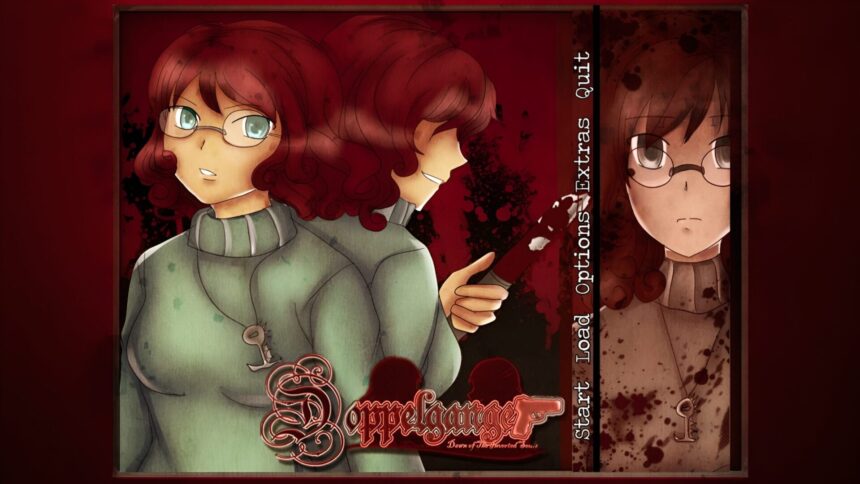
Lucia Nicol is the one I kept misjudging. After her older sister Bertha dies, Lucia tries to step directly into the space Bertha left behind, and that grief curdles into a self-centered streak that gets her bullied at Valudeto, the school Doppelganger: Dawn of the Inverted Soul is built around. Once her classmates start getting attacked one by one and Lucia becomes the prime suspect, she discovers she can see things invisible to everyone else, which is what drags her into the truth behind an entity called the Doppelganger.
AzureXtwilight, working out of Yogyakarta with co-writer Coren Baili, released this for free on January 13, 2013, and the current build stays PC only, with Mac support explicitly untested. This wasn’t a first attempt either. AzureXtwilight’s catalog already includes the two-part Fantasia series, a2, and Time Labyrinth, and Doppelganger sits inside a body of work built by someone clearly comfortable managing large, branching casts.
Scale is where this stopped feeling like a typical freeware release for me. AzureXtwilight lists more than 260,000 words, over 80 CGs plus bonus art, more than 21 characters, three unlockable videos, five unlockable paths followed by a final path, and 29 endings, with each route estimated at five or more hours on its own. I didn’t take those numbers seriously until I was several routes in and still finding character beats I hadn’t seen before.
Route order turned out to matter more than I expected. Blake Landers isn’t even selectable at the start, since his path only opens up after finishing Raphael’s and Lee’s material first, and that gating stopped feeling restrictive once I realized each route was handing me a piece of the same mystery rather than a self-contained romance. Replaying wasn’t like starting the same story over with a different man selected either. A conversation that read as harmless the first time through became uncomfortable once another route gave me context Lucia herself didn’t have yet, and a person I’d written off as simply suspicious sometimes turned out to be protecting something I hadn’t considered.
Calling this an otome game undersells what it’s doing. AzureXtwilight tags it as otome and dating sim, but categorizes the actual genres as mystery, psychological thriller, drama, romance, and supernatural, and told a player directly after release that it isn’t a fully romance game. I felt that distinction constantly. Access to a character mattered because they were holding a piece of the mystery at least as often as it mattered because I might end up dating them.
Anastasia is where that philosophy landed hardest for me. The bullying around Lucia could have split cleanly into victim and villains, and for a while I was ready to file several classmates into that second category permanently. Later information complicated people I’d already decided I understood, without excusing what any of them had actually done, and that gap between understanding someone and forgiving them is where the story’s strongest routes live. I won’t say which characters end up where in that gap.
Even the 29 endings resist a clean scorecard. AzureXtwilight declined to label them simply good or bad, since their weight depends partly on what a player brings to reading them, and the main menu itself changes to reflect whichever endings I’d already reached, turning the title screen into a quiet record of how far into the mystery I’d actually gotten.
AzureXtwilight handled the art personally alongside the writing, and given a cast this large, I expected to lose track of faces. I mostly didn’t. Character designs stay distinct enough that the sheer number of names never blurred together on me, and CGs attached to so many of the endings gave route completion more visual payoff than I’ve come to expect from anything free. The polish isn’t flawless. A few figures carry anatomical issues that stood out to me on close inspection, the kind of rough edge a small, uncredited-composer production like this one doesn’t fully hide.
I won’t credit the soundtrack to azureXtwilight specifically, since the official credits list them as writer and artist rather than composer, and I couldn’t confirm who actually scored it. What I can say is that music plays a real role throughout, present enough in key scenes that its absence would have been obvious. Voice acting exists too, though only in part. Kirroha voiced Shuang and Chunxiang in at least some material, which isn’t the same as a fully voiced release, but it’s enough that I wouldn’t call this a silent game either.
A 16+ recommendation covers violence and blood specifically, tied to the attacks running through the plot, and while that content is real, it never became the main source of unease for me. The bigger discomfort was never knowing whether I was reading someone correctly, a feeling that returned to visit a decade later when azureXtwilight released Apricity, a side story set in the same universe for Otome Jam 2023, fully voiced with its own extra scenes and endings.
Verdict
Doppelganger: Dawn of the Inverted Soul is far bigger and stranger than its freeware presentation lets on, with over 260,000 words, 29 endings, and a route structure built specifically to make me distrust my own first read on nearly everyone in it. Blake’s route locked behind Raphael’s and Lee’s material, and Anastasia’s slow reframing, turned replaying into genuine investigation rather than a search for a preferred boyfriend. A free, decade-plus-old project from a two-person team that still asks more patience and more suspicion of its own player than most releases twice its budget.