It’s the middle of the night, and I have not opened Aliya: Timelink in six hours. Somewhere on the other side of that stretch of silence, centuries away, a girl I have never actually met is either fine or she is not, and I do not know yet. That space between sending and knowing is the whole game.
There is no traditional save file and no visible story tree here. Wrong choices, or simply missing a time-sensitive prompt, mean accepting the result and living with it or starting completely over. Closing the game does not pause Aliya’s world either, since story time keeps moving at the same pace as real time whether the game window is open or not. Leaving Steam running in the background turned out to be the actual way to play this properly, since a notification pops up whenever Aliya has something new to say. Finishing a single route can stretch across several real days rather than a single sitting, and mine did.
Aliya herself is stranded centuries away, reaching out for help with a crisis the game reveals gradually rather than upfront. My choices during that crisis mattered enough to actually worry about, since the Perma Death tag on the store page is not just marketing. Missing a timing window at the wrong moment can end things for good, and knowing that going in changed how carefully I read every message before answering.
Five different endings exist, and the game is structured so the first one has to be reached before the other four unlock. Finishing it hands over the specific information needed to pursue them through a restart. Reaching those later endings took noticeably less time for me than the first playthrough did. Starting over with a version of Aliya who did not remember any of the weeks we had already spent together left a different kind of quiet after the credits. It felt less devastating than the first ending, more like meeting a stranger wearing a familiar face.
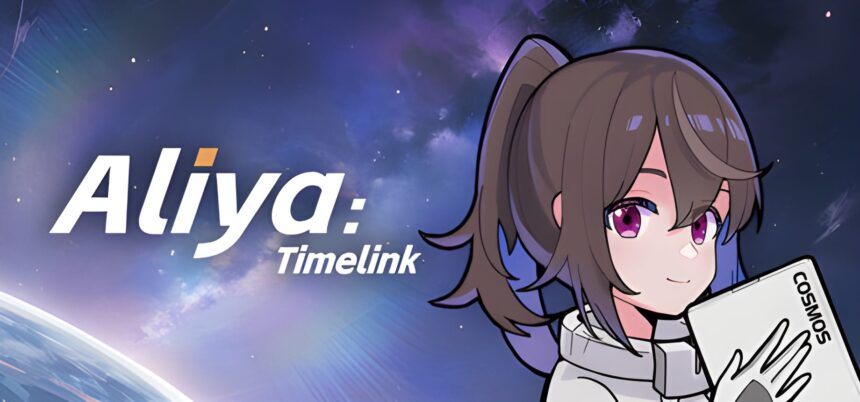
Visual presentation stays minimal by design, simple 2D artwork from a team credited as PicPicky, Anjiujiu, Sirick, and 470. It’s framed inside an interface built to look like an actual chat app rather than a traditional visual novel screen. Azure_Lag and Ganjuwei handle the music, and the softer, sparse cues fit the tone of a story that spends most of its runtime in silence between messages rather than under constant score. The whole thing plays out as text, with no voice acting at all. That actually works in this format, since every line reads like something typed rather than performed.
TDGame Studio built Aliya: Timelink, released on Steam on April 25, 2024 through publisher Anotherindie for a base price of $2.99. The team is small enough that the credits list individual names rather than departments, wuli producing, VK on design, a trio of programmers, and the artists and musicians already mentioned. Five Steam achievements track progress through the different endings. A mobile version has already launched in Chinese, with an English mobile release listed by the developers as a future goal rather than something available yet. A bonus daily-story mode unlocks after reaching Ending 5 specifically, letting the conversation with Aliya continue on an ongoing basis outside the main plot. A sequel, Aliya: Timelink 2 Dawn, already has a playable demo out and is slated for full release in 2026, continuing the same real-time synchronization idea into a new story.
Verdict
Aliya: Timelink turns waiting itself into the mechanic that carries the whole experience, using real-time messages and permanent consequences to build something closer to an actual relationship than a normal dialogue tree could manage. The first ending earned every bit of the quiet it left behind, backed by weeks of real elapsed time rather than a few hours of reading. The four endings that follow it move faster and hit differently, restarting the relationship with a version of Aliya who does not know any of that history. Minimal art from PicPicky, Anjiujiu, Sirick, and 470, paired with Azure_Lag and Ganjuwei’s music, keeps the focus on the text itself rather than spectacle. At a few dollars for a game that can stretch across real days of waiting, it asks for very little money and a fair amount of patience. What it gives back is something most visual novels never attempt.