“Don’t touch me. Misery will come upon you.” It is an unusually blunt warning to hear from someone you’ve only just met, and I spent much of Yotsume God -Reunion- wondering whether it was meant to protect Mai or push her away. The answer matters far less at first than the unease it creates, and that single exchange establishes the atmosphere long before the larger mystery begins to explain itself.
Mai Sahara arrives in the mountain village of Yotsu to visit her grandparents, expecting little more than an ordinary family trip. Since childhood she has been able to see and hear things invisible to everyone else, and that ability leads her toward Yotsume Shrine after two ghostly children draw her deeper into the surrounding forest. There she encounters Imigo, the mysterious boy who warns her to stay away before disappearing just as quickly as he appeared. I liked how little time the story wasted convincing me something was wrong. The supernatural elements are present almost immediately, but they unfold naturally enough that I never felt buried under exposition.
The remake expands considerably on SEEC’s original release rather than simply updating its presentation. New scenarios, additional illustrations, and full Japanese voice acting build on the earlier story while keeping the central mystery intact. The investigation itself gradually weaves together two connected threads, the legend surrounding the Yotsume God and the hidden history of the Sagara family. I appreciated that those mysteries never felt like separate cases competing for attention. Each revelation naturally reframed what I thought I understood about the other.
Exploration plays just as large a role as the conversations. Marketed as an escape adventure novel, Yotsume God -Reunion- mixes point-and-click puzzle solving with visual novel storytelling in a way that kept both halves feeling important. Solving puzzles opens the path forward, while searching each location carefully rewards curiosity with optional character cards that flesh out the supporting cast without making them mandatory for understanding the story. I always enjoy collectibles that deepen a world instead of existing simply to fill a gallery, and these felt worthwhile for that reason.
The puzzles generally struck a comfortable balance between accessibility and challenge. A built-in hint system meant I was rarely left completely stranded, but I still had to pay attention to the environment rather than simply clicking through until something happened. One late puzzle asked me to make a bigger leap in logic than the rest of the game had trained me to expect, and that interruption stood out precisely because the earlier design had been so consistent. It never overshadowed the experience, but it was one of the few moments where I felt the investigation pause instead of building momentum.
Choices also carry more weight than I initially expected. Different dialogue decisions, item usage, and discoveries influence which ending I reached, making another playthrough feel genuinely worthwhile instead of simply repeating the same investigation. I liked uncovering additional pieces of the mystery from another direction rather than replaying solely to see an alternate conclusion. The branching structure supports the story’s larger themes by encouraging me to question details I had previously accepted without much thought.
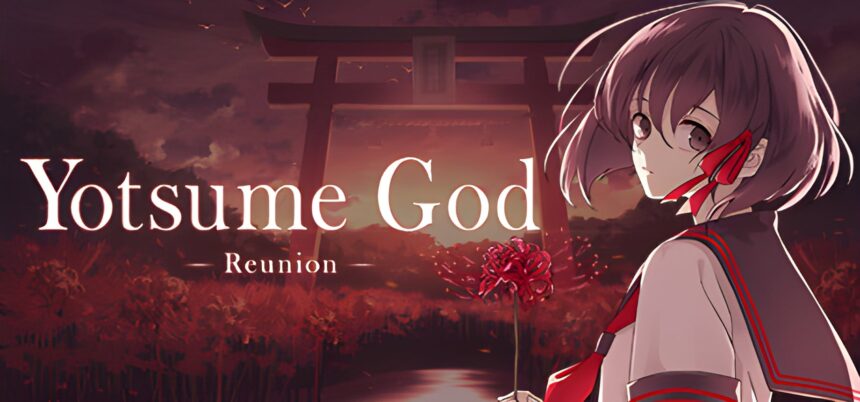
Presentation does much of the work in sustaining that atmosphere. Animated character sprites, detailed backgrounds, and a traditional Japanese folk-horror aesthetic give Yotsu Village a distinct identity without relying on constant jump scares or graphic imagery. The shrine, forests, and abandoned corners of the village feel quietly unsettling because of their isolation rather than because the game is constantly trying to frighten me. That slower approach suited the mystery far better than louder horror techniques would have.
The remake’s full Japanese voice cast strengthens many of those quieter scenes, particularly whenever conversations begin revealing pieces of the village’s history. Combined with the opening theme and ambient soundtrack, the audio consistently supports the tension instead of overwhelming it. I found myself lingering on certain exchanges simply because the performances gave emotional weight to information that could otherwise have felt like straightforward exposition.
SEEC also makes good use of the remake as an opportunity to modernize the experience without losing what distinguished the original. The revised visuals and additional story material help the world feel fuller, while the puzzle solving, branching routes, and folklore remain firmly at the center. I never felt as though the remake was trying to replace the earlier version. It felt more interested in completing it.
I will leave the truth behind Imigo, the Yotsume God, and the Sagara family undisclosed. Discovering how those pieces fit together is the mystery’s greatest strength. What stayed with me was the growing sense that every answer uncovered another layer beneath it, transforming what began as a simple visit to a quiet village into something much stranger than Mai ever expected.
Verdict
Yotsume God -Reunion- succeeds because it treats its escape-room puzzles and supernatural mystery as parts of the same experience instead of alternating between them. The investigation surrounding Yotsume Shrine and the Sagara family gradually rewards careful exploration, while the remake’s expanded scenarios, new artwork, and full voice acting make the story feel more complete than a straightforward remaster. A handful of puzzles occasionally ask for bigger leaps in logic than I wanted, but the atmosphere, interconnected mysteries, and satisfying blend of investigation and visual novel storytelling kept me engaged from beginning to end.