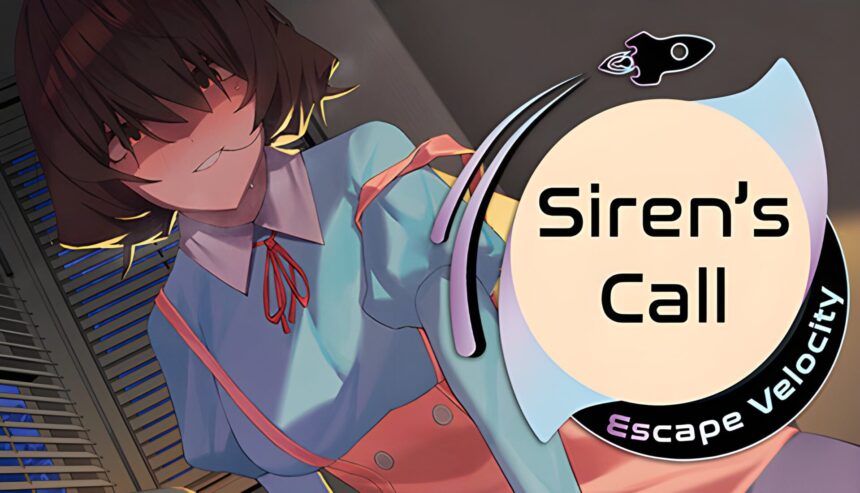
I don’t scare easily in horror-tinted visual novels, and I went into Siren’s Call: Escape Velocity expecting the same detached distance I usually bring to games built around jump-scare rhythms and unsettling imagery. That distance didn’t last. Solo developer ThePenSword built this surreal coming-of-age story around Oliver, who spends his final days before college saying proper goodbyes to five close friends after a summer spent fighting supernatural creatures called Sirens together, and by the time I reached the story’s quieter midpoint, the horror wasn’t what kept me up, the goodbyes were.
The five friends at the center of Oliver’s summer are where this game earns most of its weight. Judith in particular stood out to me, sweet on the surface but intense underneath in a way that kept me uneasy even during her calmer scenes, and Andi’s sharper, more combative energy gave the group a different kind of friction than Judith’s did. Ashton rounds out the group with a more straightforward warmth that offsets some of the heavier material elsewhere. None of them read as a single-trait archetype standing in for a real person, and that specificity is what makes the eventual goodbyes land as hard as they do.
Structurally, the game organizes itself around distinct thematic categories, each one built around a specific issue in Oliver’s relationship with a particular friend or with himself, paired with a puzzle worked through using a resource called lucidity. That pairing of emotional confrontation with mechanical puzzle-solving is a smart choice, giving abstract personal growth a tangible, interactive shape rather than simply narrating it, and the puzzles stay varied enough across the roughly ten-hour runtime that the format never wears thin. A deliberate save-deletion mechanic, clearly flagged before it happens, keeps momentum moving forward rather than encouraging save-scumming, and while that’s the kind of design choice that could easily frustrate in lesser hands, it’s implemented thoughtfully enough here that it reinforces the story’s themes about moving forward instead of functioning as an arbitrary restriction.
Character sprites themselves stay comparatively modest, competent at conveying personality and emotional range without matching the more elaborate, detailed art some anime-styled visual novels showcase, though that’s a small, deliberate trade-off given how much design attention clearly went toward the more experimental structural elements instead. There’s no voice acting here, which fits an indie project built and written solo; every scene runs on text and the sprite work rather than a voiced cast, so nothing about that side of the presentation departs from what a solo-developer project of this scale typically offers.
The soundtrack draws consistent, specific praise for capturing a genuine sense of place, evoking early-2010s Central Florida with regional specificity that grounds the story’s more surreal detours in something recognizably lived-in. It’s one of the clearest strengths of the whole package, and it does a lot of quiet work keeping the setting feeling real even during the story’s stranger stretches.
What elevates this past a simple “cute horror game” premise is how much it commits to Oliver’s emotional journey underneath the surreal, unnerving trappings, drawing clear inspiration from Persona 4, Higurashi, and Doki Doki Literature Club without simply imitating any of them. The game takes patient time letting me simply exist with this friend group during quieter moments, sharing meals, working through old tensions, getting a fuller picture of who these people are and what they’ve each been carrying, before the story’s darker mechanics start pulling everything apart. That investment pays off; the eventual answers the game arrives at about growing up, changing, and what’s actually worth holding onto once innocence fades are handled with nuance rather than defaulting to easy, uplifting platitudes about the power of friendship. Life, as the writing insists throughout, is messier than that, and the story is stronger for refusing to pretend otherwise.
Beyond the main story, unlockable side stories exploring the group’s history before the game’s events add further texture for anyone who finishes the true ending wanting more time with this cast. A completionist gallery, an extensive journal system, and a scene select round out a package that clearly understands and rewards the kind of dedicated engagement visual novel fans bring to games they fall for.
Verdict
Siren’s Call: Escape Velocity uses inventive, format-breaking horror mechanics in service of a sincere, nuanced coming-of-age story about the specific grief of growing apart from the people who shaped you, and it largely succeeds at balancing both halves of that ambition. Its character sprites stay comparatively modest next to more visually elaborate genre peers, and the sheer density of heavy subject matter woven throughout demands real emotional readiness going in. For readers drawn to psychological horror that earns its unsettling moments through heart rather than shock alone, this stands as one of the more distinctive, thoughtfully constructed independent visual novels available.