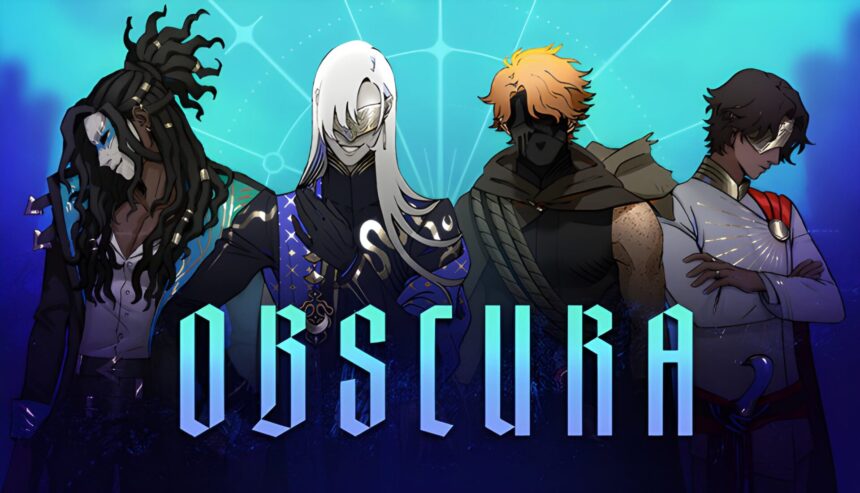
Whenever conversations about morally gray fantasy romance drift toward wish lists, the same request keeps coming back: something that treats a masked, dangerous marketplace as more than set dressing for a harem plot. OBSCURA is the game built for exactly that ask. It’s the one where nobody in the story gets to keep their real name. It’s the one where the closest thing to safety is choosing who to trust least. Developed by the small team at Rotten Raccoons and released episodically in early access, with a free first chapter that hooks you before the paid continuation asks anything of you, OBSCURA doesn’t just gesture at dark fantasy atmosphere, it commits to it in ways that plenty of visual novels with considerably larger budgets don’t bother matching.
Vesper is the name I gave my protagonist by default, though the game lets you pick your own name, pronouns, and one of three mask designs before you ever set foot in the market under the mountain, a desperate, morally gray refuge for people running from something, cursed by something, or simply out of better options. Everyone down there hides behind a mask and a borrowed name, and the entire place carries a persistent undercurrent of religious dread that never quite lets up.
What set this apart from a typical otome adjacent romance for me was how patient the worldbuilding stayed. Small details, the fact that most spaces under the mountain lack proper rooms, the specific customs governing how strangers interact when everyone’s identity is hidden, added up into a place that felt lived in rather than a vague fantasy backdrop propped up to justify the romance happening in front of it.
The customization options add real personal investment, though I noticed the gender choice carries more cosmetic weight than narrative consequence. Other characters react largely the same regardless of which pronouns I picked, which is a fair thing to flag in an early access project still being built out rather than a flaw baked into the concept.
Character writing is where this stands out most. Keir, Cirrus, Francesco, and Oleander each carry a distinct personality and moral shading, and the pacing of those relationships earns real credit for resisting the urge to rush toward a romantic payoff. Trust and attraction build slowly across a setting dangerous enough that the caution makes sense as part of the story rather than reading as artificial delay.
Cirrus’s route pushed me further than any of the others, built around a character who’s magnetic and unsettling in roughly equal measure. The BDSM content in his route gets handled with real care: built in safewords and dedicated aftercare scenes let the story slow down and check on how I was doing after intense moments. One specific dynamic within that route still sat uneasily with me even with those systems technically available, since it felt like Vesper had less agency in the moment than the safety net around it implied, and that’s worth going in aware of rather than glossing over for a story that otherwise handles its darker material responsibly.
The writing stays purposeful rather than meandering throughout, describing setting and character with enough specificity to keep momentum even during quieter, dialogue heavy stretches. It also avoids the obvious this choice clearly matters signposting that plenty of otome games lean on, letting decisions feel like natural extensions of character rather than a clearly telegraphed fork in the road.
Being early access does mean committing to an incomplete story. The free demo covers each love interest’s first chapter, and the paid continuation, sold identically through itch.io and Steam rather than one platform undercutting the other, currently runs two of the planned three chapters per route. Real threads, including what actually lies beneath the mountain and what happened to Vesper before arriving there, stay unresolved for now.
Presentation impressed me the most consistently across everything. Hand drawn character art carries real distinctiveness between routes, the background work sells the sense of an actual physical space rather than a generic backdrop, and the soundtrack reinforces the market’s uneasy, quietly desperate mood without wearing thin over long reading sessions.
There’s no voice acting here, which fits an indie project of this scope and never left the writing feeling like it needed to compensate. What did stand out were the accessibility features built in: adjustable text speed, screen shake toggles, flashing visual warnings, and generous save slots, alongside the safeword and aftercare systems already mentioned. That level of care around player comfort is uncommon even in larger commercial otome releases, let alone a small team working on this as a side project.
The moments that stuck with me most were the quiet ones right after danger passed, not the danger itself. Watching Vesper let their guard down for a few lines with someone they’d spent an entire chapter refusing to trust landed harder than any of the market’s actual threats did, and that shift felt earned rather than handed to me.
Verdict
OBSCURA distinguishes itself through patient, well developed romance routes set against richly atmospheric worldbuilding, backed by thoughtful, carefully implemented systems around consent and player comfort that go further than most of the genre bothers to attempt. Its early access state means committing to a story without a confirmed ending timeline, and Cirrus’s route handles a difficult dynamic that still gave me pause even with its safety systems in place. For anyone drawn to slow burn dark fantasy romance with real narrative ambition, this stands as one of the more striking, carefully crafted indie visual novels currently in development.