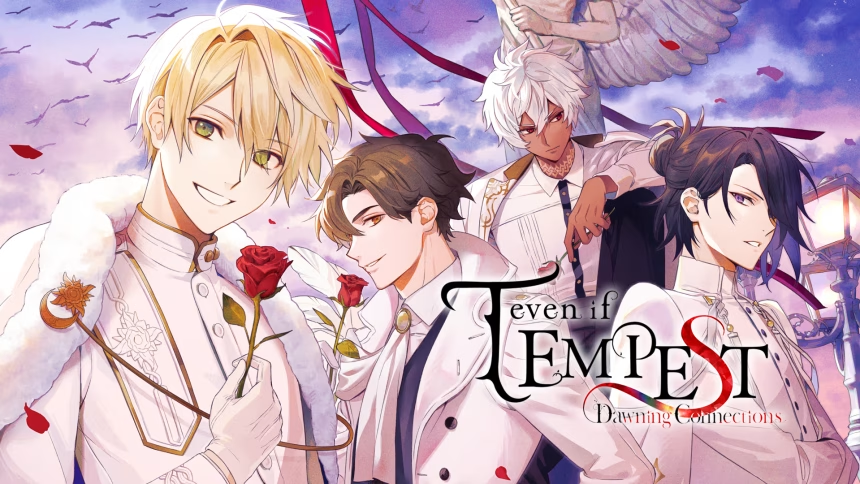
My biggest complaint after finishing the original even if TEMPEST was that I never got enough time with these characters once the mystery actually resolved, and Dawning Connections is Voltage’s answer to that exact complaint, delivered almost point for point. Fandiscs have a reputation problem in the visual novel space, often treated as glorified epilogue padding stitched together to squeeze a bit more money out of a beloved cast before everyone moves on, but this one avoids that trap almost entirely by identifying exactly what its predecessor was missing and building an entire release around fixing it. As the direct follow-up to their genre-bending dark fantasy debut, released worldwide for Nintendo Switch on October 26, 2023, this fandisc drops the murder mystery machinery that dominated the original and replaces it with something the base game rarely had room for: actual, sustained time spent watching Anastasia and her chosen partner simply be happy together.
That shift in priorities is the whole pitch, and it lands for me. The original earned real praise for its investigative witch-trial sequences and its structurally clever, plot-justified branching, but even as someone who loved it, I kept running into the same frustration: romance kept getting shoved aside in favor of escalating stakes and lore-heavy revelations, particularly in the back half. Dawning Connections listens to that criticism directly, giving each of the four main love interests, Crius, Tyril, Zenn, and Lucien, a dedicated post-happy-ending storyline built specifically around relationship development rather than crisis management. The results vary somewhat in quality depending on which route I was reading. One route left me genuinely disappointed relative to its potential, while another finally delivered the emotional payoff I’d personally been waiting for since the first game. That kind of uneven reaction seems baked into a structure serving four very different pairings simultaneously, and it’s worth going in knowing that not every route lands with equal force, even if the overall quality bar stayed consistently solid for me throughout.
Beyond the core relationship-focused content, the fandisc adds a substantial alternate-path storyline exploring what happens if Anastasia never enters a romance at all, focused instead on the found-family bond between her and the wider cast working together to address a loose thread the original game left dangling. That’s a smart inclusion for a genre that sometimes treats platonic bonds as an afterthought next to romantic ones, and it gave me, someone less interested in shipping one specific pairing over the others, a real, substantial alternative to sink into. Side stories built around previously secondary figures, Anastasia’s loyal maid, the story’s central antagonist, and a couple of morally ambiguous supporting players, round out the package further, giving characters who mostly existed to serve the main cast’s arcs in the original some welcome interiority of their own.
Structurally, this plays much more like a conventional visual novel than its predecessor did, and that’s a genuine relief rather than a loss of ambition. The original’s structure, where finishing one route would automatically dump you into the next without warning, tied directly into its plot-justified reasoning for why routes were canon and sequential, but it also made the game considerably less flexible to navigate. Here, routes can largely be tackled in whatever order appeals to you, with only a couple of side stories locked behind initial progress, a minor structural annoyance I found needlessly restrictive given how otherwise open the rest of the experience is. A proper flowchart and extras section round out the navigation improvements, giving this fandisc a level of basic usability the original noticeably lacked.
On the technical side, this is close to an unqualified success. Where the original launched riddled with software crashes frequent enough that compulsive, redundant saving became a genuine survival habit for me, this release ran cleanly across my entire playthrough, a legitimately significant improvement worth calling out on its own. The presentation itself deserves real credit too, expanded facial expressions and outfit variations for the cast, portraits that shift between foreground and background to sell a stronger sense of spatial presence during conversations, and voice acting that continues to earn the same strong praise the original did. This English localization holds up well throughout, handling the game’s humor and more nuanced emotional beats with a level of care that never felt like a rush job to me.
Verdict
even if TEMPEST: Dawning Connections succeeds precisely because it understands what its predecessor was missing and builds its entire structure around correcting it, delivering the sustained romantic payoff, technical stability, and easier navigation that longtime fans had been waiting for. Individual route quality varies somewhat depending on which pairing you’re most invested in, and a small amount of side content stays needlessly locked behind initial progress, but neither issue meaningfully undercuts what stands as a genuinely satisfying, well-crafted continuation. For anyone who finished the base game wanting more time with this cast before the credits rolled, this delivers exactly that.