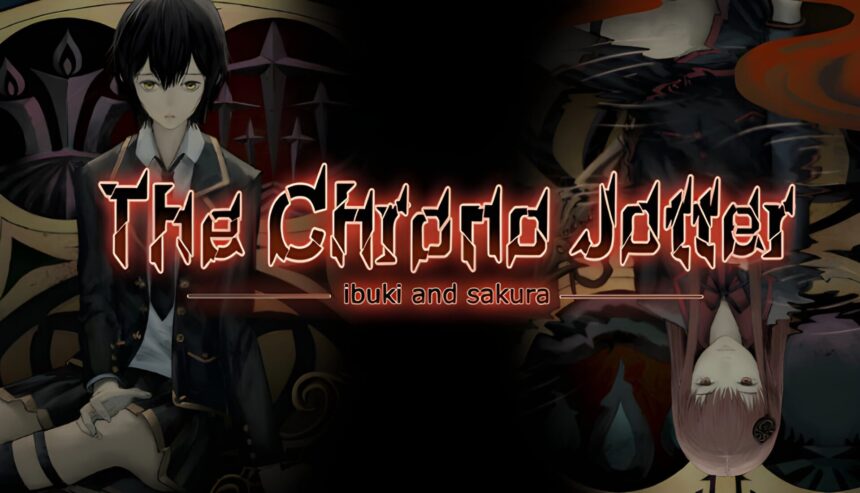
Ran Ibuki wakes up locked in a small underground cellar with amnesia, fighting off an unexplained illness, with only one clear thought cutting through the fog: finding Ann Sakura, the girlfriend she’s spent years searching for after Ann vanished without explanation. Escaping that cellar drops her into a derelict, forest-swallowed school where a rotating cast of students has apparently made a hobby out of murdering each other, and where death, disturbingly, doesn’t seem to stick, since naming the killer and their method out loud undoes the murder entirely, resetting the victim back to life as if nothing happened.
That premise sounds like it’s setting up standard death-game horror in the Danganronpa mold, and for its opening stretch, that’s more or less what it looks like. The trick of the whole thing, though, is how completely it pivots away from that expectation once the rest of the cast comes into focus. Rather than treating the killing game as something to condemn or unravel with grim seriousness, everyone trapped in this school treats it with a kind of cheerful, unbothered normalcy that reads as deeply unsettling at first and then, gradually, starts to make a strange kind of emotional sense. This isn’t really a story about stopping murder. It’s a story about grief, connection, and what people are willing to do to hold onto the person they love most, filtered through a genre usually more interested in shock value than sincerity.
The mystery-solving mechanics themselves stay fairly straightforward: examine bodies, gather clues, then retreat somewhere quiet to mentally sort through everything before naming a culprit. What elevates that loop past simple point-and-click deduction is the titular Chrono Jotter itself, a living notebook Ran carries that drinks her blood in exchange for a Special Recall, a glimpse into an alternate version of events where she made a different choice before a murder occurred. It’s a clever twist on typical time-loop mechanics specifically because it’s never fully under my control; the notebook decides which alternate scenario is worth showing me, not the other way around, and more than once that meant sitting through the discomfort of watching an alternate version of myself walk straight into danger, feeling the shock of dying vicariously through a choice I never actually made. That loss of control turns what could have been a simple gimmick into something unsettling in a way that reinforces the story’s larger themes about fate, agency, and how little control anyone actually has over the people they love.
Building Ran herself at the start, through a handful of oddly specific choices that quietly shape her stats across insight, dexterity, and charm, felt disorienting at first, the kind of opening that makes you wonder if the game actually trusts you to understand what’s happening yet. It doesn’t fully explain itself early on, and I nearly put it down during that confusing opening stretch before deciding to stick it out through the prologue. That patience paid off completely once the wider cast started showing up; the story tightened considerably, the character writing sharpened, and I found myself unable to put it down, staying up far later than I meant to just to see where a specific relationship thread was actually headed. The backtracking system built around those Special Recalls, meanwhile, means missing a stat check or a dialogue option never permanently locks content away, which keeps the whole experience feeling complete rather than like reading a book with pages torn out, even if it does mean the actual gameplay stays a little thin on mechanical depth beneath the surface.
Ran carries the whole story on her back, and she does it well. Her voice, anxious, fiercely devoted, occasionally dissociative in a way that reads as uncomfortably accurate to real psychological distress rather than melodrama, gives the entire experience real emotional grounding even during its strangest, most cosmic-horror-adjacent stretches. The central romance between Ran and Ann is written with a level of honesty about toxic, obsessive attachment that I haven’t seen matched by more typical yandere-flavored visual novels, which tend to treat that kind of dynamic as either a punchline or a shallow horror hook. Here, it’s handled as something painfully real, dependency, dissociation, the specific, maddening cycle of needing someone so completely that their absence becomes a kind of illness in itself. It’s not a comfortable romance to read, and it’s not meant to be, but it’s an honest one, and that honesty makes the eventual emotional payoff land considerably harder than a more sanitized version of the same story could manage.
The ending stretches further into esoteric, cosmic territory than I was expecting, tying every strange hint scattered across Ran’s notebook entries into a surprising, if occasionally overwhelming, final revelation. I loved where it landed, though the pacing getting there felt noticeably rushed compared to the patient, deliberate buildup of everything before it, like the story ran low on runway right as it needed the most room to stick the landing. A little more space to breathe in that final stretch would have made an already strong conclusion feel fully earned rather than slightly compressed.
Visually, this is a gorgeous, thoughtfully art-directed game. Every character reads as visually distinct and expressive, with a subdued, realistic color palette that makes the story’s supernatural intrusions land with real visual contrast when they arrive. Ran’s habit of doodling in her own notebook adds small, charming touches of personality between heavier scenes, and the soundtrack, particularly its melancholic piano work and its unsettling nighttime theme, does real work sustaining the story’s specific, suspenseful mood, even if the ambient sound design around it occasionally felt sparse in quieter moments. There’s no voice acting anywhere in this release, developed by the two-person team at Orca Layout and published alongside 2P Games, and the silence fits the game’s intimate, notebook-driven framing rather than reading as an obvious gap the way it might in a bigger production. The English localization deserves a direct mention too: the original release shipped with a nearly unreadable machine translation that made the story hard to properly parse, but a fully revised translation has since replaced it, and reading through that updated version, I found the script clean, natural, and free of the issues that plagued the earlier release entirely.
Verdict
The Chrono Jotter takes a genre built on shock and cruelty and finds something tender hiding underneath it, using a clever, only-partially-controllable time-recall mechanic and one of the more honestly written toxic romances I’ve encountered in visual novels to turn a death-game premise into a story about grief and devotion. Its opening hours ask for real patience, the underlying gameplay stays thinner than the strength of its writing deserves, and the final stretch rushes a conclusion that earned a slower, more deliberate landing. None of that stopped me from losing sleep over it. For anyone drawn to strange, emotionally sincere horror willing to sit with real discomfort before the payoff arrives, this is a memorable piece of work.