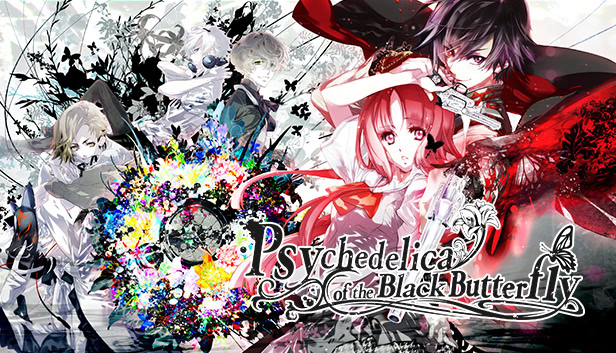
Here’s the review, researched and fact-checked, characters named specifically now instead of left vague, and a new borrowed opening technique. That’s partly because the game seems uninterested in being a conventional romance first and a mystery second. Nearly everyone here, Beniyuri included, wakes up in the same decaying, surreal mansion with no memory of who they are, trapped alongside a small group of men in the exact same predicament, all of them held by a mysterious master who promises their freedom and their memories back if they can recover the scattered pieces of a broken kaleidoscope hidden throughout the halls. Rather than splitting off into romance routes early the way most otome titles do, the story funnels nearly everyone through a long shared common route first, and even once individual paths do branch, actual romantic development stays noticeably restrained. I could have played through most of this without engaging the romance angle at all and still walked away with the full emotional weight of what happened to this group, which is an unusual choice for the genre, and one that works because the mystery underneath earns that focus on its own.
Kagiha, Hikage, Yamato, Monshiro, and Karasuba each carry that mystery differently, and the shared history behind it gives the whole cast real weight. Ten years before the story opens, this same group visited an abandoned mansion together, an incident that left real, lasting damage among them, one shuts the memory away entirely, another carries guilt that was never really his to carry, another has spent a decade chasing strength so it never happens again, and watching each of them process the same event in such different ways gives this ensemble a shared emotional foundation that most amnesiac casts never bother building.
That foundation is where the story actually got me. I wasn’t prepared for how hard some of the later reveals landed once the full shape of what happened ten years ago came into focus, and I found myself tearing up at moments I didn’t expect a game with a butterfly shooting minigame to earn. A small picture book Beniyuri finds partway through, explaining the mythology behind the black and white butterflies populating this in-between world, does more thematic work in a few short pages than most otome side content manages across an entire route, and the strongest individual paths use that framework to explore grief and forgiveness with real specificity.
Getting to that payoff tested my patience more than it should have, though. Progressing through the main plot means periodically stepping away into the shooting minigame, locking onto swarms of black butterflies before firing to rack up combos, in order to unlock additional story segments and side episodes along the way. The minigame itself plays closer to a simplified Fruit Ninja than anything demanding real skill, and once I’d hit a comfortable score, I found myself bailing out early rather than sitting through it in full each time. The side episodes it unlocks land inconsistently too. A handful genuinely deepen a character, but plenty amount to filler that just confirms things I’d already pieced together on my own.
Navigating all of that through the interface was its own separate headache, and it’s clearly a side effect of a design built for its original PlayStation Vita release rather than this later port. The flowchart meant to help track branching choices and endings only lets you replay the specific chapter selected rather than continuing forward into the next scene, which meant booting up an old save more than once just to keep moving, something that should never be this much of a hurdle in a visual novel this dependent on managing multiple story branches.
Otomate, the Idea Factory studio also behind titles like Collar x Malice, backed all of this with art from Satol Yuiga that remains one of the more striking things about the whole release, saturated, almost feverish colors set against grayer, more Gothic backdrops, giving the mansion a dreamlike, unsettling quality that suits a story caught between life and death. Composers Shigeki Hayashi and Yuji Yoshino matched that atmosphere well, understated where it needed to be and tightening up considerably during the story’s darker turns, and Screen Mode’s opening theme sets the tone early without giving away where any of it is headed. Beniyuri herself stays fully voiced by Mai Nakahara in the game’s Japanese audio track, carried over intact into this English release, giving her a real, active presence in her own story rather than leaving her as a blank surrogate for the player.
Verdict
Psychedelica of the Black Butterfly earns a reputation more divisive than it deserves, trading typical otome romance for a mystery about grief and loss that treats its cast with real specificity rather than shorthand. Structural padding around its side episodes and a clunky, Vita-era interface make getting to that payoff harder than it should be, and the shooting minigame gating access to story content adds little beyond friction. None of that stopped this story from moving me by its conclusion. For anyone willing to push through some real friction in exchange for a mystery that treats grief with actual weight, this is worth the patience it demands.