Poor Fuchai. She’s barely finished securing her throne, and already she’s being pulled at from every direction, a mentor who won’t let romance interrupt his agenda, an enemy king who can’t decide if he wants her dead or trusted, and a dragon god that isn’t finished collecting from her family yet. while armies of obligation are still moving against her on every side. After congratulating herself, briefly, on surviving long enough to sit on that throne at all, My Vow to My Liege makes clear a vow this broken doesn’t pay off just because you’ve survived the first battle. That’s a rough start for anyone, let alone someone whose entire claim to that throne rests on a secret she can’t afford to let slip.
The setting is the waning years of the Spring and Autumn Period, roughly between 771 and 476 BC. Tengyu is the last surviving member of her royal siblings after her father’s attempt to break a hereditary vow binding their kingdom to a vengeful dragon god went catastrophically wrong. She takes her dead brother Fuchai’s identity and his throne, ruling the Kingdom of Ng in secret as a man while pursuing the same mission that got her siblings killed, finishing what her father started before the dragon god finishes what’s left of her family too. That kingdom’s ancestors made that vow generations earlier, and breaking it cleanly, rather than just delaying the consequences the way her father’s attempt did, becomes the actual engine driving the plot forward across every route.
Watching her try to hold both halves of her life together, the girl underneath the disguise and the king she has to keep performing, gives even the game’s quieter dialogue scenes real tension. That performance isn’t just about hiding her gender either, since every public decision she makes as Fuchai has to serve the kingdom first, leaving Tengyu’s own wants folded away for whenever there’s actually room for them.
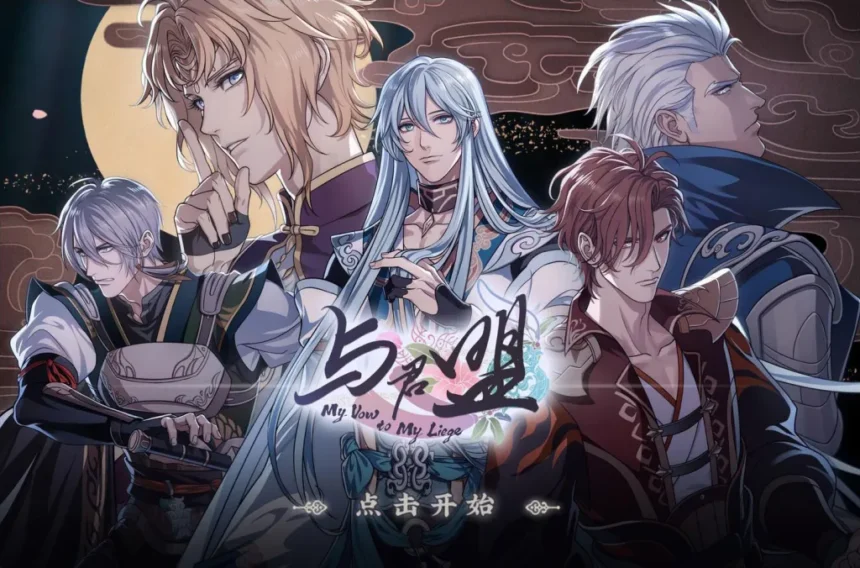
Wu Zixu, at 37, is easily the most historically weighted of the four romance options, a prime minister whose entire family was executed by the King of Chu when he was a boy. Raised afterward by the previous king, Helü, he’s devoted himself entirely to helping Fuchai complete the mission tied to the dragon god, treating romance as something almost beneath consideration outside his own storyline. That devotion forces Fuchai into a noticeably more assertive role pursuing him than she needs with anyone else. Wu Zixu came from the Kingdom of Chu originally, and that outsider history, combined with the personal loss that shaped him, gives his loyalty to Fuchai’s cause a weight none of the other three love interests carry in quite the same way.
Goujian, 21, is the King of Yue and Ng’s defeated former enemy, surrendered into slavery guarding Helü’s mausoleum after losing the war between their two kingdoms. That humiliation feeds a slow burning drive for revenge that complicates his growing, unlikely friendship with Fuchai, a proud man who can down a full bottle of liquor before turning into a foul mouthed, babbling mess the moment he’s actually drunk. I found his ambition ruthless even while staying sympathetic, and the writing never lets his humiliation excuse the harder edges of what he’s still capable of doing. Their friendship develops almost in spite of both of their better judgment, which makes the moments it actually breaks through his guard land with more weight than a more straightforward enemies to lovers setup usually manages.
Shi Yiguang, 19 and better known by the nickname Xi Shi, leads the magically powerful Shi clan and grew up as Fuchai’s childhood playmate. His own family died at her father’s hands during the same era of chaos that eventually cost Fuchai her siblings too, a separate tragedy from her own. That shared loss still ties the two of them together as survivors of the same violent history. That shared history with Fuchai gives their scenes together a specific kind of ease other routes have to work harder to earn, two people who already understand exactly what the other one lost. He’s often mistaken for a beautiful maiden while washing bandages by the river, a detail that undercuts his otherwise serious introduction with real, deliberate humor.
Chen Feng, 22, rounds out the cast as Fuchai’s bodyguard since childhood, quieter and more guarded than the other three, determined to protect the girl he grew up with at any cost regardless of the throne she’s now forced to occupy. His route leans quieter than the other three by design, built more on steady presence than dramatic declaration, which fits a character defined by showing up consistently rather than making grand gestures. Even a quiet route benefits from a cast this large surrounding it, since Chen Feng’s scenes still connect back to the wider political stakes running through everyone else’s story too.
What actually sets this apart from a lot of otome titles is how consistently it keeps Fuchai’s own mission at the center of every route. No matter which of the four men she ends up with, or doesn’t, she never stops pursuing the dragon god, even in the story’s bad endings, and the writing never lets any single romance quietly take over and sideline her actual goal the way these games sometimes do once a route locks in. That structural discipline gives even her softest moments with each love interest real stakes, since her duty to her kingdom is never actually paused to make room for them. The common route itself runs a massive ten chapters before any individual path actually opens up, and each character’s own route runs noticeably shorter by comparison once it does. That pacing choice asks real patience early on, since the heavy worldbuilding across those ten chapters can feel dense before any individual romance actually gets room to breathe.
I did run into one specific frustration worth flagging directly: the Back to the Past achievement in Wu Zixu’s English route refuses to unlock even when every listed choice is followed correctly. It’s a persistent issue, not a one time fluke, and it’s a small thing in the scope of the whole game, but achievement hunters should go in aware they might not get a clean sweep no matter how carefully they play that route. I checked multiple guides and confirmed choice orders before giving up on it myself, which at least rules out simple player error as the cause.
Presentation carries one real quirk worth knowing before you buy: the game itself runs natively in a 4:3 aspect ratio, meaning the widescreen promotional art on the store page doesn’t reflect what you’ll actually see in the client. It’s not a flaw exactly, just an unusual choice that’s easy to be caught off guard by if you’re expecting a modern widescreen layout. That aspect ratio choice likely reflects the game’s Chinese mobile origins more than a deliberate stylistic statement for the PC release specifically, though the storefront itself never spells out the reason directly. Completing every ending unlocks a full art gallery through the game’s Art Exhibition menu, alongside a glossary, replay options, and a dedicated staff credits section listed under Heroes Behind the Scene.
Music throughout leans into the historical setting without overplaying the drama, and the three vocal theme songs performed by the cast add a level of polish beyond what most otome titles at this budget bother including. Individual tracks shift between somber and martial registers depending on whether a scene leans toward court politics or the war still simmering underneath everything else. Full voice acting covers all four love interests plus supporting cast, and in a nice touch, the game ties specific achievements to visiting each voice actor’s Weibo page directly from the character menu, a real bit of cross promotion baked right into the completion list. The game’s own character bios list each actor’s role only as a credited but undisclosed voice, a deliberate choice on the developer’s part rather than a gap in the game’s presentation.
Yetu AVG developed My Vow to My Liege, with Fangkuai Youxi publishing the Steam release on September 22, 2020, in both English and Chinese. It’s the studio’s second major otome title after Lost in Secular Love, and the writing here carries a distinct, semi classical prose style that fits the historical setting closely throughout. That prior release gives Yetu AVG real experience building otome specifically for a Western audience before tackling a setting this history dense. It shows in how confidently the game handles unfamiliar historical context without over explaining it. A mobile port has been in development since around release, alongside talk of a potential DLC route built around Zheng Dan, a character who doesn’t factor into the base game’s four romance options.
Verdict
My Vow to My Liege carves out real distinction for itself within the crowded historical otome genre by refusing to let romance override its heroine’s own mission, giving Fuchai a consistent, driven throughline no matter which of her four love interests she ends up choosing. A stray achievement bug and an unusual native aspect ratio are worth knowing about going in, but neither undercuts a well constructed historical fantasy built around a woman who never stops being the one steering her own story. Few historical otome titles commit this fully to keeping their heroine’s own agency intact across every single ending, happy or otherwise.